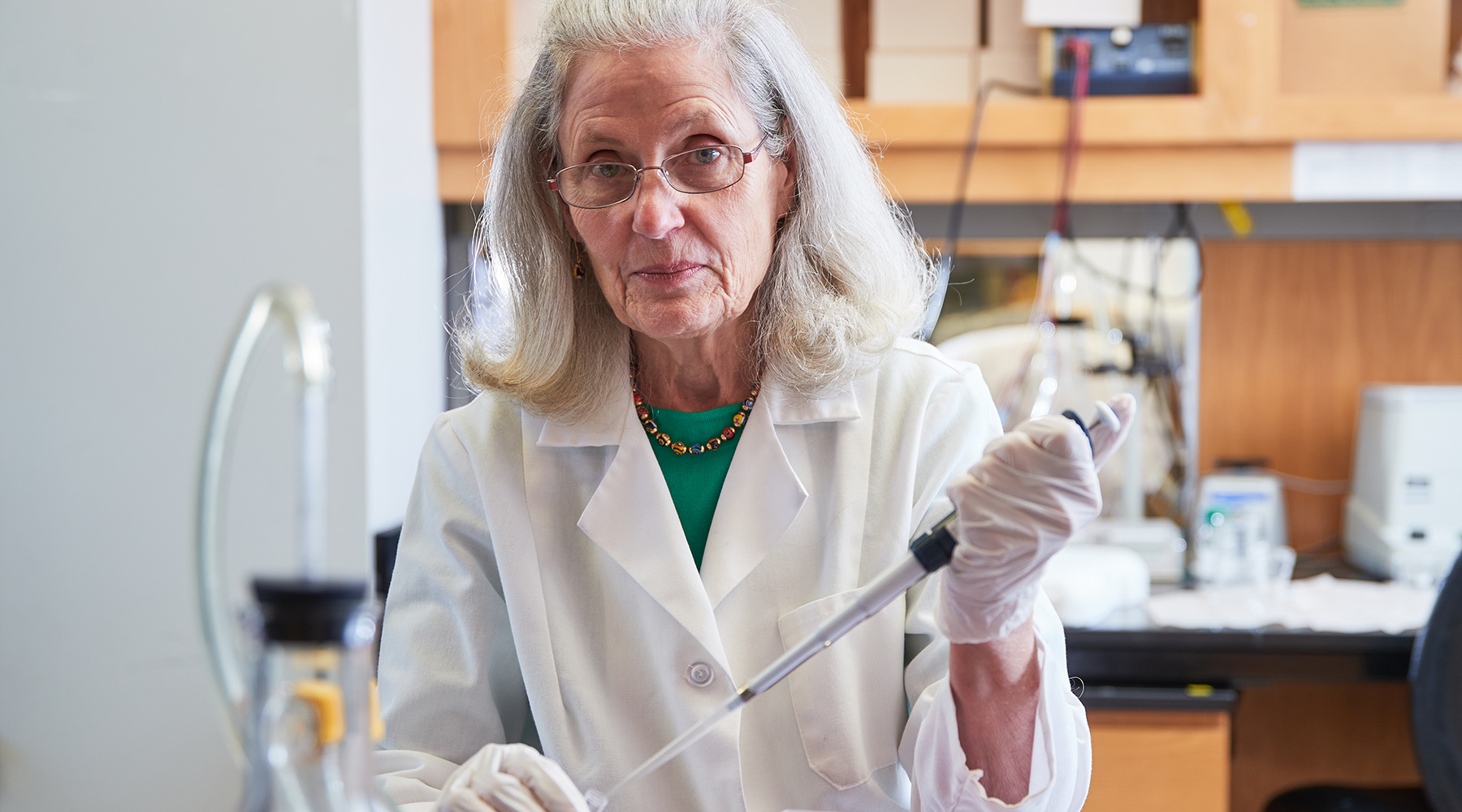
Linda F. Thompson, Ph.D.
Professor
Arthritis & Clinical Immunology Research Program
Putnam City Schools Distinguished Chair in Cancer Research
Adjunct Professor, Department of Microbiology & Immunology, University of Oklahoma Health Sciences Center
Director, Flow Cytometry Core
My 101
In my lab, we are interested in human diseases caused by abnormal lymphocyte development or function. In the past, we have studied a form of severe combined immunodeficiency caused by a mutation in the gene adenosine deaminase (ADA). Children who inherit mutations in the ADA gene lack both T and B lymphocytes, two of the most important cell types in the immune system, and will die of an infection if they do not receive a bone marrow transplant. This disease is difficult to study in the laboratory because the patients are very rare and they lack the very cells (lymphocytes) whose properties need to be investigated. Therefore, we developed a model system using cultured cells from the thymuses of children undergoing corrective cardiac surgery. The thymus is the organ where T cells develop. Thymus tissue must be removed in certain cardiac surgeries so that the surgeon can have access to the heart. The model systems that we developed to study ADA deficiency are now being used to study how T cells develop in a normal thymus. These studies are important because abnormal development of T cells in the thymus can lead to leukemia or lymphoma.
Another area of interest for us is a second enzyme called ecto-5′-nucleotidase or 5′-NT. This enzyme produces adenosine, a substance that can bind to cell surface adenosine receptors found on almost all cells. Adenosine receptors regulate a variety of important physiological processes, such as nerve transmission, heart rate, kidney function, smooth muscle contraction, and inflammation. My colleagues and I have engineered a strain of mice that lacks 5′-NT and are using these mice to understand the function of this enzyme. Work in my lab centers on the ability of adenosine produced by 5′-NT to modulate various types of inflammatory responses. We have also discovered that 5’-NT contributes to the immunosuppressive environment surrounding many tumors. Inhibiting 5'-NT may be a new strategy for treating some types of cancers. We have shared our mice with many other groups of scientists all over the United States and even in Europe, Japan, China, and Australia so that investigators with expertise in a wide variety of fields can have access to this unique tool.
A third area of interest in my lab is autoimmunity. In the past, we studied the immune response of patients with lupus to immunization with the influenza vaccine. We were happy to find that most lupus patients did not experience a flare in their disease after vaccination. Together with other scientists at OMRF, we are now studying Sjögren’s Syndrome, an autoimmune disease that causes severe dry eyes and dry mouth.
Research
Research in my laboratory concerns the role of ecto-5′-nucleotidase (CD73), a purine metabolizing enzyme, in generating adenosine for adenosine receptor signaling. Ecto-5′-nucleotidase is a glycosyl phosphatidylinositol-anchored enzyme that catalyzes the dephosphorylation of extracellular AMP to adenosine. Adenosine receptors are seven transmembrane spanning G-protein coupled receptors that regulate many important aspects of physiology. We are using CD73-deficient mice, created in our lab, to learn more about the ability of CD73 to generate adenosine for adenosine receptor signaling. CD73-/- mice appear healthy and reproduce normally but show exaggerated responses to a variety of inflammatory stimuli. For example, they exhibit a vascular leak syndrome characterized by neutrophil accumulation in tissues, especially the lung, when exposed to hypoxia. They also show elevated cytokine responses in experimental models of colitis, sepsis, and pulmonary inflammation and fibrosis. CD73-deficient mice exhibit increased lymphocyte migration to the draining lymph nodes after exposure to an inflammatory stimulus. Surprisingly, CD73-deficient mice are resistant to the development of experimental autoimmune encephalomyelitis (EAE), a model for multiple sclerosis. The development of EAE depends upon the ability of pathogentic T cells to enter the central nervous system. These findings suggest that CD73-generated adenosine plays an important role in regulating leukocyte migration across endothelial and epithelial barriers in a variety of physiological or pathological settings. Future studies will investigate the mechanism by which adenosine either inhibits or promotes leukocyte trafficking under specific experimental circumstances. We are also studying the role of CD73 in contributing to an immunosuppressive tumor microenvironment.
My lab has had a long-standing interest in human lymphocyte development and the pathogenesis of human primary immunodeficiency diseases. We have been particularly intrigued by the question of how developing thymocytes “decide” whether to adopt the alpha/beta vs. gamma/delta T cell lineage. Recent observations demonstrate that the expression of CD73 marks those gamma/delta T cell receptor-expressing thymocytes that have committed to the gamma/delta lineage and can no longer adopt the alpha/beta fate. Experiments are ongoing to determine the mechanism by which CD73 appears to control the gamma/delta T cell fate.
We are also participants in a multi-investigator project to understand the pathogensis of the autoimmune disease Sjögren’s Syndrome (SS). Although SS is a systemic disease, its defining characteristics are dry eyes and dry mouth. Together with Dr. Darise Farris at OMRF, we are characterizing the T cells that infiltrate the minor salivary glands of patients with SS with the goal of determining the salivary gland antigen(s) which they recognize. We hope that this knowledge will lead to more rational treatments for SS patients.
Brief CV
Education
B.S., University of Michigan, Ann Arbor, 1968
M.S., University of Michigan, Ann Arbor, 1971
Ph.D., University of Michigan, Ann Arbor, 1973
Honors and Awards
Michigan Non-resident Alumni Fund Scholarship, 1965-1968
National Science Foundation Traineeship, 1969-1970
Phi Lambda Upsilon, 1972
Sigma Xi, 1973
Arthritis Foundation Postdoctoral Fellowship, 1977-1980
Putnam City Schools Distinguished Chair in Cancer Research, 2001
Edward L. and Thelma Gaylord Prize for Scientific Achievement, 2007
Merrick Award for Outstanding Medical Research, 2013
Other Activities
Section Editor for the Journal of Immunology
Ad hoc reviewer for a variety of NIH Study Sections
Memberships
American Association for the Advancement of Science
American Association of Immunologists
American Federation for Medical Research
Clinical Immunology Society
Joined OMRF scientific staff in 1989
Publications
Recent Publications
Popescu NI, Kluza J, Reidy MA, Duggan E, Lambris JD, Thompson LF, Coggeshall KM. Monocyte uptake of polymeric peptidoglycan is bimodal and governed by complement C3 and C4 opsonins. JCI Insight, 2024 December, PMID: 39656526, PMCID: PMC11790019
McKernan P, Virani NA, Faria GNF, Karch CG, Prada Silvy R, Resasco DE, Thompson LF, Harrison RG. Targeted Single-Walled Carbon Nanotubes for Photothermal Therapy Combined with Immune Checkpoint Inhibition for the Treatment of Metastatic Breast Cancer. Nanoscale Res Lett 16:9, 2021 January, PMID: 33411055, PMCID: PMC7790975
Tripathi A, Lin E, Xie W, Flaifel A, Steinharter JA, Stern Gatof EN, Bouchard G, Fleischer JH, Martinez-Chanza N, Gray C, Mantia C, Thompson L, Wei XX, Giannakis M, McGregor BA, Choueiri TK, Agarwal N, McDermott DF, Signoretti S, Harshman LC. Prognostic significance and immune correlates of CD73 expression in renal cell carcinoma. J Immunother Cancer 8, 2020 November, PMID: 33177176, PMCID: PMC7661372
Selected Publications
* Munroe ME, Vista ES, Guthridge JM, Thompson LF, Merrill JT, James JA. Pro-inflammatory adaptive cytokines and shed tumor necrosis factor receptors are elevated preceding systemic lupus erythematosus disease flare. Arthritis Rheumatol 66:1888-1899, 2014. PMID: 24578190 PMCID: PMC4128244
Coffey F, Lee SY, Buus TB, Lauritsen JP, Wong GW, Joachims ML, Thompson LF, Zuniga-Pflucker JC, Kappes DJ, and Wiest DL. The TCR ligand-inducible expression of CD73 marks γδ lineage commitment and a metastable intermediate in effector specification. J Exp Med. 211:329-43, 2014. PMID: 24493796 PMCID: PMC3920555
Thompson LF, Tsukamoto H, Chernogorova P, Zeiser R. A delicate balance: CD73-generated adenosine limits the severity of graft vs. host disease but also constrains the allogeneic graft vs. tumor effect. Oncoimmunology 2:e22107, 2013. PMID: 23482243 PMCID: PMC3583907
Tsukamoto H, Chernogorova P, Ayata K, Gerlach UV, Rughani A, Ritchey JW, Ganesan J, Follo M, Zeiser R, Thompson LF, Idzko M. Deficiency of CD73/ecto-5'-nucleotidase in mice enhances acute graft-versus-host disease. Blood. 119:4554-4564, 2012. PMID: 22262774 PMCID: PMC3362368
Blackburn MR, Thompson LF. Adenosine deaminase deficiency: unanticipated benefits from the study of a rare immunodeficiency. J Immunol. 188:933-935, 2012. PMID: 22262755 PMCID: PMC3341658
Wang L, Fan J, Thompson LF, Zhang Y, Shin T, Curiel TJ, Zhang B. CD73 has distinct roles in nonhematopoietic and hematopoietic cells to promote tumor growth in mice. J Clin Invest. 121:2371-2382, 2011. PMID: 21537079 PMCID: PMC3104756
Contact
Immunobiology and Cancer Research Program, MS 29
Oklahoma Medical Research Foundation
825 N.E. 13th Street
Oklahoma City, OK 73104
Phone: (405) 271-7235
Fax: (405) 271-7128
E-mail: Linda-Thompson@omrf.org
For media inquiries, please contact OMRF’s Office of Public Affairs at news@omrf.org.


News from the Thompson lab






You simply couldn’t find a scientist who was studying Covid-19 in 2019. Which makes sense, because it wasn’t until the final day of that year that China reported its first cluster of cases to the World Health Organization. In the months that followed, countless researchers pivoted to tackle the novel coronavirus that had emerged as […]




Another season, and Covid-19 is still with us. The novel coronavirus first reared its head last winter. Throughout the spring and summer, it surged and, occasionally, ebbed a bit, only to surge again. With the coming of fall, we’ve now made it almost full circle. So, in that time, what have we learned about this […]





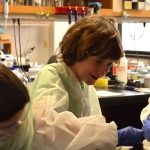


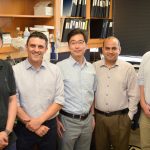
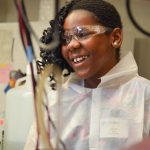



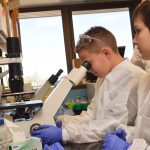










When Jason Hasty started running, he was looking to lose some weight and set an example for his students by pounding some pavement. He had no idea he’d be using his legs to pound cancer, too. But raising money for cancer research at OMRF is second nature to everyone in the Putnam City school district. […]
In just 365 days, the students, parents and teachers of the Putnam City School District gathered more than $110,000 for cancer research at OMRF. Since 1975, the school district has worked with OMRF to pay for cancer research, including funding the Putnam City Schools Distinguished Chair in Cancer Research, held by Linda Thompson, Ph.D. “What […]

For 33 years, the students, parents and teachers of the Putnam City School District have made cancer Public Enemy No. 1. If there’s a way to raise money, Putnam City has done it; from carnivals to bake sales to door-to-door fund drives. This year, the schools have added another weapon to the arsenal—a 5-kilometer run/walk. […]
A good cup of coffee might be just the wake-up call scientists need to stop multiple sclerosis. A new study coauthored by Oklahoma Medical Research Foundation scientist Linda Thompson, Ph.D., found that mice immunized to develop an MS-like condition were protected from the disease by drinking caffeine. The research appears in the early online edition […]
It took 14 years for Oklahoma City biotechnology company InterGenetics to research and develop its breast cancer risk assessment test, OncoVue. But less than a year after becoming commercially available, the test has already begun paying dividends to patients. A California oncologist reports that that the test, which has its origins in research conducted at […]
Science education doesn’t get much more “real world” than a day at the Oklahoma Medical Research Foundation. That was the experience of 33 elementary, middle and high school students from Putnam City Schools during OMRF’s annual Junior Scientist Day. Outfitted with goggles and lab coats, the science-minded students spent time Friday and Monday working with […]
How do complex networks of genes control obesity, cancer and heart disease? The unique rodents of the Oklahoma Medical Research Foundation may hold the answer. Their small size and short gestation periods make mice ideal models for studying human disease. Although garden-variety rodents don’t make the cut for research, technological advances have made it possible […]
The bake sales have passed. The carnival games have ended. But the $116,000 that Putnam City students raised in 2006-07 will make a difference for years to come in supporting cancer research the Oklahoma Medical Research Foundation. The school district Monday night presented OMRF with the money, which was collected through a series of student […]
The Oklahoma Medical Research Foundation will honor a pair of scientists and a board member at its annual honors and awards banquet Tuesday. For the first time in OMRF’s 61-year history, the event will be held in Tulsa, at historic Cain’s Ballroom. OMRF will award Linda Thompson, Ph.D., the Edward L. and Thelma Gaylord Prize […]
Putnam City Public Schools on Monday night presented the Oklahoma Medical Research Foundation with a check for more than $122,000 to support cancer research. The funds were raised entirely by district students during the 2005-06 school year. “Once again, the students of Putnam City have demonstrated a remarkable commitment to philanthropy and public health,” said […]
The National Institutes of Health has awarded the Oklahoma Medical Research Foundation $8.132 million to study the influenza vaccine. The five-year project will examine why the vaccine does not protect certain individuals with compromised immune systems.”Influenza research is one of the most competitive and difficult arenas in which to secure funding,” said J. Donald Capra, […]
On most days, district attorneys worry about things like search warrants, jury instructions and cross-examinations. But on Friday, the biggest concern for a group of ten Oklahoma prosecutors was the contents of a tiny test tube. The district attorneys came from Claremore, Bartlesville, Pawhuska, Sapulpa and across the state to attend a workshop in forensics […]
Oklahoma City, OK – Following the discovery of a new gene potentially associated with breast cancer, Oklahoma City researchers announced they are seeking candidates for an ongoing study to further analyze the genetics of the disease. This announcement follows the publication of a study in the prestigious British medical journal The Lancet on May 19, […]
Oklahoma City, OK – Young women concerned about their risk for breast cancer may soon have another test to aid them in early detection or prevention of the disease, thanks to the discovery of another gene that appears to be associated with breast cancer in women age 50 and younger who have a family history […]