Adam’s Journal
My most memorable Christmas gift this past year was Covid, whose symptoms set in just in time to ruin the holiday. Womp, womp.
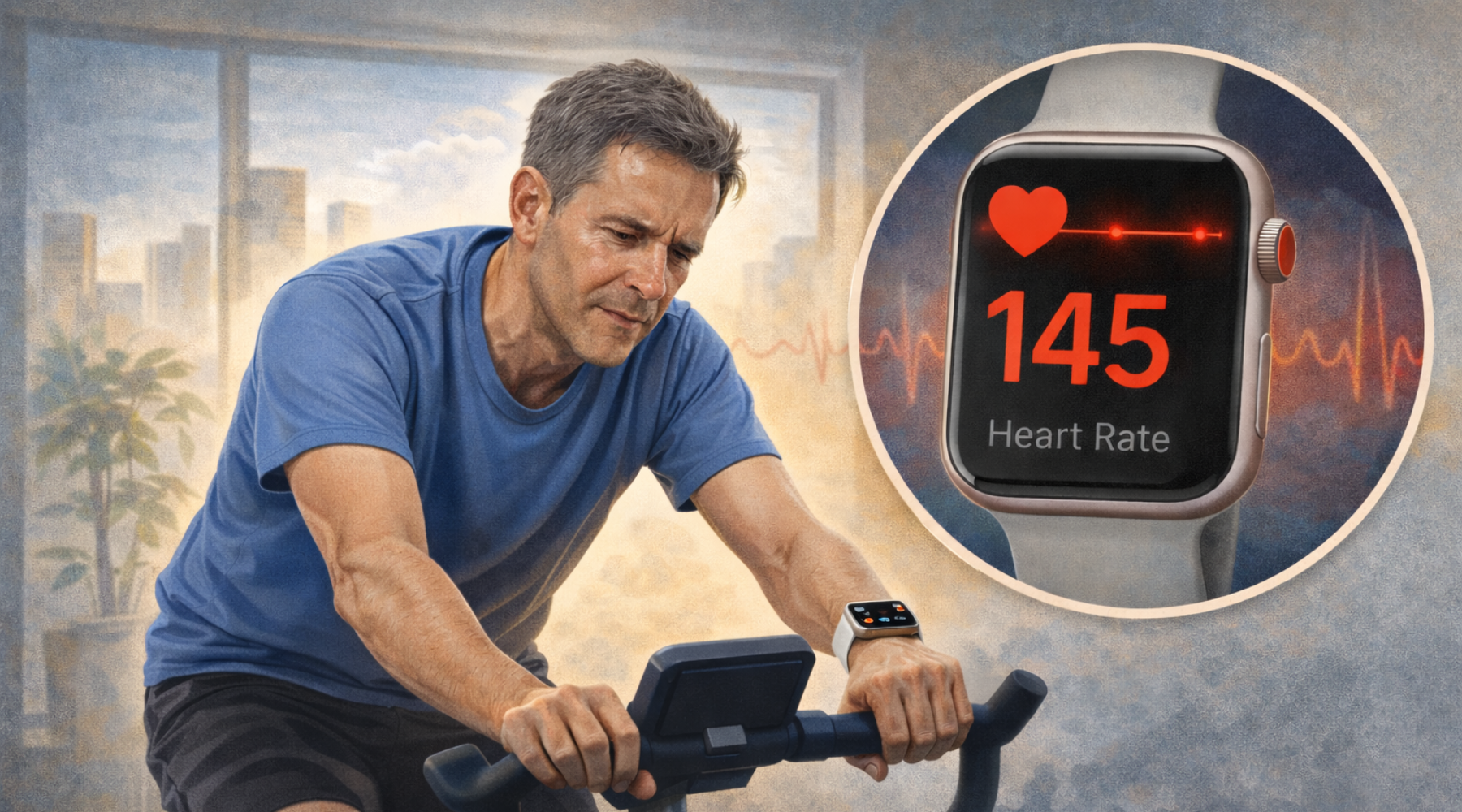
Fortunately, it was a fairly mild case. But even weeks after I’ve recovered, I continue to notice that my heart rate during exercise is a bit higher (10 beats per minute or so) than it typically would be during similar workouts. Should I be worried?
Dr. Scofield Prescribes
The short answer is no. Temporary elevation of heart rate at those levels, both during normal day-to-day activities and exercise, is quite common following Covid – or, for that matter, any respiratory infection.
The reasons for this are not fully understood, but especially when it comes to exercise, part of the effect is likely due to deconditioning, which is the fitness a person loses due to inactivity (like lying in bed while ill). But there are likely other physiological factors at work as well.
Researchers have found that Covid affects the heart in myriad ways. Numerous studies have shown that Covid infection ups the risk of heart problems, including heart attacks, strokes, damage to the muscle and arrhythmia. While it seems to be most acute in the weeks after infection, that increased risk level can stretch up to a period of three years.
The culprit behind much of this is believed to be the inflammation that the virus causes. This inflammation can injure both the heart muscle and the cells lining the blood vessels.
In addition, in some patients with long Covid, it appears the muscles are less able to pull oxygen from the blood than normal, dampening their ability to exercise at high levels. Also, their mitochondria – the power generators of cells – may not function effectively.
Finally, in long Covid, some patients appear to be developing a condition known as POTS (postural orthostatic tachycardia syndrome). In POTS, which can also be triggered by other infections, patients experience a range of symptoms that include a spike in heart rate with minimal physical activity, along with lightheadedness, fatigue and brain fog.
If you find your heart racing during rest or low-level activity, especially if significant time has passed since a Covid infection, you should consult your healthcare provider. But small increases in pulse, like you are experiencing, are no cause for alarm.
Over time, assuming you continue to adhere to your normal pre-Covid workout schedule, I would expect to see your heart rate during exercise return to the levels you saw prior to your latest infection.
–
Dr. Hal Scofield is a physician-scientist at the Oklahoma Medical Research Foundation, and he also serves as Associate Chief of Staff for Research at the Oklahoma City VA Medical Center. Adam Cohen is OMRF’s senior vice president and general counsel. Send your health questions to contact@omrf.org.