Adam’s Journal
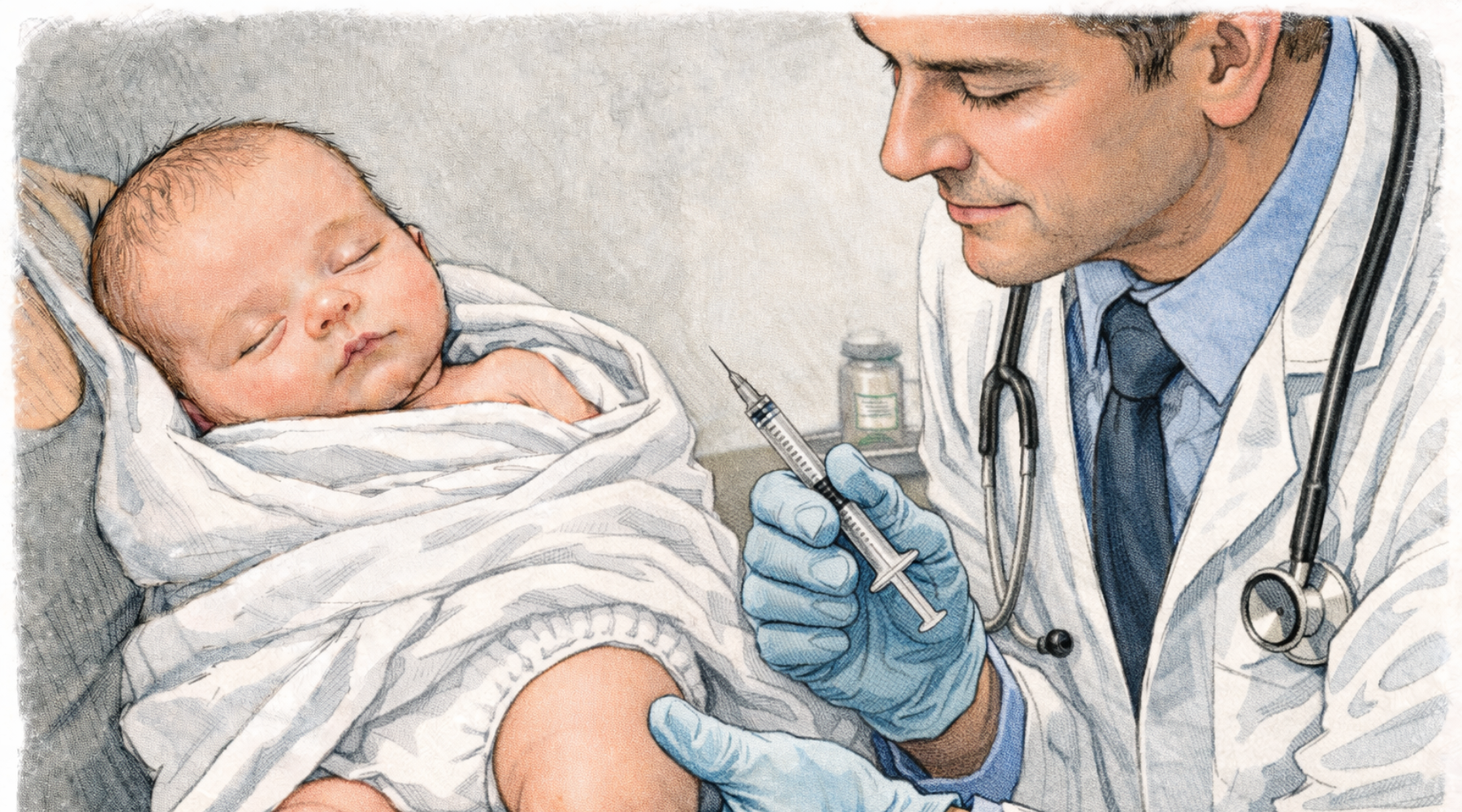
Earlier this month, an advisory panel to the Centers for Disease Control voted to stop recommending hepatitis B shots at birth for most newborns. My understanding is that hepatitis B is usually transmitted sexually or through intravenous drug use. So, why would babies need to be vaccinated against this virus?
Dr. Scofield Prescribes
Hepatitis B spreads when bodily fluids like blood and semen pass from an infected person into someone else’s body. The virus can be up to 100 times more infectious than HIV, and it most often passes through sex or shared needles, including equipment used for tattooing or piercing.
As you’ll notice, in the passage above, I said that these are the ways hepatitis B spreads “most often.” In other words, these are not the only ways it spreads.
An infected mother can pass the virus to her child during birth. And any exposure to blood (think of a nosebleed or a cut) can also spread hepatitis.
The virus is so contagious that it can spread through exposure to specks of dried blood left on all sorts of everyday items like towels, razors, nail clippers, combs and toothbrushes. In even tiny spots of dried blood, which can be produced by an almost infinite number of scenarios in schools and daycares, hepatitis B can remain infectious for a week.
Most pregnant women in the U.S. are screened for hepatitis B in the first trimester. And if they test positive, even under the new guidance, their children would be recommended for vaccination at birth.
However, screening is imperfect, and not every pregnant mother gets tested. The screening also typically takes place in the first trimester, leaving a window of two more trimesters where a pregnant mother could get infected.
For a decade, the U.S. only offered the hepatitis vaccine to high-risk groups, like IV drug users, people with many sexual partners, and infants whose mothers had the virus. But this policy failed to control the virus.
In the early 1990s, an estimated 16,000 children under the age of 10 were infected with hepatitis B annually. Roughly half of these children were infected during delivery or soon after, while the others picked up the virus through exposure to blood in everyday life.
Since we moved to universal vaccination, those numbers have dropped precipitously. Transmission at birth has sunk almost to zero, with no more than a dozen or so documented cases in the U.S. each year. Childhood infections have also fallen at similar rates.
While adults infected with hepatitis B may not develop chronic infection, infants infected at birth almost certainly will. And chronic hepatitis B leads to cirrhosis of the liver, liver cancer and premature death.
The hepatitis B vaccine has been found to be extremely safe. It’s the best way to protect children against a deadly virus that can last a lifetime. The sooner they’re vaccinated, the better.
–
Dr. Hal Scofield is a physician-scientist at the Oklahoma Medical Research Foundation, and he also serves as Associate Chief of Staff for Research at the Oklahoma City VA Medical Center. Adam Cohen is OMRF’s senior vice president and general counsel. Send your health questions to contact@omrf.org.