Adam’s Journal
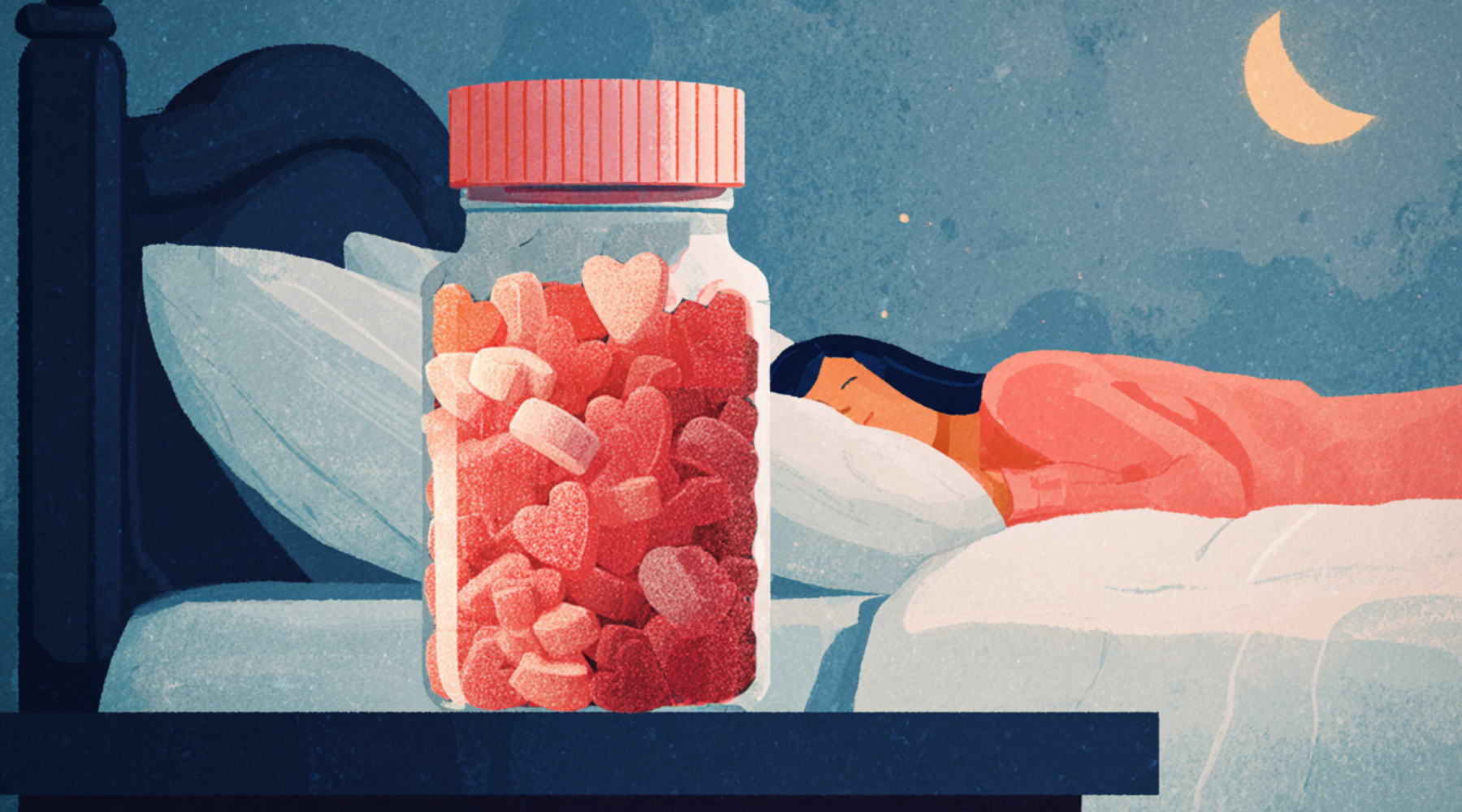
I’ve seen several recent news reports linking melatonin to heart failure. That sounds alarming. Do people using this sleep aid need to reconsider?
Dr. Scofield Prescribes
Melatonin is probably the most popular sleep aid in the US. A survey from the Sleep Foundation in 2022 found that more than a quarter of American adults reported using it. And among those who did, almost 40% said they took the supplement daily.
So, any health risk related to melatonin would be a big deal.
The study in question has yet to be published. It was presented at the American Heart Association’s annual scientific meeting in New Orleans in November.
Researchers reviewed health records of more than 130,000 adults with insomnia. They found that those who’d taken melatonin for a year or more were almost twice as likely as those who had no record of taking the supplement to be diagnosed with heart failure. Melatonin users were more than three times as likely to be hospitalized for heart failure and twice as likely to die from any cause.
The numbers are attention-grabbing. However, they come with a significant asterisk.
This was simply an observational study, so it doesn’t prove cause and effect. To do that, researchers would need to conduct a clinical study, assigning people with insomnia who were otherwise similar to two random groups: half who received melatonin, the other half a placebo. Then you could examine the impact that melatonin alone – as distinct from other hidden factors – played in relation to heart failure risk.
Without this quality of data, you simply have more questions than answers.
For example, it’s quite possible that many of those taking melatonin had underlying health conditions – like sleep apnea – that caused both insomnia and heart issues.
In addition, the study didn’t delve into melatonin dosage and insomnia severity. Both of these could impact cardiovascular risk.
In short, the study is too incomplete to come to any conclusions about whether melatonin increases the risk of heart failure.
Still, this research does remind us that our knowledge of supplements like melatonin is far from complete. While melatonin mimics a hormone that our bodies make naturally, that doesn’t mean it’s without risks.
–
Dr. Hal Scofield is a physician-scientist at the Oklahoma Medical Research Foundation, and he also serves as Associate Chief of Staff for Research at the Oklahoma City VA Medical Center. Adam Cohen is OMRF’s senior vice president and general counsel. Send your health questions to contact@omrf.org.