Adam’s Journal
I read that a company recently succeeded in bringing back the dire wolf, a species that went extinct more than 10,000 years ago. How’d they do it? And what does this mean for other long-gone species like the dodo and woolly mammoth?
Dr. Scofield Prescribes
This past spring, a genetics startup company called Colossal introduced the world to a trio of young wolves that are extremely close genetic cousins of dire wolves. (Their names are Romulus, Remus – the mythical founders of Rome were said to have been nurtured by a wolf – and Khaleesi, a nod to dire wolves’ fame from the TV show “Game of Thrones.”)
I call the pups genetic cousins of dire wolves because they aren’t genetically identical to the extinct breed.
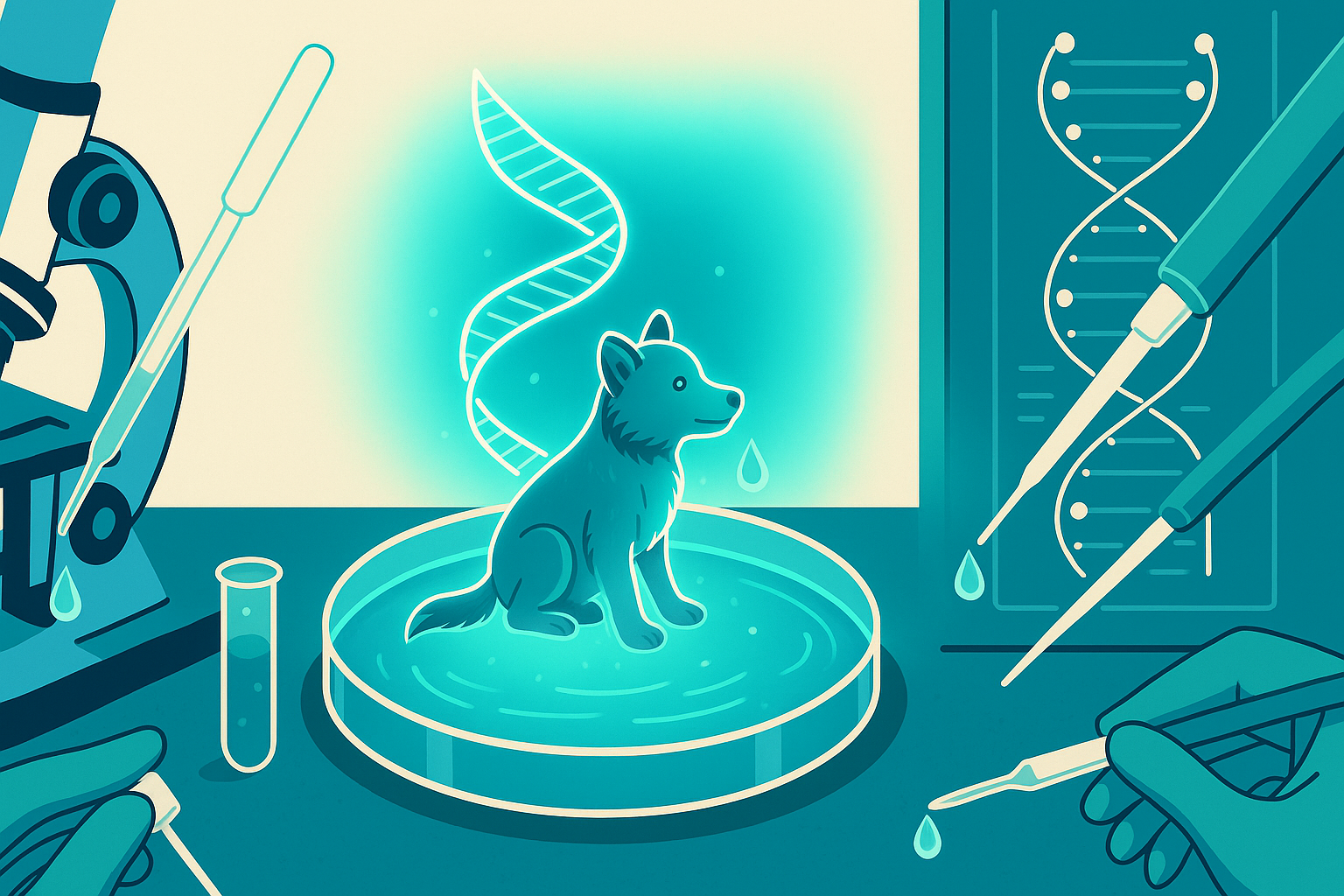
Scientists at Colossal started with the DNA of a gray wolf, dire wolves’ closest living relative. From ancient dire wolf DNA researchers extracted from a 13,000-year-old tooth in Ohio and a 72,000-year-old skull in Idaho, they identified 20 or so key regions where the two breeds’ genetic makeup differed.
Using the gene-editing technology CRISPR – which our Oklahoma Medical Research Foundation colleague Dr. Gaurav Varshney employs to study genetic disorders – company scientists altered the DNA they’d extracted from a gray wolf. Specifically, they reprogrammed those key regions to make them as similar as possible to those found in the dire wolf fossils.
The scientists then inserted the edited DNA into an empty dog egg, which they duplicated dozens of times and implanted into dogs that served as surrogate mothers. Most of the embryos didn’t survive, and one pup died soon after birth. But Romulus, Remus and Khaleesi are apparently thriving: In a report last month, Colossal said that at an age of just over six months, all three bushy, white-haired wolves are doing well, with the two males already larger than average adult gray wolves.
Despite this success, I wouldn’t expect to see facsimiles of dodos or woolly mammoths back among the living any time soon. The genetic feats required for so-called de-extinction are, as the company’s name suggests, colossal.
The primary reason dire wolves emerged as its first successful project was the relative ease of the endeavor compared to other long-vanished species. The genetics of dogs are among the best known of any nonhuman mammal.
The dodo and mammoth are both on Colossal’s to-do list, but the company has yet to issue a timeline. And whether they can pull off the genetic backflips required to rekindle these less-understood animals remains to be seen.
To give you a sense of the task at hand, Dr. George Church, a Harvard geneticist who co-founded Colossal, said that scientists would need to make 3 million changes in the DNA of elephants to produce a woolly mammoth. (He also said that humans killed off the woolly mammoth, so we’re morally obliged to bring it back.)
In the meantime, scientists will argue about whether any of this actually qualifies as species revival. Maybe Romulus, Remus and Khaleesi are dire wolves – and maybe they’re just something that looks a lot like the long-lost breed.
As romantic as the notion of de-extinction is, I’m kind of in the camp of Dr. Elinor Karlsson, an expert in dog genetics at the Broad Institute. She said, “Why are you calling this a dire wolf when it’s a gray wolf with 17 or 18 changes in its DNA?”
–
Dr. Hal Scofield is a physician-scientist at the Oklahoma Medical Research Foundation, and he also serves as Associate Chief of Staff for Research at the Oklahoma City VA Medical Center. Adam Cohen is OMRF’s senior vice president and general counsel. Send your health questions to contact@omrf.org.