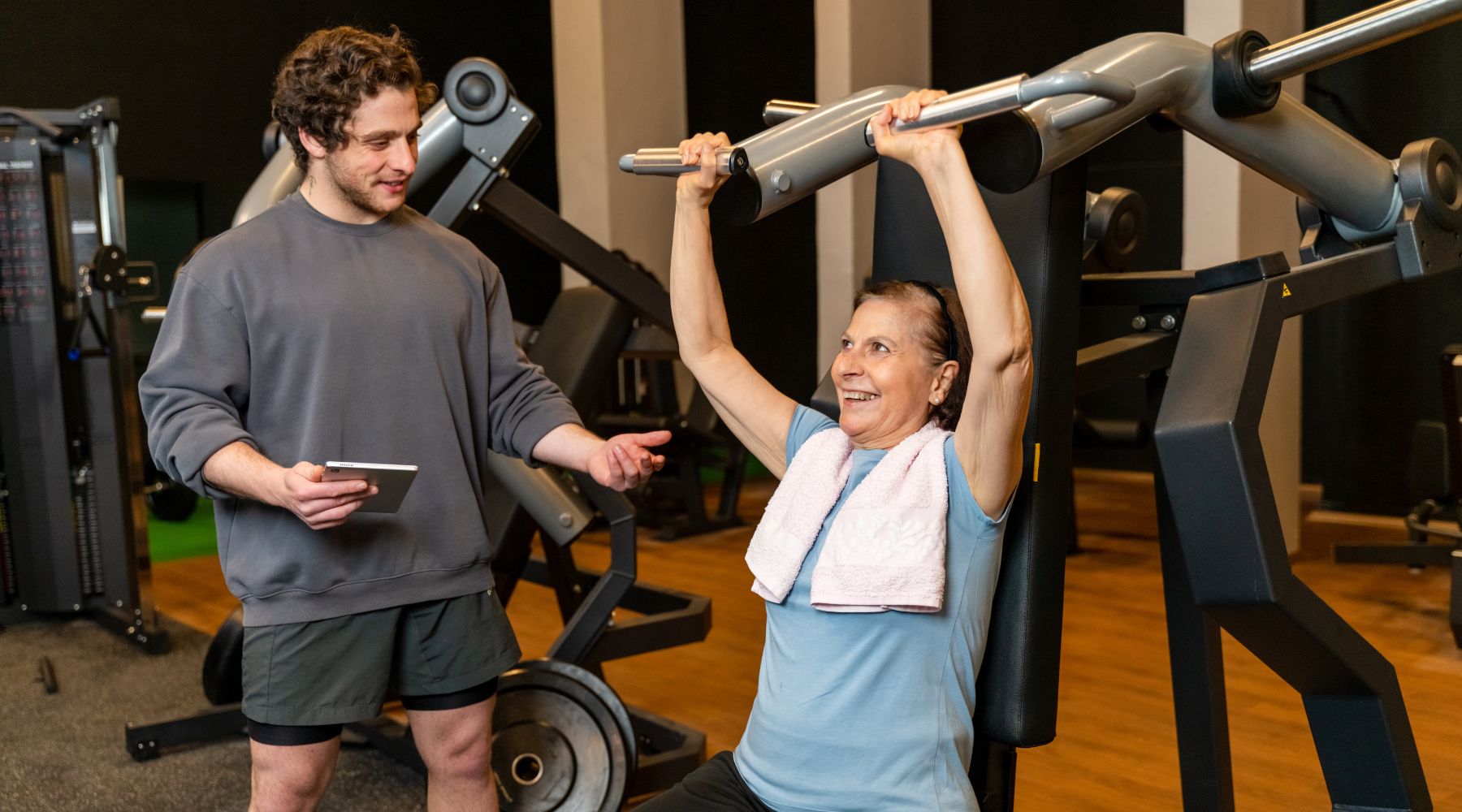
A year ago, Oklahoma Medical Research Foundation scientists launched an ambitious, five-year study aimed at understanding what makes some people over age 60 respond differently to exercise than others.
Now, thanks to a grant from the Presbyterian Health Foundation, a pilot project seeks to answer the same question in older people with multiple sclerosis. The funding will enable an important collaboration between OMRF researchers who study aging and clinician-scientists who work with MS patients in OMRF’s Multiple Sclerosis Center of Excellence.
In MS, the body’s immune system mistakenly attacks the myelin sheath, a protective layer covering nerve fibers. The damage disrupts nerve signals, leading to a range of problems that include muscle weakness, balance and vision impairment, cognitive difficulties, and fatigue. The disease affects more than 1 in every 500 Americans.
Not that long ago, physicians typically advised MS patients to avoid exercise, fearing the resulting body heat would trigger the disease and cause extreme fatigue. Only in the past 30 years has conventional wisdom switched, said Bobbette Miller, Ph.D., a neurologic physical therapist who will coordinate the new study.
“Most existing studies involve people with MS under age 60, and those studies show that exercise actually improves fatigue,” said Miller.
OMRF clinicians will identify 10 current MS patients age 60 and above. All patients who volunteer to participate will undergo a supervised 12-week exercise protocol that involves both cardiovascular and strength training.
“We have limited medical experience treating older MS patients,” said Gabriel Pardo, M.D., director of OMRF’s MS Center of Excellence. “What we learn through this study will give us insight into how to implement the right strategies to improve function and quality of life.”
Benjamin Miller, Ph.D., who leads OMRF’s Aging & Metabolism Research Program, applied for the grant for this study. He hopes the results will lay the foundation for a larger study of how exercise can benefit older MS patients.
One important aspect will examine monoparesis, or single-leg weakness, a common symptom of MS caused by neurologic damage. Participants will undergo muscle biopsies to determine whether working out improves this condition, said Certified Physician Assistant Jennifer Smith, who will assist with the study.
April Stuart, the Presbyterian Health Foundation’s director of grants and programs, said PHF funded project because it “connects strong science with real patient need.”
“By building on an existing clinical trial and the expertise of the MS Center of Excellence, this study creates an important opportunity to better understand how people age with multiple sclerosis and to develop more personalized guidance for maintaining strength and function,” Stuart said.