Adam’s Journal
As I approach my 58th birthday, I’m beginning to see the writing on the wall for running and me. Although the sport has served me well for four decades-plus, the injuries are piling up at a rate that’s becoming unsustainable.
If I want to stay active – and I do! – as I age, what other sports would you recommend?
Dr. Scofield Prescribes
Any activity is always better than none, so there’s no wrong choice here. Research has shown that physical activity is linked to longer life, less disability, and lower risk of most common diseases, including cancer, dementia and heart disease.
Federal guidelines recommend at least 150 minutes of moderate-intensity aerobic exercise each week, along with two days of muscle-strengthening work. But studies have shown that the benefits of exercise kick in far below these thresholds.
Walking 4,000 steps a day – well below the mythical 10,000-step standard – has been found to reduce the risk of dying from any cause. Similarly, older people who did 20 minutes of high-intensity interval training twice a week also saw longevity gains.
That said, researchers in Copenhagen conducted a 25-year research study that looked at which sports were linked to the most longevity gains. Although the study was observational, meaning it doesn’t definitively show cause and effect, the results are nonetheless instructive.
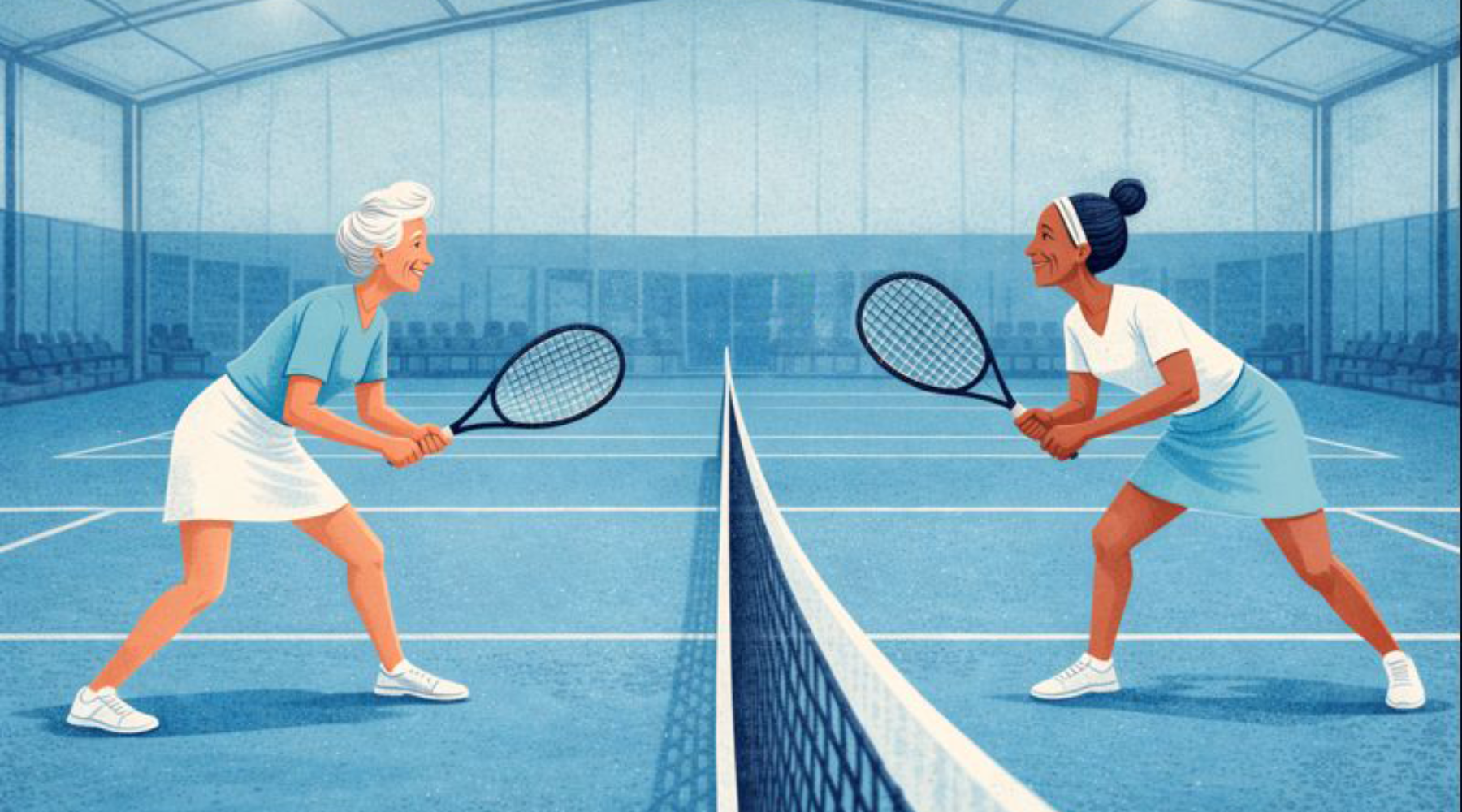
Tennis topped the list: Those who played it showed an average lifespan almost 10 years longer than their inactive counterparts. Badminton was next, showing a 6.2-year advantage over inactivity. (The study was done before pickleball took over the world, but I suspect you’d see similar numbers for it.) Lower down the list were soccer (+4.7 years), swimming (3.4 years), jogging (3.2 years) and “health club activities” (1.5 years), a catch-all that pulled in weightlifting and cardio workouts using equipment like ellipticals and stationary bikes.
While it’s possible that people who play racquet sports may be just healthier and wealthier, which has also been shown to improve lifespans, researchers tried to account for those factors. So, I’d surmise that racquet sports seem to add the most years to people’s lives – and studies in the U.S. and Great Britain have yielded similar results – for a variety of reasons.
These sports provide a full-body workout. They involve quick bursts of intense exercise as well as endurance. They require rapid changes in direction, which can improve balance, and the walking and running involved has been linked to improved bone density. They also require and improve grip strength, which has been tied to longer life and less disability.
Finally, racquet sports are cognitively demanding and social, two other factors that have been linked to longevity.
As for me, only one of my two sports is on there. Sort of. As a soccer referee, I get roughly the same workout as the players. But soccer shows better longevity gains than pure running, perhaps because of the high-intensity interval nature of the game, along with the balance and coordination involved.
My other sport, golf, didn’t make the list. I thought maybe this was because Danes didn’t golf. But, apparently, it’s the fourth most popular sport in Denmark. Which probably suggests that while physical activity is good, there are likely better ways to add years to your life than swinging at a little, white ball.
Tennis, anyone?
–
Dr. Hal Scofield is a physician-scientist at the Oklahoma Medical Research Foundation, and he also serves as Associate Chief of Staff for Research at the Oklahoma City VA Medical Center. Adam Cohen is OMRF’s senior vice president and general counsel. Send your health questions to contact@omrf.org.