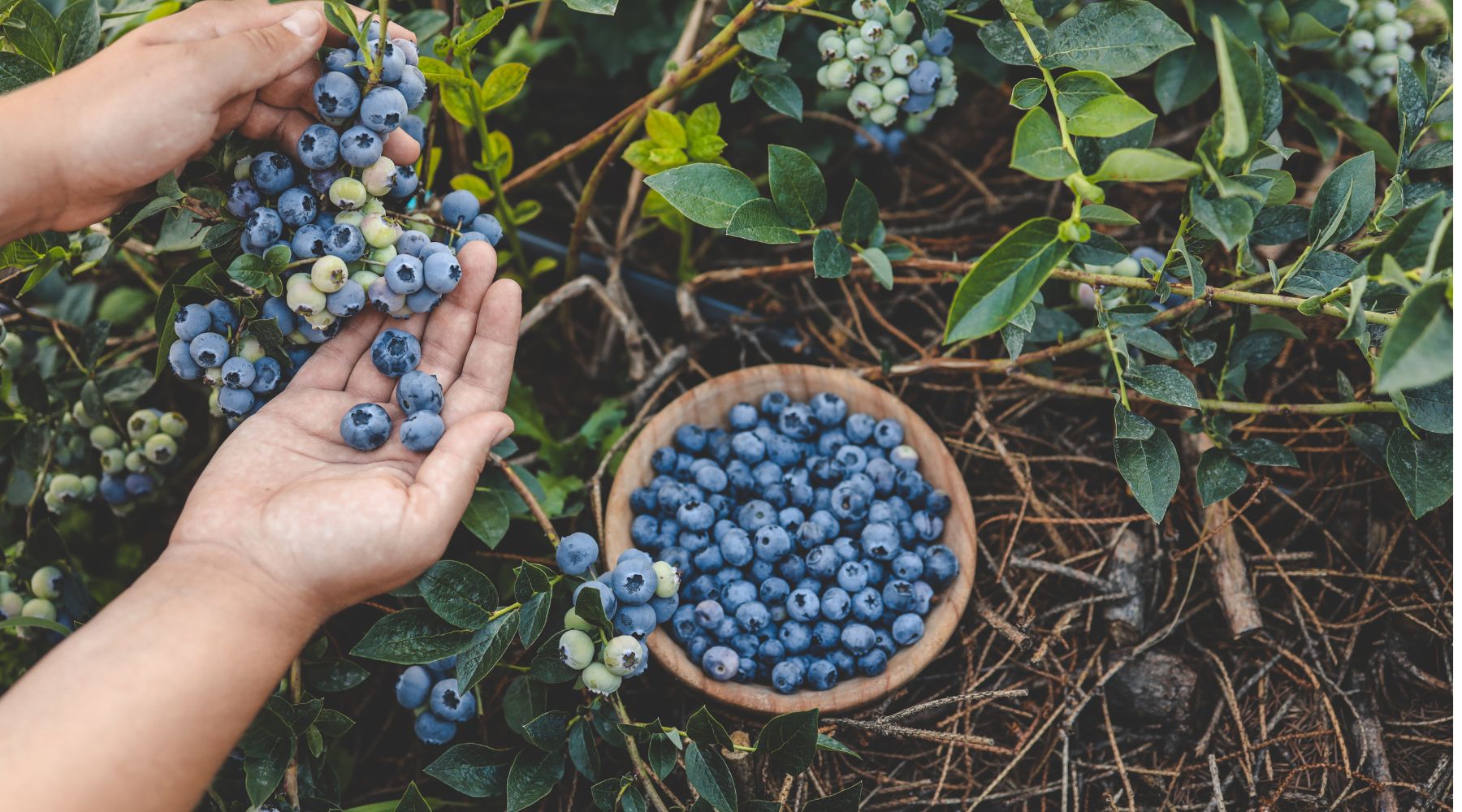
Can one of the most common items in the produce aisle reduce arthritis-related inflammation and pain? Two Oklahoma Medical Research Foundation physician-scientists hope to find out.

Hal Scofield, M.D., and Matlock Jeffries, M.D., will rely on their existing patients for a study into whether regular blueberry consumption benefits people with osteoarthritis and rheumatoid arthritis.
Blueberries have long been known to be high in antioxidants, which protect cells from damage caused by unstable molecules called free radicals. However, their role in reducing arthritis-related symptoms is less clear.
Osteoarthritis is a degenerative joint condition and the most common cause of joint replacements. It affects an estimated 32.5 million Americans. According to the World Health Organization, its prevalence more than doubled between 1990 and 2019, largely due to an increase in obesity.
Rheumatoid arthritis is a chronic autoimmune disease affecting about 1% of the world population. The two diseases are sometimes mistaken for each other due to shared symptoms like joint pain and stiffness.

This research, funded by the Wild Blueberry Association of North America, also involves scientists at the University of Nevada, Las Vegas. It seeks to build from a 2019 study of people with knee osteoarthritis who consumed a daily serving of about 1½ ounces of freeze-dried blueberry powder and showed a significant reduction in pain, stiffness and difficulty performing daily tasks.
The new study involves about 80 current patients of OMRF’s Rheumatology Research Center of Excellence: 40 with a previous diagnosis of rheumatoid arthritis and another 40 who’ve been diagnosed with osteoarthritis. Half of those in each group will consume a freeze-dried powder containing the equivalent of one cup of blueberries per day. The rest will receive a placebo. After 12 weeks, the two products will be switched for a second 12-week testing period.
“We’re particularly interested in whether blueberries help people who have osteoarthritis in one or both knees,” Scofield said.
Scofield will compare each group’s pain and inflammation levels. Jeffries’ lab will examine blood and stool samples to monitor changes in participants’ microbiome, the collection of billions of microorganisms that live in our digestive system.
“Some previous research has found that these wild berries have organic compounds called polyphenols that steer the microbiome into a less inflammatory place by increasing the good bacteria and decreasing the bad bacteria,” Jeffries said. “Through this study, we hope to better understand that.”
This isn’t Scofield’s first study exploring the health benefits of berries. In a 2021 study, he found that the daily consumption of about an ounce of freeze-dried strawberry powder mixed with water lessens the risk of heart disease, stroke and diabetes.
“We’ve long known that berries reduce inflammation and are good for your heart,” said Scofield, who also serves as assistant chief of staff for research at the Oklahoma City VA Medical Center. “This study promises to expand what we know about the connection between arthritis and our diet.”