If participants in America’s first Thanksgiving meal could time travel to this Thursday, they wouldn’t recognize what they’d find on our tables.
“That’s because what the Pilgrims and the Wampanoag tribal members ate was a lot healthier than what most of us will be piling on our plates,” said Oklahoma Medical Research Foundation physician-scientist Hal Scofield, M.D.
No journalists were on hand for that first harvest feast in 1621, so historians are left to speculate what was on the menu. But they know it didn’t include mashed potatoes and gravy, green bean casserole, or pumpkin pie.
Instead, historians theorize that first feast in Plymouth, Massachusetts, included waterfowl – perhaps stuffed with onions and herbs – plus fish, corn porridge, squash, eels, roots, berries, nuts and shellfish.
“In pre-industrial times, the American diet consisted largely of meat and fish, along with vegetables and, to a lesser degree, fruits and carbohydrates,” said Scofield, who is also working toward a master’s degree in medical history. “The first Thanksgiving meal would have reflected this.”
The contents of our plates began to change in the 19th century due to numerous factors, most notably industrialization, technological advances and geographic spread. And with those developments came two major changes in our consumption patterns: more calories and more processed and ultra-processed foods.
A 2022 study in the journal Frontiers of Nutrition found that from 1800 to 2019, processed and ultra-processed foods went from less than 5% of American diets to more than 60%. That same study found that over the past century, our daily caloric consumption climbed by 18%.
As a result, we’ve seen corresponding increases in obesity and cardiovascular and metabolic diseases.
“Over time, we’ve shifted away from fresh foods with a short shelf life and longer prep time to ultra-processed foods high in sodium, fat and refined carbohydrates,” said Scofield. “Our portion sizes have grown, too.”
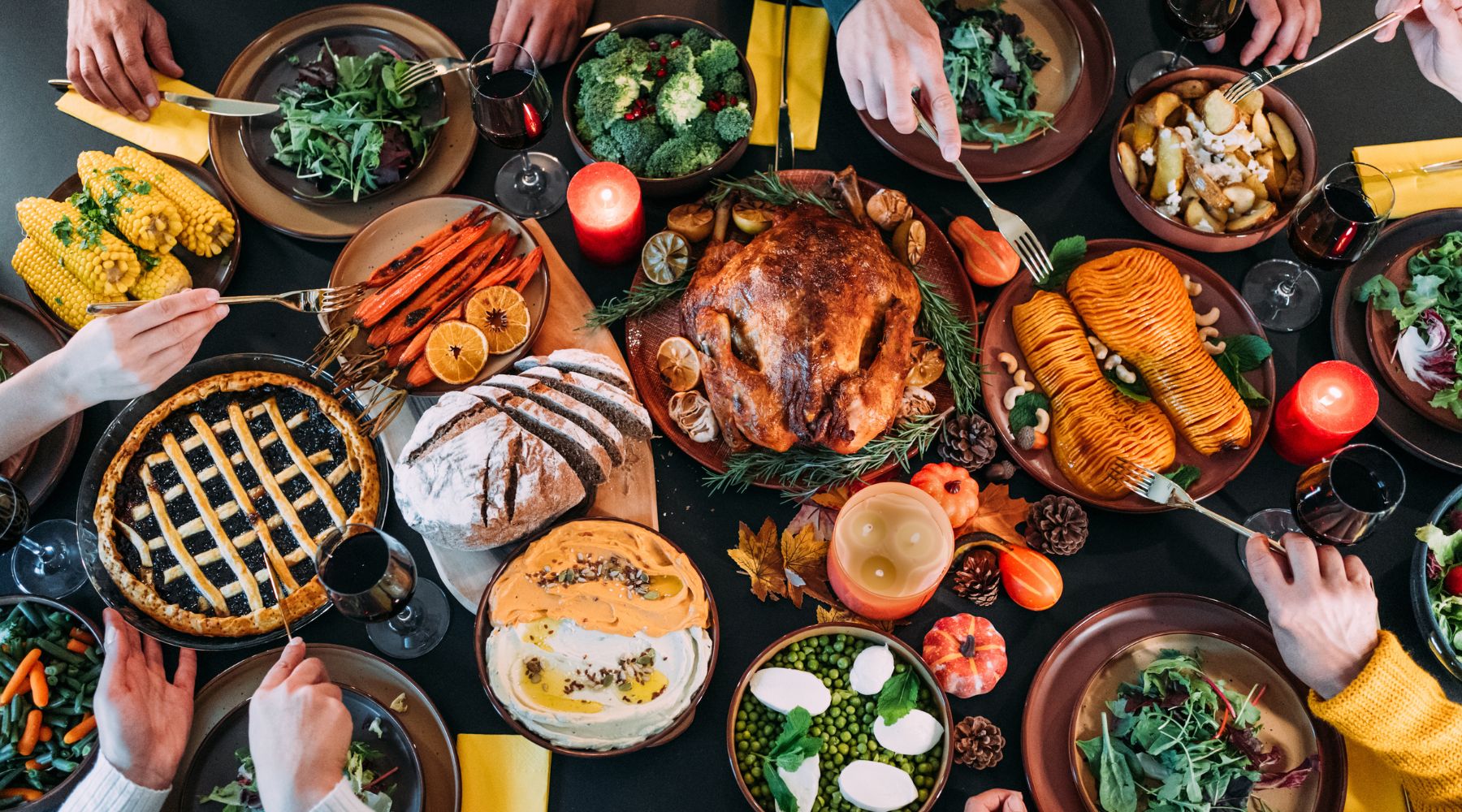
What we typically eat the fourth Thursday in November mirrors those broader trends. On Thanksgiving Day, the average American consumes 4,500 calories, more than twice the recommended daily intake for most adults, according to the Calorie Control Council.
Scofield says he doesn’t want to scare anyone into thinking a single heavy holiday meal increases health risks. Still, he offers a few suggestions to avoid overindulging.
Focus on foods made from scratch, Scofield suggests. Choose vegetables over starchy or fatty foods when possible and go light on sauces. Limit portion sizes, try to avoid seconds, and take it easy on desserts and alcohol.
“If you exercise restraint on Thursday, your body will thank you on Friday,” said Scofield.