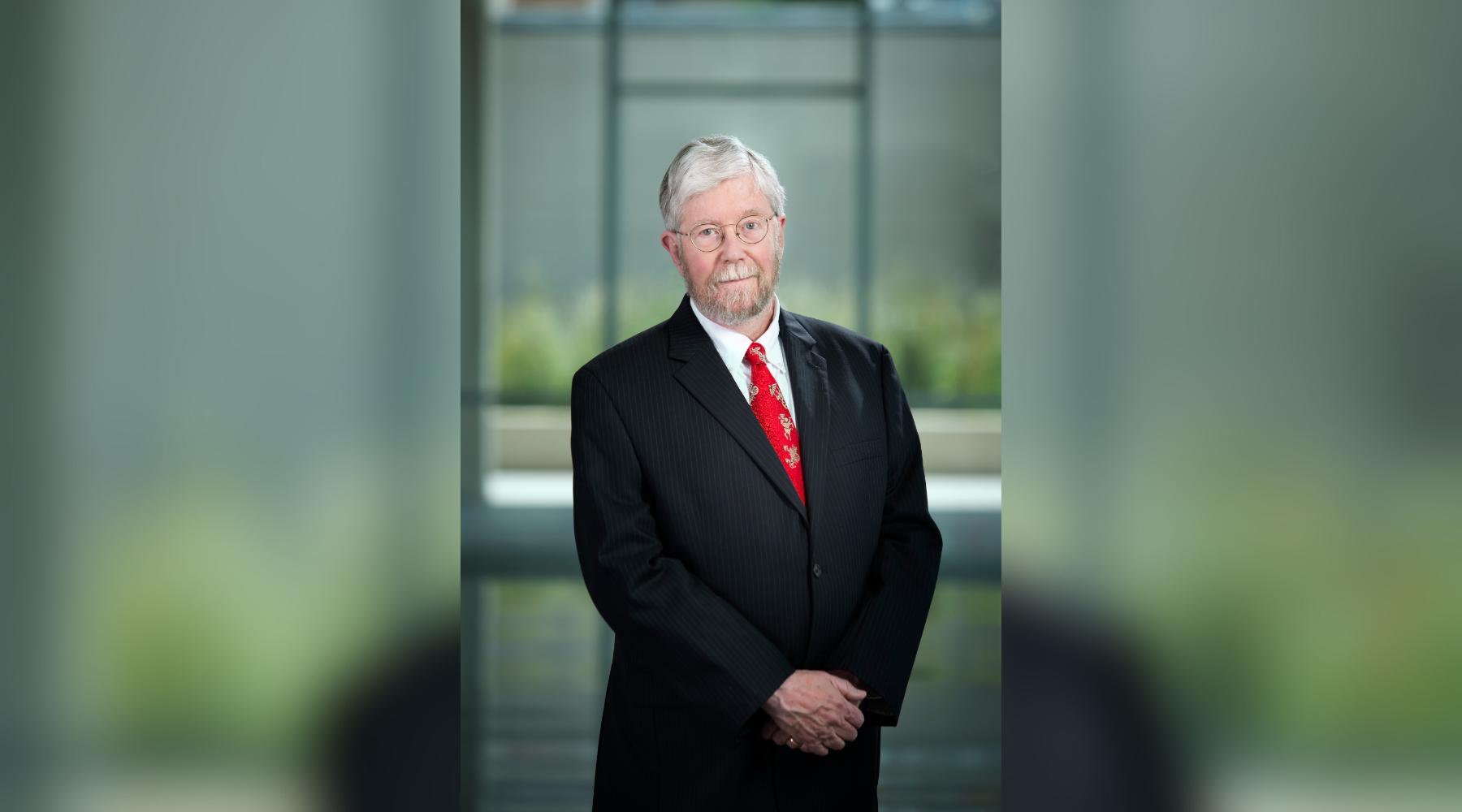
Paul Kincade, Ph.D., devoted his life to medical research, spending his entire career probing the mysteries of the human immune system. That commitment continued upon his death, with the former vice president of research at the Oklahoma Medical Research Foundation making a $500,000 estate gift to OMRF.
“I’m just so happy about this gift,” said Kincade’s widow, Melanie. “Paul loved science, and I know how attached he was to OMRF.”
Kincade died in October at the age of 80 from complications of Parkinson’s disease, which he’d lived with for more than a decade.
Born and raised in Mississippi, Kincade earned his Ph.D. at the University of Alabama at Birmingham. After nearly a decade on the faculty of the Sloan-Kettering Institute for Cancer Research in New York, in 1982 he joined OMRF, where he’d spend the balance of his scientific career.
Kincade studied the development of the immune system, with a focus on understanding how defects in this process lead to cancers, immune deficiency diseases and autoimmune disorders. He founded OMRF’s Immunobiology and Cancer Research Program, and his work garnered numerous honors, including a Research Career Development Award from the National Institutes of Health and an NIH M.E.R.I.T. Award.
He served as president of both the American Association of Immunologists and the Federation of American Societies for Experimental Biology, the nation’s largest association of biological scientists. He was also the founding scientific director of the Oklahoma Center for Adult Stem Cell Research, a program of the Tobacco Settlement Endowment Trust.
At a recent celebration of life held at OMRF, Kincade’s friends and colleagues remembered a scientist – and person – who was both brilliant and giving.
“Paul was a very smart and creative scientist,” said Rod McEver, M.D., Kincade’s colleague at OMRF for many years and his successor as vice president of research. “But most of all, he was kind and generous.”
OMRF President Andrew Weyrich, Ph.D., said Kincade’s estate gift represents one more way his legacy will live on at the organization he loved.
“Dr. Kincade’s research helped us understand how the human immune system functions,” said Weyrich. “Now, his donation will help other scientists continue that important work.”