


Center for Genomic Regulation
Proper regulation of genomic structure and function is central to life and health. Dysfunction of cell division, chromatin structure and gene expression are common features and causes of human disease. As such, understanding genomic regulation is central to elucidating disease processes and developing new interventions.
Technological and analytical advances are rapidly changing the research landscape in genomics, epigenomics and transcriptomics. While a core of genomics-related research has developed at the Oklahoma Medical Research Foundation, additional investigators and research resources are needed to make genomic regulation research at OMRF, and in Oklahoma, a competitive, self-sustaining community.
The Center for Genomic Regulation is a nexus for the efforts that are currently scattered across institutions and disease-focused research. The goal of the CGR is to build a focused research community that performs collaborative research and effective training. We define genomic regulation as studies examining chromatin, DNA modifications, genome structure and transcription.
The Center will provide mentorship and research resources for Early-Stage Investigator Assistant Professor-level faculty and support the development of their independent careers. The CGR will be a hub for advanced research across organ and disease domains, integrating genomic analysis technologies and data science capabilities
These goals will be accomplished through the following Specific Aims:
- Aim 1: Support promising Research Project Leaders to scientific independence.
- Aim 2: Promote novel genomic regulation research through mentoring the Research Project Leaders.
- Aim 3: Integrate existing and new resources through the Epigenomics and Artificial Intelligence Cores to support genomic regulation research.
- Aim 4: Promote an environment that supports the success and development of an independent and sustainable center in genomic regulation.
Leadership
OMRF
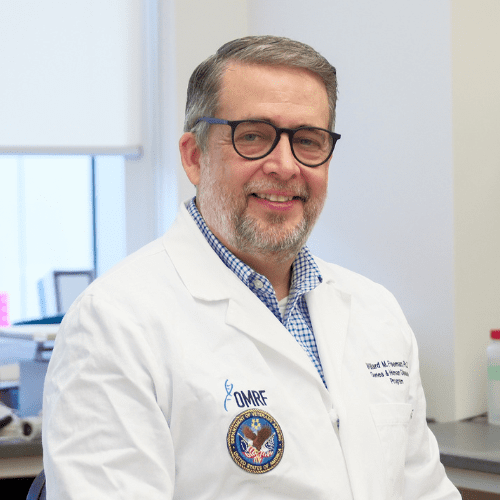
Willard M. Freeman, Ph.D.
Professor, Oklahoma Medical Research Foundation
Genes & Human Disease Research Program
Chair, OKCVAMC SRS Committee, Oklahoma City VA Medical Center
Adjunct Professor of Biochemistry and Physiology, and Cell Biology,
University of Oklahoma Health Sciences Center
Research Career Scientist, Oklahoma City Veterans Affairs Medical Center

Gary Gorbsky, Ph.D.
Professor and Program Chair, Oklahoma Medical Research Foundation
Cell Cycle & Cancer Biology Research Program
Adjunct Professor, Department of Cell Biology,
University of Oklahoma Health Sciences Center
Internal Advisory Committee
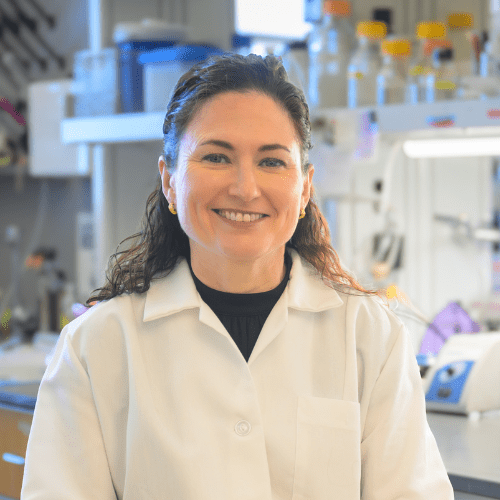
Courtney Griffin, Ph.D.
Professor, Oklahoma Medical Research Foundation
Vice President of Research and Professor
Cardiovascular Biology Research Program
Scott Zarrow Chair in Biomedical Research
Adjunct Professor of Cell Biology, University of Oklahoma Health Sciences Center
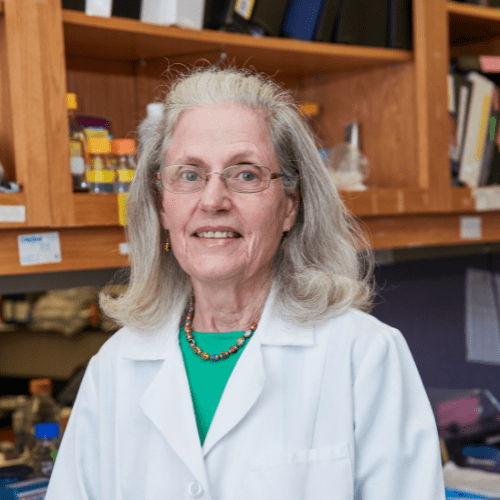
Linda Thompson, Ph.D.
Professor, Oklahoma Medical Research Foundation
Arthritis & Clinical Immunology Research Program
Putnam City Schools Distinguished Chair in Cancer Research
Adjunct Professor, Department of Microbiology & Immunology, University of Oklahoma Health Sciences Center
Director, Flow Cytometry Core
External Advisory Committee
Duane Compton, Ph.D.
Geisel School of Medicine at Dartmouth
Professor of Biochemistry and Cell Biology
Dean of the Medical School
Biochemistry and Cell Biology
Robb Krumlauf, Ph.D.
Investigator and Scientific Director Emeritus
Stowers Institute for Medical Research Professor
The Graduate School of the Stowers Institute Professor
Department of Cell Biology and Physiology, University of Kansas School of Medicine Professor
Neurosciences Graduate Program, University of Kansas Professor
Department of Oral Biology, University of Missouri-Kansas City Dental School
Karen Miga, Ph.D.
Assistant Professor, Biomolecular Engineering Department, UCSC
Associate Director, UCSC Genomics Institute
Director, UCSC Sequencing Technology Center
University of California, Santa Cruz
Harinder Singh, Ph.D.
University of Pittsburgh
Professor and Director
Center for Systems Immunology
Department of Immunology
Current Projects
Elucidating pBAF-complex functions by chemical genetics and epigenome editing
Jacob Kirkland, Ph.D., RPL1
Our DNA is packed inside cells in a highly organized way that helps control which genes are turned on or off—an essential part of how cells grow, change, and stay healthy. This project studies a group of protein machines, called chromatin regulators, that manage this DNA organization, particularly a group known as pBAF, which may play a unique role in development and disease. Since problems in chromatin regulation are linked to cancer, neurological disorders, and developmental conditions, this research could pave the way for future treatments by showing how these regulators work and what happens when they malfunction.
Mechanisms of recruitment and roles of the BET family chromatin readers in transcription initiation
Rafal Donczew, Ph.D., RPL2
Precise control of gene transcription is necessary for normal cell development. Dysregulated transcription contribute to the emergence and progression of cancer and other human diseases. Our proposed work will define the principles of regulation of transcription by proteins from the BET family and their partner factors.
Mapping heterochromatin organization with high-throughput imaging
Elizabeth Finn, Ph.D., RPL3
Most of your genome is repetitive or viral in origin and must be kept silent to ensure genome stability, ensure healthy offspring, and prevent cancer. Silent genome regions spatially cluster within the nucleus, and this clustering enables their silencing, but how silent regions fit together within clusters varies between cells and even between chromosomes within a cell. We will use quantitative imaging to clarify the sources of this variability and its regulation, in the hopes of developing new paradigms for prevention and treatment of developmental disorders and cancer.
Unraveling Metabolic Resilience: A Genomic Exploration Using Astyanax mexicanus Cavefish
Jaya Krishnan, Ph.D., RPL4
Metabolic syndrome poses a significant health burden globally, necessitating innovative approaches for therapeutic discovery. This project aims to unravel the genetic basis of metabolic resilience using the unique Astyanax mexicanus cavefish system, a powerful model for studying evolutionary adaptations to metabolic challenges. The Astyanax system, featuring both river and cave-dwelling morphotypes, provides a unique opportunity to investigate how organisms adapt to metabolic syndrome-like conditions. By investigating metabolic resilience and hyperglycemia in early developmental stages, the project aims to contribute to a deeper understanding of metabolic disorders and potentially identify novel therapeutic targets.
Cores
Artificial Intelligence & Machine Learning Core
Research and Mission
The Artificial Intelligence and Machine Learning Core (AIC) at OMRF expands upon the Bioinformatics and Pathways Core to provide advanced AI/ML expertise and infrastructure. Our mission is to help COBRE Research Project Leaders (RPLs), Pilot Project Awardees, and the broader genomic regulation research community in Oklahoma adopt cutting-edge computational methods to advance their research and model diseases.
AI/ML – particularly transformer technology used in Large Language models such as ChatGPT -is reshaping biomedical research. To remain competitive in publishing and securing funding, investigators need access to specialized expertise and GPU-based infrastructure. The AIC provides this foundation while also developing novel analysis tools tailored to genomic regulation research.
Our current efforts include: 1) Building a genomic region embedding system, leveraging deep learning to capture spatial and sequence-based features of DNA beyond traditional statistical methods, 2) Developing Conditional Variational Autoencoders (CVAEs) to de-noise, normalize, and synthesize high-throughput experiments such as RNAseq into a compressed latent space that represents the most important features associated with specific conditions, and 3) Artificial Neural Nets (ANNs) to identify key features of importance on 2D signals, such as electroretinograms (ERGs) and nanopore sequencing data.
Services
We support investigators with a broad range of AI/ML applications, including:
- High-throughput data analysis: RNA-seq, methylation, ChIP/ATAC-seq, and multi-omics integration.
- Image & cytology analysis: Classifier development, segmentation, denoising, and quality control.
- Transcriptional network analysis: Differential expression, pathway enrichment, and cross-study meta-analysis.
- Large Language Models (LLMs): Applying transformers for text mining, metadata annotation, and workflow automation.
- Genomic region embedding: Deep-learning representations of genomic intervals to infer regulatory significance.
- GPU-enabled compute consulting: Access to and support for high-performance computing tailored to biomedical AI/ML workflows.
Personnel
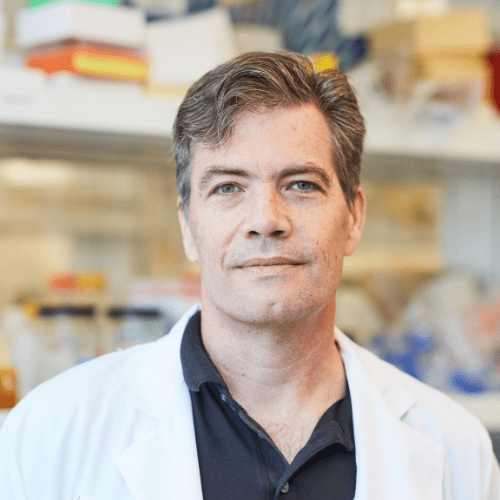
Jonathan Wren, Ph.D.
Read Bio
With over 20 years in bioinformatics and 18 years at OMRF, Dr. Wren leads the AIC. He has authored 210+ peer-reviewed papers (H-index=61), served as Associate Editor for Bioinformatics for 20 years, and maintains a strong collaborative network. His expertise spans text mining, sequence analysis, machine learning, and data integration. He brings leadership experience as a PI and a background in business operations.

Corey Giles, Ph.D.
Read Bio
Dr. Giles specializes in AI/ML applications for genomics. He developed methods for GEO data meta-analysis, automated metadata annotation systems, and helped establish the first GPU cluster at OMRF. He has hands-on experience with large language models (e.g., LLaMA) for structuring experimental meta-data and convolutional neural networks (CNNs) for imaging.
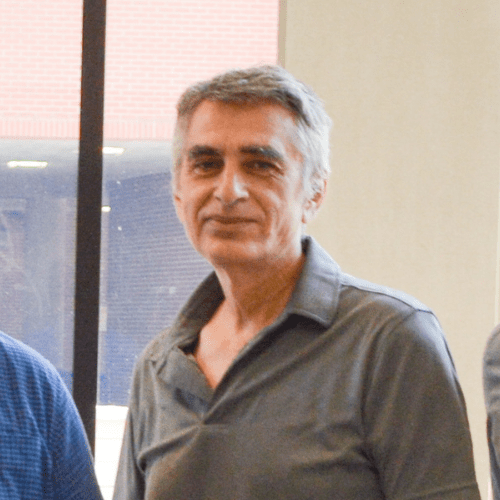
Constantin Georgescu, Ph.D.
Read Bio
Dr. Georgescu earned his PhD in Statistics from the University of Illinois and trained as a postdoc in bioinformatics at Caltech. He has extensive expertise in sequencing data pipelines, particularly next-generation sequencing (NGS) and region-based analyses. He joined OMRF in 2014 and contributes deep statistical and computational expertise to genomic data interpretation.

Hunter Porter, Ph.D.
Read Bio
Dr. Porter’s research focuses on applying machine learning to model biological changes and evaluate potential treatments. He has developed expertise in epigenetic clocks using DNA methylation data, as well as in the analysis of genetic, epigenetic, proteomic, lipidomic, and metagenomic datasets. At OMRF, he collaborates widely to integrate big data with investigator-driven studies, with a particular interest in vision, neuroscience, and aging. His work bridges computational model development with translational applications, aiming to modernize experimental and clinical assays using deep learning.
Epigenomics core
The growth of genomic regulation research at OMRF over the past ~10 years has been supported by the OMRF Clinical Genomics Center. This initially COBRE-supported core brought next generation sequencing capabilities to OMRF to support studies on the genetics of immunity. These sequencing capabilities have also been useful to genomic regulation research. However, key gaps in the portfolio of available core services have been chromatin accessibility and conformation analyses as well as the current generation of DNA-binding protein analyses and long read sequencing. The Epigenomics Core will be an upgrade of current facilities and employ personnel with extensive scientific experience in these areas to provide a range of sequencing technologies and methods. The significant experience of the PI and staff of operating resources and of transitioning a COBRE funded core to full self-sustainability will contribute to the success of the Core. The first impact of the Epigenomics Core will be to provide sequencing and associated services for user generated libraries of any type (e.g., SLAMSeq) and continue providing relevant services such as RNA-Seq. The Epigenomics Core will introduce new services specifically designed for the RPLs’ research and for genomic regulation research. Chromatin accessibility (ATAC-seq), genomic localization of DNA binding proteins (ChIP-seq, CUT&RUN, CUT&TAG), chromatin conformation (Pore-C) and long read nanopore sequencing of RNA (Iso-seq). With the customization often required of these protocols to meet the needs of the specific projects, the Epigenomics Core will work with investigators to develop workflows and ‘handoffs’ in the processes between the investigator and the Core. The Epigenomics Core will work closely with the Artificial Intelligence Core to assist researchers in assessing the output of these new data types and turning them into biological insights. The Epigenomics Core will give genomic regulation investigators in Oklahoma the capability to examine a wide range of endpoints critical to their studies. The development and continued growth of genomic regulation research at OMRF will be achieved through the Epigenomics Core offering advanced research tools and training to foster independence and to enhance the innovation and creativity of individual research programs. It will also serve to attract and retain talented investigators in service of our goal of building a vibrant and self-sustaining genomics regulation research community in Oklahoma.
Genomic regulation research is the interdisciplinary investigation of the organization, storage, and retrieval of genomic information to regulate cellular function. This research requires genome-wide data on chromatin conformation, DNA accessibility, genomic localization of DNA-binding proteins, and DNA modifications, along with the expression of encoded genes. Advanced sequencing analyses are a powerful set of tools for these studies, but the instrumentation, experience, and skills to fully exploit these tools are beyond the capability of a single laboratory. To provide our Research Project Leaders (RPLs), Pilot Award Leaders, and other genomic regulation researchers at OMRF and partner institutions state-of-the-art capabilities, the Epigenomics Core will provide instrumentation, services, and training for rigorous analyses relevant to their projects.
The purpose of the Epigenomics Core is to provide a range of technical services for data generation as well as expert advice in study design, experimental approaches, data analysis and interpretation, and grant proposal preparation. Importantly, the Epigenomics Core has a proven track record of integrating new technologies and methods as they become available – a continuing reality of the rapidly evolving genomic space – to meet needs of the RPLs and Pilot Project Leaders and remain at the forefront of the field.
- Aim 1: Leverage state-of-the-art high throughput sample preparation and sequencing platforms to address key questions in genomic regulation research.
- Aim 2: Increase the service offerings of the Epigenomics Core with new genomic regulation Technologies.
Contact
Center for Genomic Research
Oklahoma Medical Research Foundation
825 NE 13th Street
Oklahoma City, OK 73104-5005
Grant Number: P20GM156711
Funded by an Institutional Development Award (IDeA) from the National Institute of General Medical Sciences of the National Institutes of Health