



Available technologies
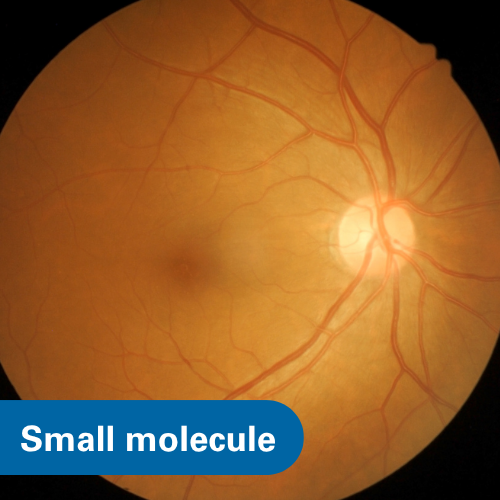
ETS Factors as Therapeutic Targets in Neovascular Eye Disease
Current challenges
Globally, diabetic retinopathy (DR) affects ~30% of people with diabetes, and retinopathy of prematurity (RoP) affects ~32% of preterm infants. DR and RoP are the leading causes of blindness in adults and children respectively. Regression of healthy retinal blood vessels followed by abnormal vessel overgrowth can lead to blindness. Current treatments involving eye injections and laser ablation can be ineffective and cause off-target effects.
Innovation
We have discovered a small molecule inhibitor of a specific transcription factor that selectively regresses the abnormal blood vessels in the eye without the side effects and while supporting healthy vessels.

Blocking Retinal Capillary Regression to Prevent Retinopathy
Current challenges
Retinopathy is a leading cause of vision loss in adults and children. Current treatments, including repeated eye injections and laser ablation, target established abnormal vessels but do not prevent their formation.
Innovation
Scientists at OMRF have modulated transcription-factor pathways that can prevent early capillary regression – a precursor to abnormal vessel growth, allowing intervention in newly diagnosed patients before irreversible retinal damage and vision loss occur.

Monoclonal Antibodies for Diagnosis and Treatment of Streptococcus Pneumoniae Infections
Current challenges
Immuno-compromised groups, including older adults and young children, experience the highest morbidity and mortality from pneumococcal disease. However, current pneumococcal vaccines are less effective in these populations.
Innovation
We have generated a panel of human antibodies that are optimal for diagnosis and treatment of people infected with S. pneumoniae.
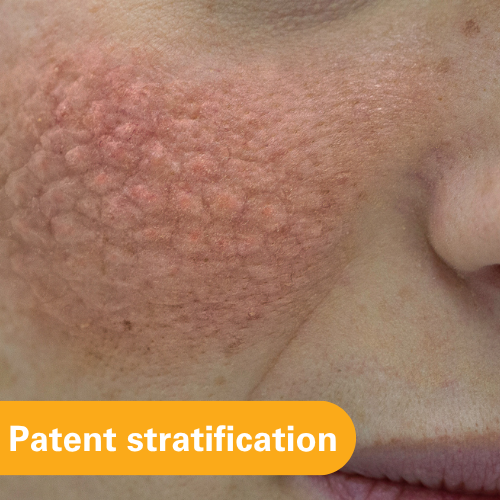
Biomarkers to Assess Heterogeneity of Treatment Response in Lupus Patients
Current challenges
For the 1.5 million Americans suffering from systemic lupus erythematosus (SLE), an autoimmune condition with heterogenous presentation, the standard of care is dictated by disease severity. Patient response to treatment is unpredictable with a third of the patients being non-responsive to standard of care.
Innovation
Our scientist has developed an algorithm that utilizes blood biomarker expression to identify patients who are likely to respond to a specific treatment.

Biomarker Panel for Diagnosis of Ro Seronegative Sjögren’s Disease
Current challenges
Sjögren’s disease is a debilitating autoimmune condition that affects the entire body, yet ~40% of the people with symptoms of dryness test negative on objective tests forcing them to undergo an invasive lip biopsy for diagnosis.
Innovation
Scientists at OMRF have developed an algorithm that utilizes a panel of blood biomarkers to identify patients missed by standard blood tests. This technology spares patients from invasive biopsies while matching them with targeted treatments.

DNA Methylation Predicts Progression of Knee Osteoarthritis
Current challenges
Although osteoarthritis (OA) affects 32.5 million of U.S. adults, there are no FDA-approved disease-modifying therapies available. Slow, unpredictable disease progression and the lack of accurate biomarkers to predict knee OA remain key obstacles to clinical trials and therapy development.
Innovation
First-in-class blood biomarkers discovered at OMRF predict worsening disease with high sensitivity and specificity, improving clinical management and enabling patient selection for successful trials.

Peripheral Blood Epigenetic Markers for Predicting Osteoarthritis Incidence
Current challenges
The healthcare burden for OA in the U.S. is $136.8 billion annually. Yet, there is no test available to predict OA incidence which could support patient management and improve clinical trial design.
Innovation
Our blood biomarker-based algorithm predicts incident OA up to 96 months in advance with over 70% accuracy, supporting earlier diagnosis and intervention.

PFKFB2 Inhibitor as a Cancer Treatment
Current challenges
Solid tumors account for nearly 90% of the over 2 million cancer cases diagnosed in the US each year. PFKFB proteins are central to the process required for the rapid growth and survival of cancer cells. However, no PFKFB inhibitor has achieved FDA approval due to limited efficacy and safety concerns.
Innovation
Our work shows that a low-dose PFKFB2 inhibitor that blocks the energy supply required for tumors to grow could overcome the efficacy and safety limitations of previous candidates.

Treatment for a Rare Genetic Skeletal Dysplasia
Current challenges
Mutation in the MBTPS1 gene leads to an ultra-rare skeletal disorder called Spondyloepiphyseal dysplasia, Kondo-Fu type (SEDKF). With only 14 known patients, there is no specific treatment for SEDKF.
Innovation
A team of OMRF researchers have demonstrated that a chemical chaperone, sodium phenlybutyrate (PBA), can correct the collagen trafficking defect caused by the mutated MBTPS1.

Prognostic Cytokine Biomarker Panel for Sarcoidosis
Current challenges
Sarcoidosis is a multisystem disorder of unknown etiology that affects 150,000 – 200,000 individuals in the United States and 1.2 million worldwide. Involving symptoms that overlap other conditions, sarcoidosis is difficult to diagnose.
Innovation
Sarcoidosis is diagnosed by exclusion, and our technology offers a single blood biomarker-based test to better identify and appropriately treat patients.

Allele-Specific and Template-Free Correction of Pathogenic Variants in ATAD3A
Current challenges
A spontaneous change in the ATAD3A gene causes an ultra-rare neurodevelopmental disorder called Harel-Yoon syndrome. To date, there is no treatment available for this disorder.
Innovation
Our scientist has utilized cutting-edge gene therapy to demonstrate that the pathogenic change in the ATAD3A gene can be corrected to restore normal function of the protein it expresses.

Prevention of Myxomatous Valve Disease by Inhibiting PDGF-β Signaling
Current challenges
Myxomatous valve disease, affecting 1-4% of people worldwide, is a condition in which heart valves – most commonly the mitral valves, become ‘floppy’. The only treatment available currently is valve repair or replacement.
Innovation
We have identified that targeting PDGF-β signaling with a small molecule inhibitor can improve heart valve function and can stall progression of disease.

SARM1 Inhibition Ameliorates Metabolic Cardiomyopathy
Current challenges
1 in 8 Americans has diabetes- mostly type II, which is the most common acquired cause of metabolic cardiomyopathy and up to 30% of diabetic patients develop cardiomyopathy. However, targeted therapy remains elusive due to the knowledge gap in the causative molecular mechanisms.
Innovation
Nicotinamide adenine dinucleotide (NAD+) depletion is a hallmark of hearts affected by diabetes and we discovered that inhibiting the enzyme that breaks down this NAD+ could be a novel approach to treat diabetic cardiomyopathy.

Development of a Colorectal Cancer and Colitis Mouse Model using Type O-glycans
Current challenges
Current mouse models for colon cancer are typically on an immunodeficient background and/or require an additional stimulus to induce cancer and do not allow an accurate interpretation of therapeutic interventions.
Innovation
Our immunocompetent model provides clinically applicable insights into the colon cancer pathogenesis and enables identification of therapeutics relevant to human patients.

Anti-vimentin Antibody as a Biomarker for Sjögren’s Disease Severity
Current challenges
Sjögren’s disease (SjD), a rheumatic autoimmune disease characterized by severe dry mouth and eyes, chronic pain, and fatigue, affects 0.1-4% of the population in the US. SjD is difficult to diagnose, often requiring invasive lip biopsies.
Innovation
OMRF discovery that increasing levels of vimentin autoantibody correlate with increasing SjD severity indicates that measuring vimentin antibody could improve treatment decisions.

Thiol-reactive Compounds Attenuate Aortic Stenosis
Current challenges
Aortic Stenosis (AS) is a degenerative disease heart valve disease affecting over 200,000 people per year in the US. Current treatment is limited to valve replacement, underscoring the need for non-invasive, safe, and effective drug therapies.
Innovation
We have demonstrated that N-acetylcysteine, an FDA-approved drug, slows AS progression and offers a non-surgical treatment option.

Monoclonal Antibody Therapy for Glioblastoma
Current challenges
Glioblastoma multiforme (GBM) is the most common primary malignant brain tumor in adults with an incidence of ~3 cases per 100,000 individuals every year. GBM, an aggressive brain tumor with five-year survival rates less than 5%, lacks effective therapies.
Innovation
We have developed an antibody fragment that targets a biomarker specifically overexpressed in high-grade GBM (ELTD1) and demonstrates efficacy without the side effects seen with standard anti-GBM therapies.
Licensed Technologies
Equilibra Bioscience
Based on an OMRF discovery, Equilibra Bioscience is developing a drug for the treatment of genetic bleeding disorders, Hemophilia A and Hemophilia B. The drug is currently in phase 1 clinical trials.
Otologic Pharmaceutics
Joint research from OMRF and Hough Ear Institute related to preventing and treating hearing loss is being advanced by Auditus, a wholly owned subsidiary of Otologic Pharmaceutics.
Q BioMed
Q BioMed, Inc. is a biotech acceleration and commercial stage company licensing Uttroside-B technology, and pursuing it as a new treatment of liver cancer. Uttroside-B is the product of joint research between OMRF and Rajiv Gandhi Centre for Biotechnology.
Oblato
OKN-007, a drug discovered at OMRF is being developed by Oblato for treatment of brain cancers. Clinical trials investigating the safety and efficacy of OKN-007 are ongoing.
FDA-Approved Drugs
Adakveo
Originating from an OMRF discovery, this drug is the first targeted therapy approved for the treatment of the pain crises in sickle cell disease. Early development was led by Selexys Pharmaceuticals, which was later acquired by Novartis in a transaction valued at up to $665 million.
Soliris
OMRF scientists made the seminal discovery that led to the development of Soliris, a first-in-class treatment for the blood disorder Paroxysmal Nocturnal Hemoglobinuria (PNH). Soliris was initially developed and marketed by Alexion Pharmaceuticals, which was acquired by AstraZeneca in 2020.
Ceprotin
Created from an OMRF discovery, this therapy from Baxter is a plasma-derived Protein C concentrate for use in patients with severe congenital Protein C deficiency. The product is currently marketed by Takeda Pharmaceuticals.
Diagnostic Tests
These technologies are available for commercial partnerships.
Crescendo
Founded on OMRF technology, Crescendo was a molecular diagnostics company focused on assessing disease activity and treatment response in rheumatoid arthritis. Its flagship product, Vectra® DA, became a widely adopted blood test for evaluating disease activity, leading to the company’s acquisition by Myriad Genetics for $270 million. The test, now known as Vectra®, is currently marketed by the diagnostic company Labcorp after it acquired Myriad Genetics’ autoimmune business unit in 2021.
Progentec Diagnostics
Progentec is an OMRF spinout developing biomarker–based tests (aiSLE® DX) that improve lupus diagnosis and management. Two of their aiSLE® DX tests are now available to clinicians. The aiSLE® DX Flare Risk Index provides clinicians with insight into a patient’s risk of an imminent flare, and the aiSLE® DX Disease Activity Index aids in assessing disease activity and assessment of treatment options.
Contact Tech Ventures
Visiting Us: OMRF Office of Technology Ventures is located on the first floor of the Bell Building, Room 105 across from McMechan Park.
MS #52
825 NE 13th St.
Oklahoma City, OK 73104

Hemangi Pakala, Ph.D.
Read Bio

Rodolpho Carvalho, Ph.D.
Read Bio
Rodolpho Carvalho earned his Ph.D. in biochemistry from the University of Arizona and completed postdoctoral training at the University of Rochester Medical Center. He also brings private-sector experience in biotechnology and clinical sciences. At OMRF, Carvalho manages intellectual property-related agreements, supports contract negotiations, licensing activities, and fosters collaborations between the foundation scientists and industry partners.

John Miller
Read Bio
John Miller earned a bachelor’s degree in accounting and business management and an MBA from Oklahoma Christian University. John joined OMRF’s Office of Technology Ventures team in 2019 after several years in the private sector. In his role as the Operations and Compliance Manager, he oversees the database systems, finances, annuities portfolio, and License & Bayh-Dole compliance for the Office of Technology Ventures.