

The human body has responses in place to fight viral infections. However, a mutation in a single gene may alter the normal response and instead promote autoimmune diseases like lupus.
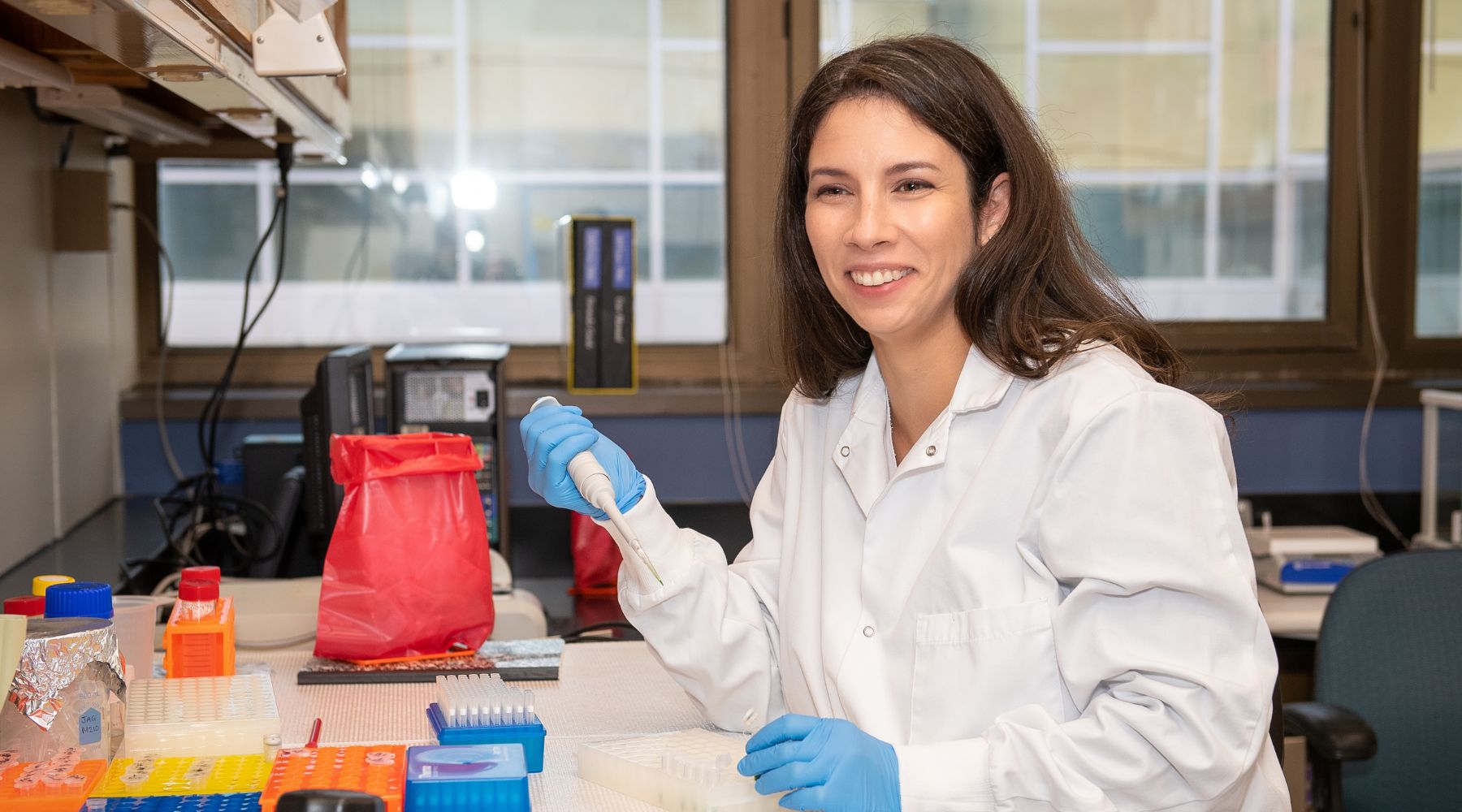
With a new four-year, $3.1 million federal grant, Oklahoma Medical Research Foundation scientist Jacquelyn Gorman, Ph.D., will investigate this mutation. Her study ultimately could lead to more effective treatments for lupus, which has no known cure.
In lupus, the immune system’s attack on its own tissues causes widespread inflammation that can affect organs and joints. Lupus most often features periods of flares and remission. In some cases, it can lead to organ failure.
According to the Centers for Disease Control and Prevention, the most common form of lupus affects more than 200,000 Americans, primarily women. Scientists believe lupus is linked to the interaction of a person’s genetics with environmental exposures and other factors. It can remain dormant for years before the onset of symptoms.
Gorman’s lab will conduct experiments aimed at determining how a specific mutation leads to an overactive immune system, promoting lupus development.
In previous studies, mice with this gene variant generally showed increased inflammation and were able to fight off viral infection but were more susceptible to autoimmune diseases.
“This suggests the gene alteration may accelerate lupus by driving the immune system into a heightened state,” Gorman said. “Through our study, we hope to learn how this variant increases inflammation and whether it increases the risk of lupus progression.”
Gorman’s lab also will analyze human patient samples housed at OMRF and donated through the Lupus Family Registry and Repository and the Oklahoma Cohort of Rheumatic Diseases.
According to OMRF Executive Vice President and Chief Medical Officer Judith James, M.D., Ph.D., Gorman’s research could lead to ways to better identify which people will transition into active lupus.
“Her work could even lead to new lupus treatments and better prediction of how patients will respond to certain lupus therapies,” James said.
Gorman’s grant, No. 1R01AI190169-01, was awarded by the National Institute of Allergy and Infectious Diseases and the National Institute of General Medical Sciences, both part of the NIH. Prior research that made this grant possible was supported by NIH grant No. P20GM139763 and funding from the Oklahoma Center for Stem Cell Research, a program of the Tobacco Settlement Endowment Trust.