

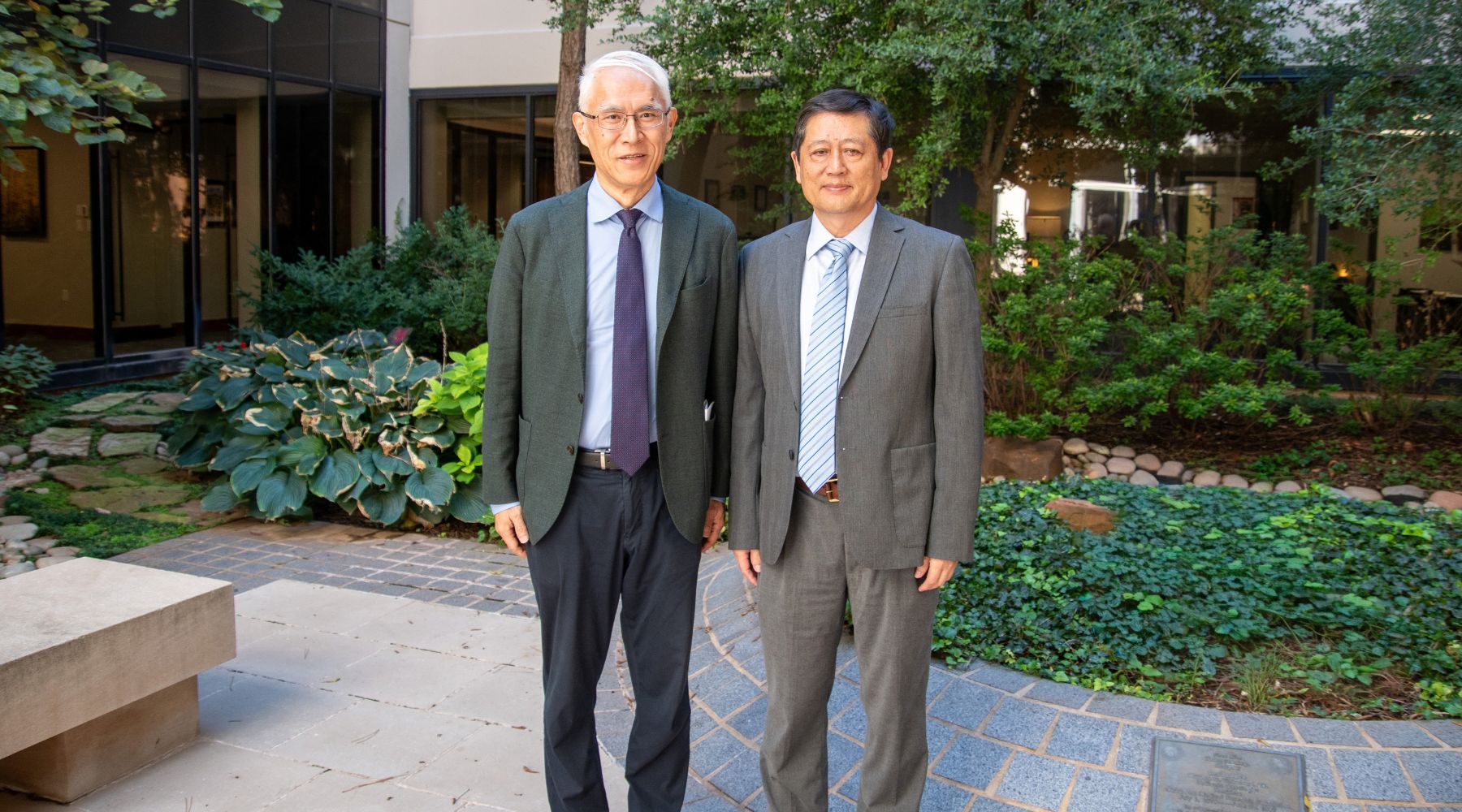
A $1 million donation to the Oklahoma Medical Research Foundation will fund an endowment honoring the legacy of OMRF scientist Charles T. Esmon, Ph.D.
The endowment was announced Monday during a scientific symposium featuring speakers who were Esmon’s trainees and peers. The funds will create a new endowed graduate student fellowship in cardiovascular biology at OMRF.
Esmon retired in 2019 after a 37-year career at OMRF that featured paradigm-shifting discoveries about how blood clotting relates to inflammation. He died in May at age 79.
His work led to the development of two drugs that received approval from the Food and Drug Administration. One of them, Ceprotin, is still used worldwide to treat patients with a life-threatening deficiency of protein C in their blood.
For his achievements, Esmon was elected to the National Academy of Sciences and was the first scientist outside a university to be named a Howard Hughes Medical Institute Investigator, one of the highest honors in medical research.
One of Esmon’s former trainees, Jun Xu, Ph.D., announced the endowment, saying he approached OMRF with the idea and committed to funding it “so that graduate students like me can start with basic research and later see their work translate into real-world treatments.”
“Dr. Esmon’s discoveries at OMRF transformed our understanding of coagulation, vascular biology and inflammation,” Xu said. “He was also a wonderful mentor, so it’s fitting that this endowment will help foster the development of a new generation of cardiovascular biologists.”
Xu now oversees a Chinese pharmaceutical company focused on blood disorders. One of its products, based on Esmon’s research, is an investigational drug designed to treat disorders including hemophilia by rebalancing the blood’s clotting system.
“Chuck was an incredible scientist and mentor who shaped numerous careers, including mine,” said OMRF scientist Lijun Xia, M.D., Ph.D., who leads the foundation’s Cardiovascular Biology Research Program and organized Monday’s symposium. “It was an honor to call him a colleague, and it will be a privilege to teach the students who receive this fellowship about his work.”