

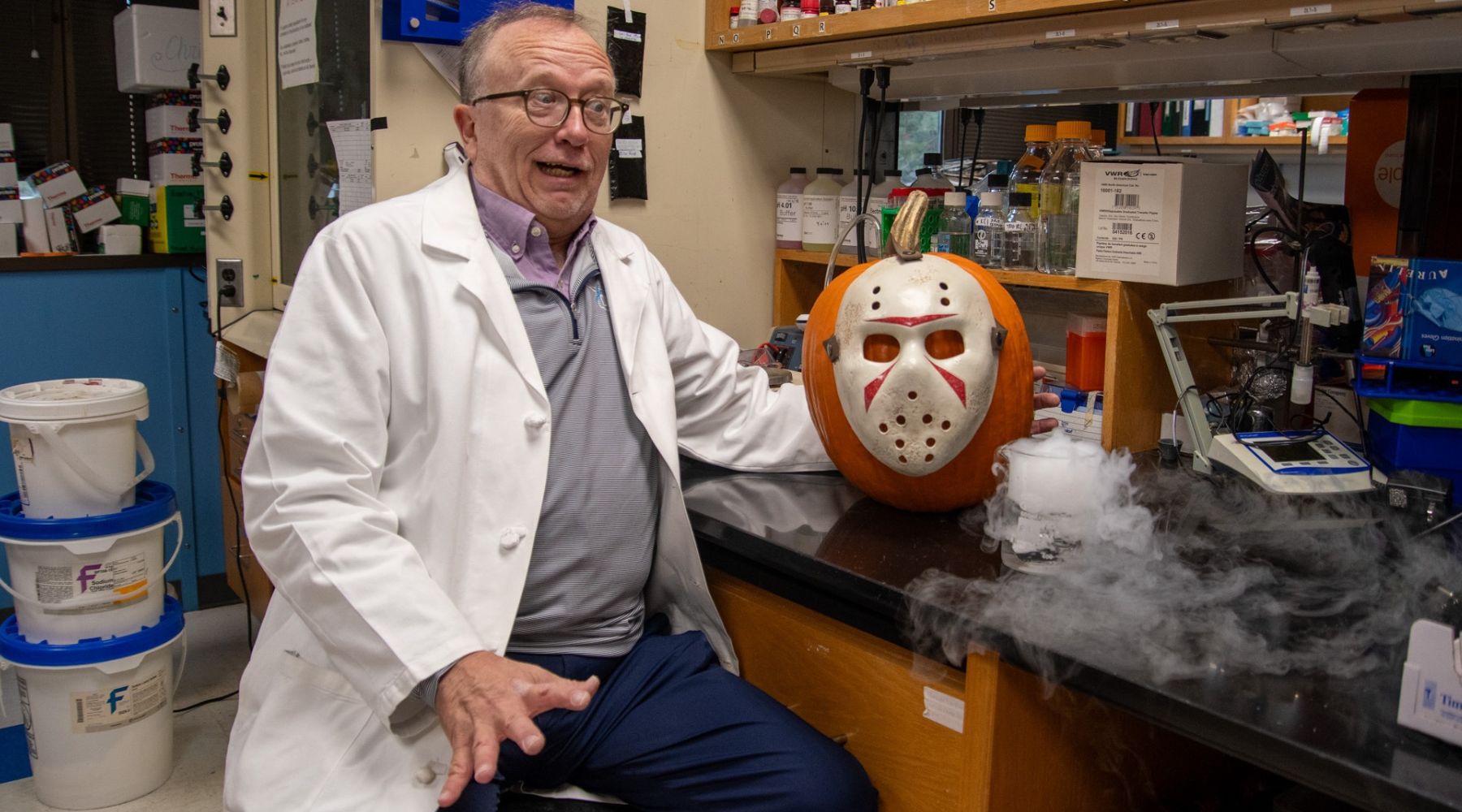
You’ve heard the three words more often than you can count. You may even have uttered them yourself, especially around this spooky time of year.
The phrase: “scared to death.”
So, is this mere hyperbole? Or can a person – literally – die of fright?
“Absolutely, fear can kill you,” says Hal Scofield, M.D., a physician-scientist at the Oklahoma Medical Research Foundation. “That said, death from fright is extremely rare, and usually it involves someone with an underlying medical condition.”
A sudden adrenaline rush can rapidly spike your heart rate and blood pressure. That’s one reason amusement parks urge people with high blood pressure, artery blockages or other heart problems to avoid thrill rides.
However, a surge of stress hormones has been known to kill even people with healthy hearts. The clinical term is Takotsubo cardiomyopathy, named for the Japanese word for the shape the heart takes in such situations. But the condition is more commonly known as broken-heart syndrome.
Typically brought on by physical or emotional stress, the condition has symptoms that mimic a heart attack, most commonly chest pain and dizziness. Most cases require hospitalization, but 95% of all patients recover full heart function within 21 days, according to the American College of Cardiology.
A study by the Journal of the American Heart Association found nearly 200,000 diagnosed cases of Takotsubo cardiomyopathy in the U.S. between 2016 and 2020. While the study found men to be twice as likely as women to die from the condition, the vast majority of cases involved postmenopausal women.
Researchers suspect that the disproportionate effect on women may stem from the loss of estrogen that comes with menopause.
In 2020, Italian researchers cited five cases of women with healthy hearts who died at the same hospital from severe emotional distress over the previous decade. Four of the deaths occurred during or after home-invasion robberies, while the fifth followed a violent argument.
Closer to home, an 89-year-old Nichols Hills man died in 1986 after his home was burglarized as he slept. Described as being the picture of health before the break-in, the victim cried for an hour as police took his report. He refused to step outside afterward and kept his lights on constantly before dying five days later.
The coroner’s report listed heart failure as the official cause of death, but the investigating officer was convinced the man’s ordeal with terror killed him.
Scofield recommends that everyone undergo annual physical exams to assess cardiovascular health. And for those intent on enjoying the adrenaline rush of a horror movie this Halloween, he offers a dad joke.
“Just make sure to get your ‘af-fears’ in order first.”