

Adam’s Journal
This week, we have a question from Carli Hartley, our co-worker at the Oklahoma Medical Research Foundation:
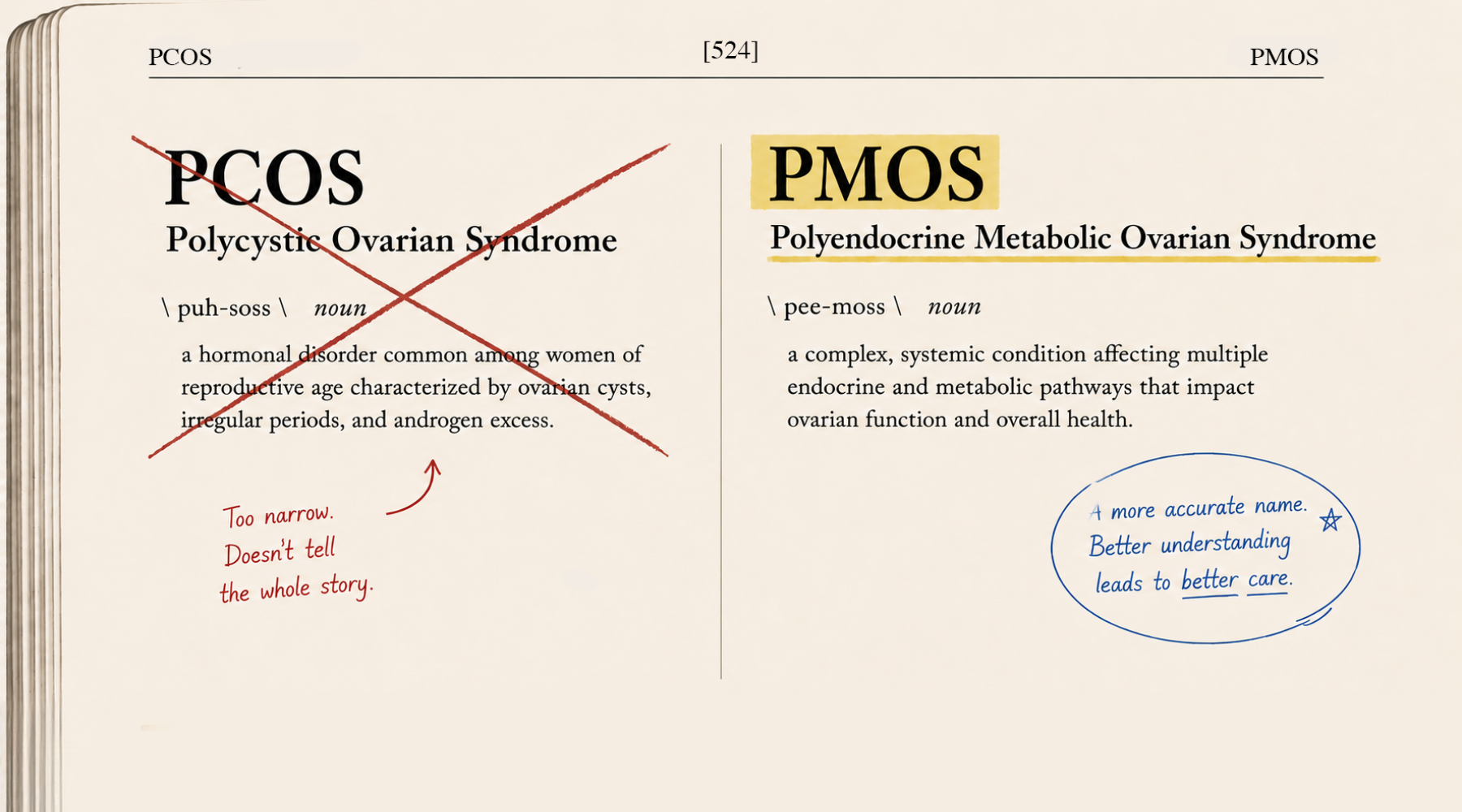
Polycystic ovarian syndrome was recently renamed polyendocrine metabolic ovarian syndrome in hopes that it would help improve care for this disorder that impacts 1 in 8 women. As someone with the condition, I’m curious how this name change will help improve care. And will it help increase research on this disorder?
Dr. Scofield Prescribes
Polycystic ovarian syndrome has been a misnomer for almost a century. Doctors first described the condition in 1935. Their characterization was based only on seven women, each of whom had enlarged ovaries with multiple small cysts.
However, we now know these cysts were just the tip of the iceberg. And, in fact, many patients diagnosed with the condition don’t have ovarian cysts at all.
Confused?
To allay this confusion, an international consortium of physicians and researchers has renamed the condition. The new name, polyendocrine metabolic ovarian syndrome (PMOS), not only gets rid of the cysts, but it points to the broader underlying nature of the condition.
PMOS affects an estimated 10-13% of women of reproductive age. A diagnosis requires two of the following three elements: (1) irregular periods; (2) evidence of elevated levels of the hormone androgen; (3) multiple ovarian cysts.
In addition to irregular periods and ovarian cysts, the condition can be marked by symptoms like pelvic pain, excess body hair and acne. Many with PMOS also have an increased risk of obesity, type 2 diabetes, cardiovascular disease and obstructive sleep apnea.
Beyond failing to accurately characterize the condition, the previous name also didn’t capture its scope. The new name attempts to correct these flaws and also recognizes its roots: the endocrine system, a network of glands and organs that act as the body’s chemical messaging system.
By moving PMOS beyond the realm of gynecology and a focus on the ovaries, experts hope it will broaden caregivers’ approaches to treatment. In particular, their aim is to shift the focus from PMOS’ impact on reproduction to encompass its many other effects.
The change could have an immediate impact for some patients, prompting doctors to recommend more screening for metabolic and cardiovascular problems. Today, if patients aren’t trying to get pregnant, they’re often prescribed birth control for their symptoms. With a broader understanding of the condition, more treatments may emerge.
Still, more research is needed, and the new name also aims to spur those studies. Until now, federal grant applications were typically directed to the institute at the National Institutes of Health that covers reproductive health, which has a relatively small budget. Those in the field now hope that, with the change, PMOS research will become eligible for support from other, better-funded NIH institutes, like those that cover diabetes and heart disease.
Over time, let’s hope this name change will, as one researcher put it, “redirect us into thinking about this as a long-term chronic condition and not just a period problem.”
–
Dr. Hal Scofield is a physician-scientist at the Oklahoma Medical Research Foundation, and he also serves as Associate Chief of Staff for Research at the Oklahoma City VA Medical Center. Adam Cohen is OMRF’s senior vice president and general counsel. Send your health questions to contact@omrf.org.