

Adam’s Journal
Here’s a question from a curious coworker at the Oklahoma Medical Research Foundation:
What’s the healthiest diet for your heart?
Darius Stevenson
Dr. Scofield Prescribes
Scientists have been thinking about this question for a long time.
In the 1950s, Dr. Ancel Keys, a physiologist at the University of Minnesota, became interested in a question that puzzled epidemiologists: Why had coronary heart disease become so common in middle-aged American men when that same trend wasn’t true everywhere?
During his travels in Europe, Keys grew intrigued by southern Italy. He noticed that people there generally ate differently than Americans.
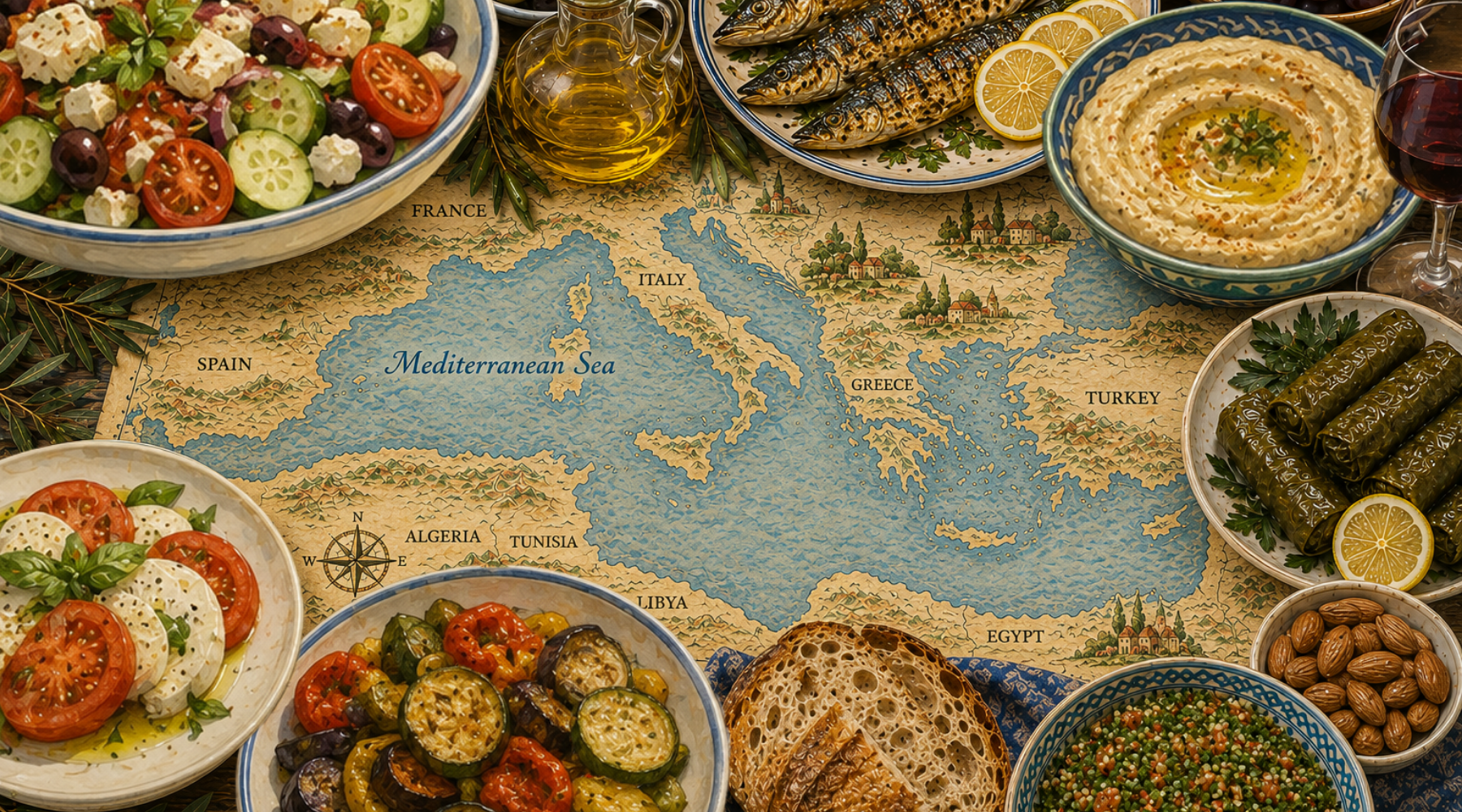
Where Americans consumed a diet heavy in meat, butter and dairy, the people of southern Italy ate relatively little of these foods. Instead, their meals relied heavily on breads and cereals, vegetables and fruit, nuts and legumes, and olive oil as the principal source of fat.
Led by Keys – whose biography is being written by Dr. Sarah Tracy, my colleague and good friend at the University of Oklahoma – scientists embarked on a decades-long study to probe this observation.
In what became known as the Seven Countries Study, they followed cohorts of middle-aged men in Italy, the U.S. and five other countries. The study found associations between saturated fats – found in red and fatty meats as well as dairy – and higher levels of blood cholesterol and coronary disease.
The scientists also reported that those who lived around the Mediterranean had lower levels of cholesterol than participants who lived elsewhere. The researchers surmised that the diets people ate in countries like Italy, Greece and Croatia had a protective effect on their hearts.
Since that time, the benefits of what we now call the Mediterranean diet are well documented. Extensive research has backed up and also clarified what Keys first observed.
We now know that Mediterranean-style diets emphasizing fruits, vegetables, whole grains, nuts, seeds, legumes, lean proteins such as fish and chicken, and healthy fats like olive oil can benefit cardiovascular health. Among those benefits are lower blood pressure and blood sugar, reduced cholesterol, and decreased risk for type 2 diabetes and cardiovascular disease.
Beyond cardiovascular protection, the Mediterranean diet has also been associated with many other health gains, including reduced body mass index, inflammation and, in pregnant women, pregnancy complications like pre-eclampsia, gestational diabetes and pre-term birth.
For many years, scientists wrestled with whether moderate consumption of alcohol, particularly red wine, was part of this equation. But more recent research has cast doubt on the idea that moderate drinking protects the heart. We now know that even small amounts of alcohol carry health risks.
Like all diets, the Mediterranean diet only works if you stick to it. Fortunately, unlike most diets, this is one that is relatively easy to adhere to for the long haul. And if you do, your heart – and the rest of your body – will thank you.
–
Dr. Hal Scofield is a physician-scientist at the Oklahoma Medical Research Foundation, and he also serves as Associate Chief of Staff for Research at the Oklahoma City VA Medical Center. Adam Cohen is OMRF’s senior vice president and general counsel. Send your health questions to contact@omrf.org.