For reasons that aren’t fully clear, women are nine times more likely than men to develop an autoimmune disease called Sjögren’s.
An Oklahoma Medical Research Foundation scientist hopes to better understand why through studies funded by a new two-year, $468,875 grant from the National Institutes of Health.
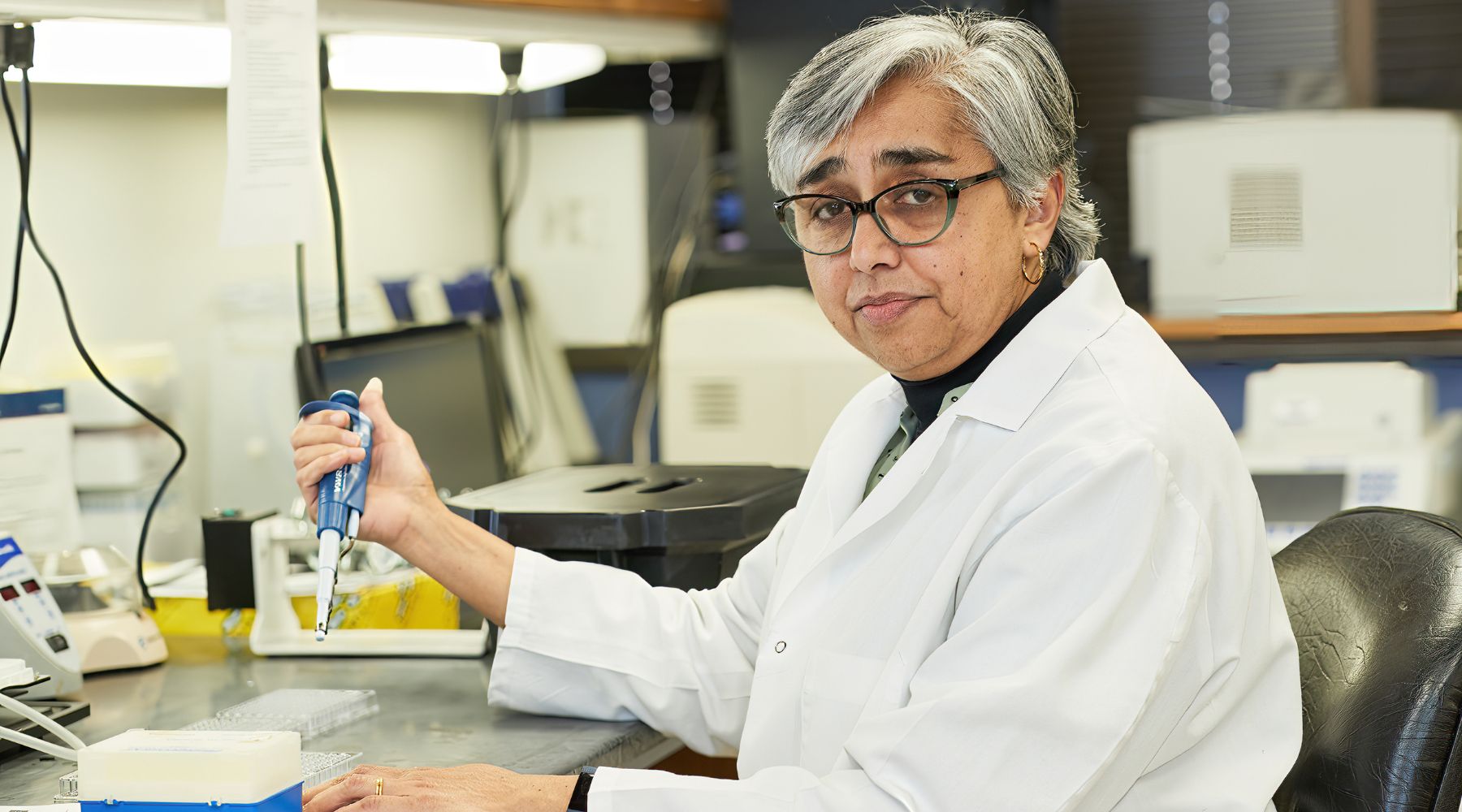
“Our goal is to determine how age and gender affect the immune system in Sjögren’s,” said OMRF scientist Harini Bagavant, Ph.D. “One specific goal is to learn why men are generally able to avoid inflammation in their salivary glands, but women are unable to do so.”
Up to 4 million Americans live with Sjögren’s, which affects moisture-producing glands. The disease causes painfully dry eyes and mouth, fatigue and joint pain. Although treatments can help manage some symptoms, Sjögren’s has no known cure and can lead to irreversible tissue damage, neurological problems, lung disease and cancer.
“While Sjögren’s itself doesn’t kill people, it can cause a very low quality of life for someone in their 40s or older,” Bagavant said.
The disease typically is diagnosed between the ages of 45 and 55, and it progressively worsens. For that reason, Bagavant will study the immune systems of older mice that develop Sjögren’s-like symptoms.
Her research will focus on a specific type of immune cell whose main job is to patrol the body and kill infected or potentially cancerous cells. In Sjögren’s, these cells go rogue and attack the salivary glands.
“This happens in both men and women,” Bagavant said. “However, we believe that males have special protective signals that prevent inflammation once these cells reach the salivary glands.”
If the study proves this hypothesis, the next step would be trying to create a similar protective mechanism in females. Potentially, that could lead to a major treatment upgrade, said Judith James, M.D., Ph.D., OMRF’s executive vice president and chief medical officer.
“Currently Sjögren’s is treated by managing symptoms,” James said. “Dr. Bagavant’s research could someday result in therapeutics that modify the disease course and prevent damage to the salivary glands.”
Bagavant’s grant is No. R21DE034962-01A1. It was awarded by the National Institute of Dental & Craniofacial Research, part of the NIH. Previous research funded by the Presbyterian Health Foundation made Bagavant’s new grant possible.