

Sir Alexander Fleming Scholar Program
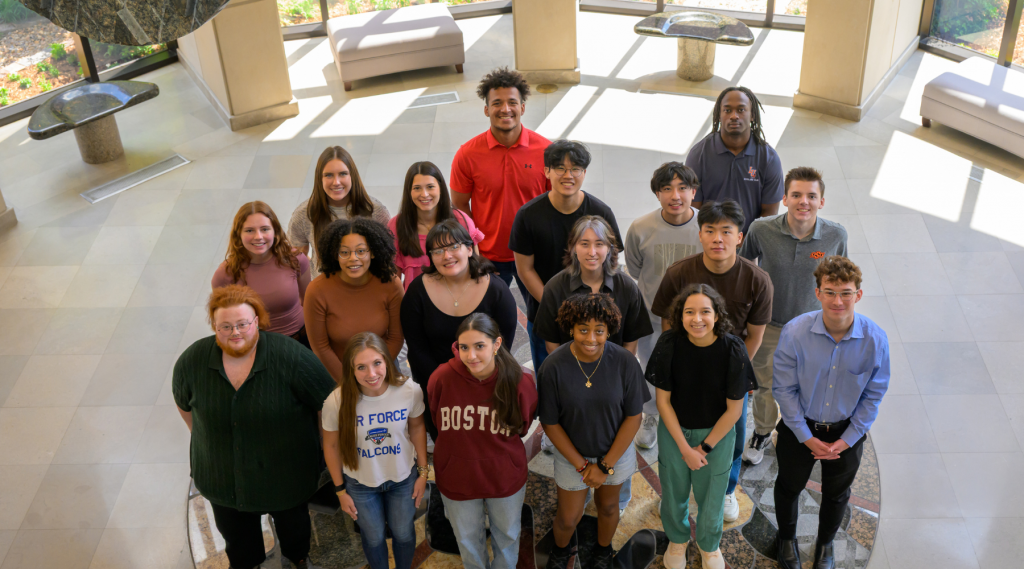
The Fleming Scholars Program was founded in 1956 as a way to give Oklahoma’s high school and college students “hands-on” biomedical research experience. The program is named for Sir Alexander Fleming, the famed British scientist, who discovered penicillin and in 1949 came to Oklahoma City to formally dedicate the Oklahoma Medical Research Foundation’s first building.
Discover a future in biomedical research this summer through the Sir Alexander Fleming Scholars Program. During this 8-week, paid, summer research experience, Fleming Scholars will be guided by senior scientists while working on individual projects in cutting-edge labs. The discoveries made during this program could not only shape your future but also contribute to advancing treatments for human diseases.
8-week, hands-on internship
Earn $5,000+
Applications due Feb. 1
Frequently Asked Questions
When are applications due?
Applications and recommendation letters are due by 11:59 p.m., Feb. 1. Mailed recommendation letters must be postmarked by Feb. 1.
Will you contact my references?
We will not contact the references listed on applications.
How are Fleming Scholars selected?
Each year, the Fleming Scholar Selection Committee selects the Fleming Scholars. All complete applications received by the Feb. 1 deadline are reviewed by this committee, and 25 applicants are selected for a virtual interview. Following interviews, the committee selects the scholars as well as two to four alternates.
When are Fleming Scholar selection results available?
All applicants are notified of their application status by late February or early March. For those who are chosen for an interview in March, final results will be available following the conclusion of all interviews.
What do Fleming Scholars do?
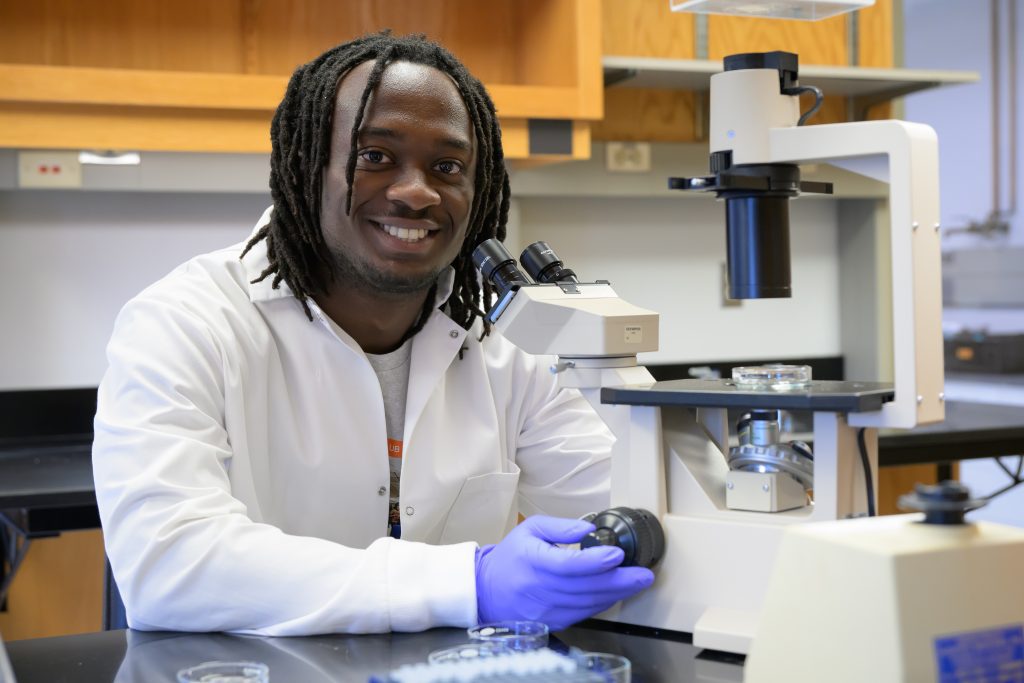
Fleming Scholars work full-time (40 hours/week on average) in state-of-the-art biomedical research laboratories on individual projects and are supervised by senior members of the OMRF scientific staff. Every effort is made to assign scholars to laboratories conducting research of particular interest to them. The scholars attend weekly seminars, group social and cultural events and, with the help of their mentor, write an abstract summarizing their summer project.
On the final day of the program, scholars give a short, formal scientific presentation outlining the findings of their projects. Parents/guardians, OMRF staff and other guests are invited to attend.
When does the program start?
Fleming Scholars work at OMRF for eight weeks in the months of June and July. Their first day is the Monday after Memorial Day.
Where do scholars live?
For scholars that live more than 40 miles from OMRF< housing is provided and located on the Oklahoma City University campus. Scholars are assigned in groups of two to four per apartment.
What about transportation?
OMRF does not provide transportation to and from work. Group transportation is provided to most social events, but most often, scholars are responsible for their own transportation.
What about meals?
Breakfast is provided at no cost to scholars every workday morning, Monday-Friday, in the OMF Research Café. Otherwise, scholars are responsible for their own meals. Lunches may be purchased in the Research Café at an employee discount. Evening meals are the responsibility of each scholar, with the exception of meals provided at social events.
What do scholars wear?
As a safety precaution, scholars should wear long pants and closed-toed shoes to work. Jeans are acceptable, as are athletic shoes. Lab work can be messy, so scholars must dress appropriately and avoid wearing torn clothes, dangling jewelry, etc. Lab coats, safety goggles and any other necessary protective gear will be provided.
Do scholars have to commit to the full eight weeks?
The Fleming Scholar program is rigorous and intense. Eight weeks is quite a short time to initiate–and complete–a detailed scientific project. In fact, many scholars find it necessary to return to OMF in the weeks following the program in order to complete their experiments and put the finishing touches on their papers. An absence of even a few days can make it difficult for a scholar to catch up before the program ends. Therefore, scholars are required to commit in advance to attendance for the entire eight weeks of the program.
May a person apply again if not selected the first time?
As long as the applicant meets the eligibility requirements for the program, they may apply to the program for as many years as desired. So, from senior year (high school) to junior year (college), candidates may apply once each year. Many scholars have been selected on their second or even third try. Anyone who is unsuccessful the first time is encouraged to apply again.
How many times can someone be a Fleming scholar?
Students can be a Fleming scholar for one summer. The program was established with the purpose of affording this unique chance to as many gifted, science-minded students as possible.
When do scholars get paid?
Scholars are paid $5,000 for June and July. Paychecks are distributed 10 business days after the conclusion of the program.
Langston University Biomedical Research Scholars Program
Discover a future in biomedical research this summer through the Langston University Biomedical Research Scholars Program. This program starts with an 8-week, paid summer research experience where Langston Scholars will be guided by senior scientists while working on individual projects in cutting-edge labs. The discoveries made during this program could not only shape your future but also contribute to advancing treatments for human diseases.
8-week, hands-on internship
Earn $5,000+
Applications due Feb. 1
How to Apply
Eligibility
To be eligible for the Langston Biomedical Research Scholars Program, applicants must be:
- Rising sophomores through rising seniors who are currently enrolled at Langston University, preferably pursuing degrees in biology, chemistry, mathematics or related fields.
- At least 16 years of age.
- A U.S. citizen or permanent resident or have unrestricted employment authorization in accordance with applicable Immigration and Naturalization Service regulations (example: J-2 – with Employment Authorization Document). Applicants with an H-4 visa are not eligible.
- Willing and able to commit to the program’s entire eight-week time frame (June 2-July 25, 2026).
- Applications are due Feb. 15, 2026.
Scholars are selected by the Joint Selection Committee based on aptitude and interest in science and math, academic standing, essays and recommendation letters written as a part of the application process.
Application Details
The application form will require you to upload several documents, including:
- Resume – Your resume should briefly describe your education, employment, volunteer work and extracurricular activities. It should not exceed two pages.
- Personal Statement – Your personal statement should tell us about you, your passion for science and how well you can communicate and express your ideas. Your statement should include your name, why science interests you, including examples of classes, hobbies, projects or experiences that sparked this interest, why you want to participate in the Langston Scholar Program and your long-term career goals. It should not exceed 750 words.
- Unofficial transcripts – Applicants should submit unofficial high school transcripts and unofficial college transcripts in one document.
- It is preferred to submit the entirety of the application packet electronically. However, if this is not possible, items outside of the online application form may be submitted via:
- Mailed or delivered to: OMRF Fleming Scholar Program, 825 N.E. 13th St., Oklahoma City, OK, 73104
To complete your application, 1-3 Recommendation Letters are required. One of your reference letters must be from a STEM instructor. Contact your references well ahead of the application due date, provide them with the Recommendation Letter Requirements document and have them submit their recommendation letter via email.
If you are a returning Scholar, email us for more information.
If you have questions or trouble applying, email us or call 405-271-7430 or 800-522-0211.
Application Deadline
All completed application packets must be submitted electronically and/or postmarked by 11:59 p.m., Feb. 15, 2025. Incomplete application packets or materials received later than the due date will be disqualified.
Interviews
The Selection Committee will select finalists to interview. Interviews will be held early to mid-March. All applicants will be notified of their status by late March.
Compensation
New Langston Scholars who complete the full summer program will be paid at least $5,000. Returning Langston Scholars and Scholars who work beyond the summer program will be paid at least $15 per hour.
Frequently Asked Questions
What do scholars do?
Scholars work full-time (40 hours per week on average) in state-of-the-art biomedical research laboratories on individual projects and are guided by OMRF scientific mentors. Every effort is made to assign scholars to laboratories conducting research of particular interest to them. The scholars attend weekly seminars, group social and cultural events and, with the help of their mentor, write an abstract summarizing their summer project.
On the final day of the program, scholars give a short, formal presentation outlining the findings of their projects. Parents/guardians, OMF staff and other guests are invited to attend.
What are the program dates?
Scholars work at OMRF for eight weeks in the months of June and July. Their first day is the Monday after Memorial Day.
When are applications due?
Applications and recommendation letters are due at 11:59 p.m., Feb. 15. Mailed recommendation letters must have been postmarked by Feb. 1.
Is this a paid position?
Yes, scholars work an average of 40 hours per week and are paid $5,000 for participating in the whole program. Paychecks are distributed the last working day of each month.
How are scholars selected?
Scholars are selected by a joint committee consisting of representatives from OMRF and Langston University. All complete applications received by the deadline are reviewed by selection committee members. After this initial review, the committee meets to select applicants to interview. Following the interviews, the committee selects as many scholars as there are mentors and funding available. Alternates may also be named.
Will you contact my references?
We will not contact the references listed on applications.
When are selection results available?
All applicants will be notified of their statuses by late February. Interviews occur in early to mid-March. Final results are available following the conclusion interviews.
Where do scholars live?
Housing is provided to Langston Scholars at student apartments on the Oklahoma City University campus. Scholars are assigned in groups of two or four per apartment.
Is transportation provided?
OMRF does not provide transportation to and from work. Group transportation is provided to some social events, but most often, scholars are responsible for their own transportation.
Are meals provided?
Breakfast is provided at no cost to all scholars every workday morning, Monday-Friday, in the OMRF Research Café. Otherwise, scholars are responsible for their own meals. Lunches may be purchased in the Research Café at the employee discount. Evening meals are the responsibility of each scholar, with the exception of meals provided at social events.
What do scholars wear?
As a safety precaution, scholars should wear long pants and closed-toed shoes to work. Jeans are acceptable, as are athletic shoes. Lab work can be messy, so scholars must dress appropriately and avoid wearing torn clothes, dangling jewelry, etc. Lab coats, safety goggles and any other necessary protective equipment will be provided.
Do scholars have to commit to the full eight weeks?
Yes. This program is rigorous. Eight weeks is a short time to initiate and complete a detailed scientific project. An absence of even a few days can make it difficult for a scholar to catch up before the program ends. Therefore, scholars are required to commit in advance to full attendance or the entire eight weeks of the program.
May a person apply again if not selected the first time?
As long as the applicant meets eligibility requirements for the program, they may apply to the program for as many years as desired. So, as long as students are enrolled at Langston University, they may apply once each year.
When do scholars get paid?
Scholars are paid $5,000 for June and July. Paychecks are distributed 10 business days after the conclusion of the program.
Program Leadership
Courtney Stevens Greenwood
Ashley Cheyney, Ph.D.
Joel Solís
Alonzo Peterson, Ph.D.
Byron Quinn, Ph.D.
John Coleman, Ph.D.
John H. Saxon Service Academy Summer Research Program
John Saxon III, M.D., is an Oklahoma physician and OMRF Board member of more than two decades. He established the John H. Saxon Service Academy Summer Research Program to honor his father, a West Point graduate and career Air Force pilot who taught for five years at the U.S. Air Force Academy before passing away in 1996. Since the program’s inception in 2009, over 40 military students from West Point, the Naval Academy and Air Force Academy have been a part of the program.
OMRF partners with individual academies to select students to participate in this unique program that pairs cadets with an opportunity to work side-by-side with OMRF’s senior scientists. Students work for three to four weeks in OMRF laboratories on individual projects and are mentored by scientific staff. At the end of the program, the students give a formal seminar on their findings and write a scientific paper.
Saxon Students are selected through their academies.
Contact