

My Research
When cells divide, either to develop new tissues or to replace aging or defective cells, a precise and complex series of events must be carefully coordinated to ensure that newly forming cells inherit the appropriate components and function properly. Work in my lab is focused on understanding how chromosomes are properly packaged and inherited during cell division. A key player in this process is a protein complex called cohesin. Cohesin folds chromosomes into loops and domains so they fit in the nucleus, ensures their accurate inheritance during cell division, contributes to proper gene expression, and promotes DNA repair.
Cohesion failures lead to inaccurate chromosome segregation, tumor formation, and increased mutation rates. Genetic defects in the cohesion apparatus lead to severe developmental disorders called cohesinopathies. Symptoms include limb truncations, craniofacial abnormalities, and cognitive delays. Thus, through its many roles in chromosome structure and maintenance, the cohesin complex is critical to human health and development.
The cell nucleus in which cohesin must function is a crowded place. We study how cohesin activity is controlled within this environment to permit DNA replication, respond to DNA damage, accommodate developmental changes in gene expression, and promote orderly genome rearrangements in specific cells and tissues. We use several experimental approaches, including cell culture models, cell-free extracts, microscopy, biochemistry, and genomic analysis. Additionally, we study cohesin regulation during early vertebrate development using the Xenopus frog embryo, which has many features in common with the early human embryo, as a model. Our long-term goal is to understand how cohesin activity is controlled to ensure normal cell growth and division, prevent mutation and cancer development, and ensure healthy development.
Research Keywords
- Cancer
- Cell division
- DNA
- Chromosome dynamics
- Birth defects
- Early development


Contact
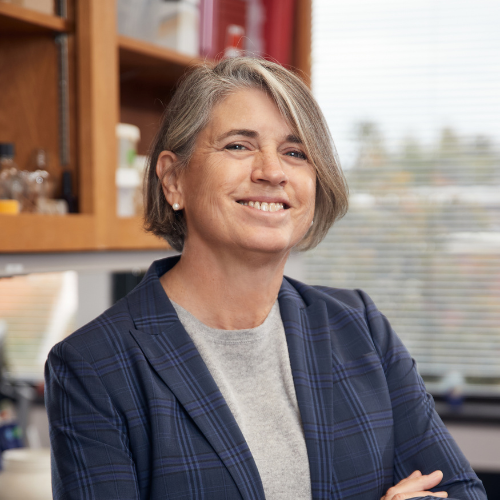
Susannah Rankin, Ph.D.
Cell Cycle and Cancer Biology Research Program, MS 48
Oklahoma Medical Research Foundation
825 N.E. 13th Street
Oklahoma City, OK 73104
Phone: 405-271-8190
Fax: 405-271-7312