

My Research
Damage to DNA can cause or contribute to a number of diseases, and in my lab, we’re studying how breaks and repairs at different points in life can affect health. DNA that is cut or malformed in the embryonic stage can cause birth defects and lead to Down syndrome or Turner syndrome. If DNA is damaged after birth, it can sometimes cause cancer.
Chromosome aneuploidies are the leading cause of infertility and birth defects in humans. They result from errors in the segregation of homologous chromosomes (HCs) during gametogenesis. The proper segregation of chromosomes is ensured by meiotic homolog recombination (HR). It begins with the introduction of DNA double-strand breaks (DSBs) followed by their repair using the intact DNA of a HCs as a template. This leads to a temporal association of the HCs in pairs that ensures their orderly segregation to opposite poles of dividing nuclei so that each gamete receives one and only one homolog of each pair. The homologs that fail to synapse segregate randomly, with a 50% chance of going into the same daughter cell. Consequently, mutations that reduce or abolish recombination are invariably associated with gross abnormalities in chromosome segregation. An estimated 10 to 30% of fertilized human eggs have the wrong number of chromosomes, resulting in at least 5% of conceptions being aneuploid. Most of them abort before term, making aneuploidy the leading known cause of pregnancy loss. Those who survive face devastating consequences, including developmental disabilities and mental retardation.
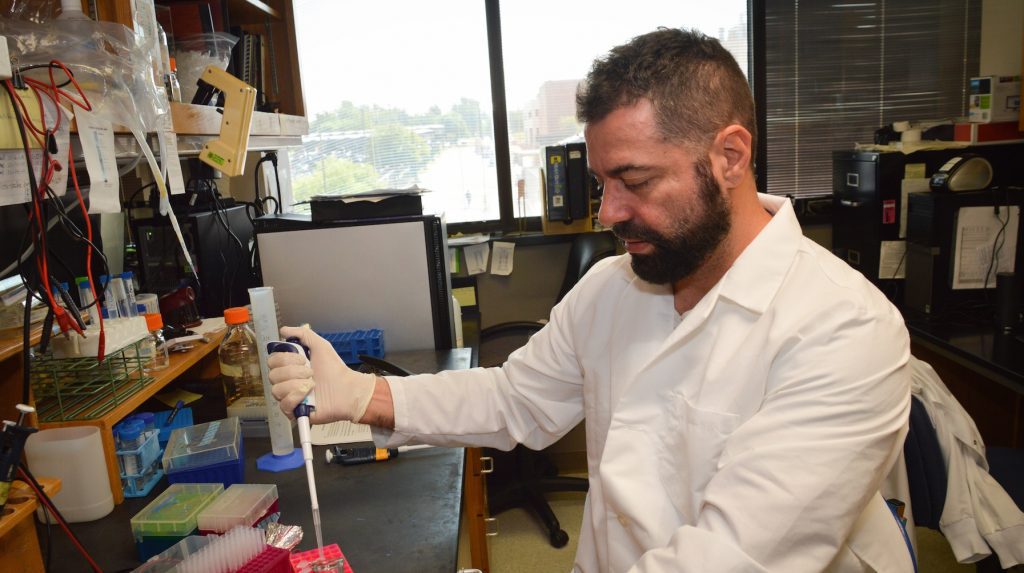
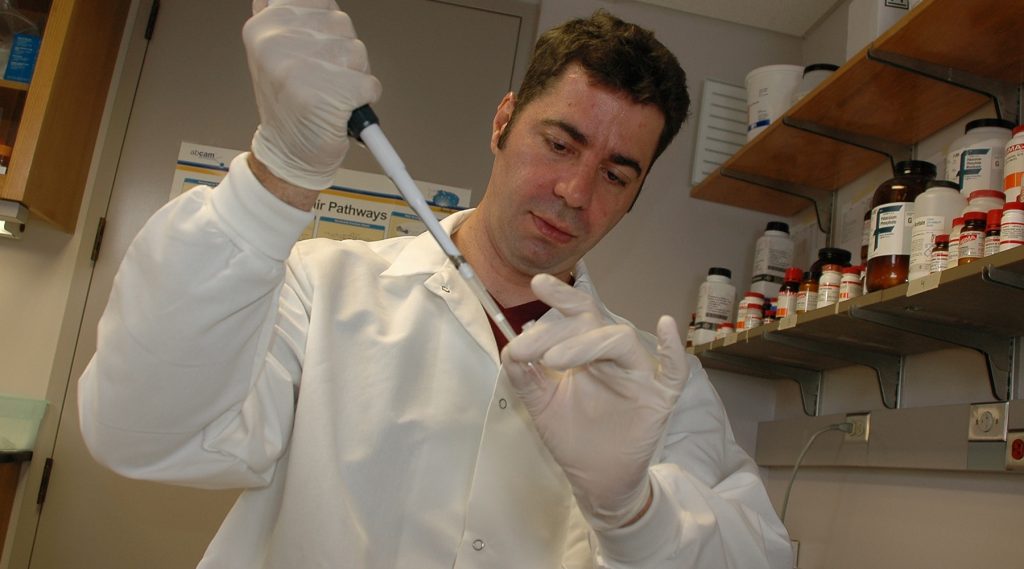
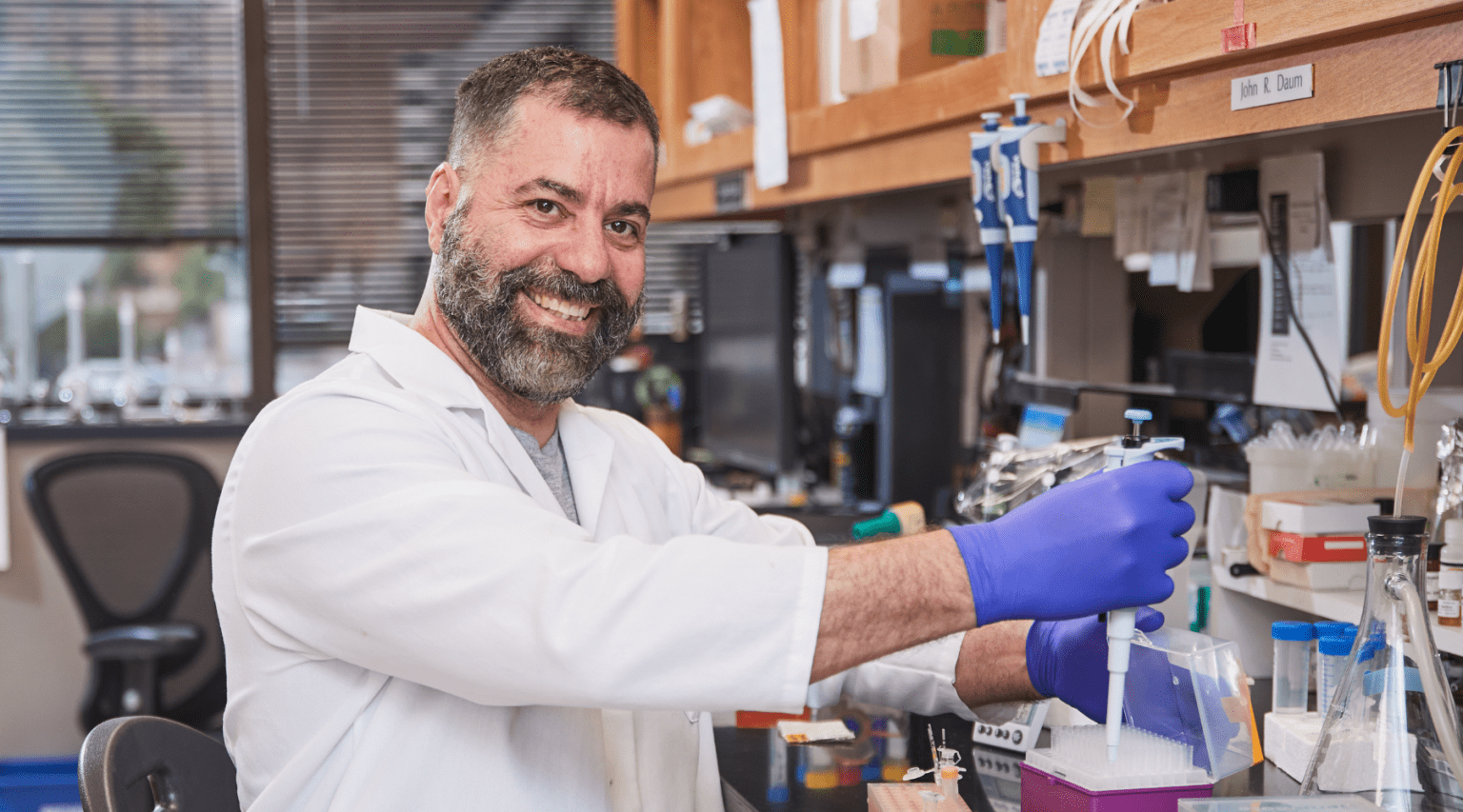
My laboratory studies the bases involved in the repair of DSBs and HCs synapses in mice. We use a combination of different approaches, ranging from the reconstruction of in vitro systems using purified proteins to the generation of genetically modified mice. Our goal is to uncover the fundamental molecular mechanisms regulating the process of homologous recognition and the proper segregation of HCs.
Research Keywords
- Cell cycles
- Birth defects
- DNA


Contact
Roberto Jose Pezza, Ph.D.
Cell Cycle and Cancer Biology Research Program, MS 48
Oklahoma Medical Research Foundation
825 N.E. 13th Street
Oklahoma City, OK 73104
Phone: 405-271-6467
Fax: 405-271-7312