

My Research
My lab is specifically interested in studying the endothelial cells that make up the lining of the blood and lymphatic vessels. We study cellular glucose metabolism, which governs how these cells use sugar and convert it into energy. This process can go wrong, with either too much or too little sugar converted, and in some cases, it can contribute to disease.
Using novel methods for studying these mechanisms, we hope to gain a better understanding of how to manipulate these cellular processes and develop new means of controlling the pathways that can lead to disease.
Lymphatic vessels maintain tissue fluid homeostasis. They also serve as essential conduits for tumor cell dissemination and the removal of cholesterol from the aortic wall. Accordingly, excessive or insufficient formation of the lymphatic vessels underlies human diseases such as cancer, lymphedema, and atherosclerosis. Thus, a better understanding of the mechanism of lymphatic vessel growth may guide the development of new therapeutic strategies.
We have discovered that a novel cellular mechanism—endothelial glycolysis—plays a crucial role in this process. Cells convert glucose into pyruvate through glycolytic metabolism, which generates ATP. Lymphatic endothelial cells exhibit robust glycolysis and heavily rely on this metabolic process for ATP production. Accordingly, glycolytic inhibition through genetic ablation of a rate-limiting glycolytic enzyme hexokinase 2 (HK2) profoundly impairs lymphatic vessel formation. Importantly, endothelial glycolysis can be enhanced by fibroblast growth factor (FGF)2 signaling via HK2 and is essential for FGF2-driven lymphatic vessel growth. Our study highlights the importance of endothelial glycolysis in lymphatic vessel formation. It also indicates that lymphangiogenic signaling controls endothelial metabolism in order to elicit a metabolic state permissive for growth and proliferation.
Research in our laboratory is built upon this project to further study the crosstalk between metabolic programs and lymphatic vessel formation signaling events and to understand the involvement of cellular metabolism in the pathogenesis of vascular diseases.
Research Keywords
- Cardiovascular disease
- Circulation
- Vascular disease
- Blood vessels
- Lymphatic vessels




Contact
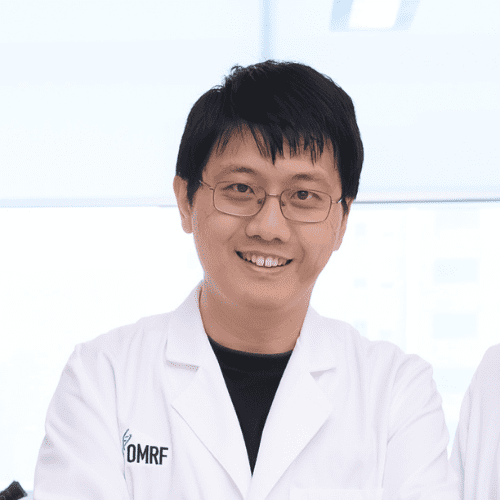
Pengchun Yu, Ph.D.
Cardiovascular Biology Research Program
Oklahoma Medical Research Foundation
825 N.E. 13th Street
Oklahoma City, OK 73104
Phone: 405-271-4445