

My Research
Our lab at the Oklahoma Medical Research Foundation (OMRF) focuses on elucidating the molecular basis of TGFβ1 release, activation, and signaling in thrombosis and organ fibrosis. We were the first to demonstrate that shear stress can activate latent TGFβ1 (LTGFβ1) in vitro. To support this research, we developed sensitive assays to accurately measure biologically active TGFβ1 levels in both murine and human plasma. Furthermore, we generated genetically engineered mice for the conditional inactivation of the TGFβ1 gene, allowing us to identify cellular sources of TGFβ1 under both physiological and pathological conditions. We also showed that platelets are major source of circulating TGFβ1 levels. We have established several preclinical mouse models and developed novel ultrasound imaging methods to detect heart failure with both reduced and preserved ejection fraction. Our work has categorized distinct stages of disease progression—including aortic stenosis (AS)—and revealed that HIV/antiretroviral therapy (ART) drugs induce cardiac fibrosis. Additionally, we developed a specialized device and computational fluid dynamics (CFD) to test the effects of varying blood flow patterns on TGFβ1 activation dynamics. Our group has also established biochemical assays to identify thiol-disulfide exchange as a mechanism involved in LTGFβ1 activation.
Major Projects
1. Aortic Stenosis and Platelet TGFβ1: Heart failure induced by aortic stenosis is a leading cause of morbidity and mortality in the elderly. As the shear stress across a stenotic aortic valve is extremely high, and the only current treatment is surgical valvereplacement, understanding the underlying mechanisms is critical for designing novel therapeutic intervention. While circulating TGFβ1 levels are known to be elevated in individuals with aortic stenosis, the specific source and activation mechanisms TGFβ1remain unclear. We hypothesize that LTGFβ1 released from platelets and activated by high shear stress contributes to aortic stenosis progression by initiating signaling programs responsible for pathological fibrosis, a hall mark of aortic stenosis.
2. Organ Fibrosis in HIV: Heart failure remains a primary complication for people living with HIV (PWH). We previously identified pathologic fibrosis and TGFβ1-Smad2 signaling in PWH and discovered that certain antiretroviral therapy (ART) drugs accelerate cardiac fibrosis in murine models. We are currently utilizing transgenic and humanized mouse models to test how HIV and ART drugs induce fibrosis in the heart and other major organs. Future work aims to identify how modulators—such as shear, reactive oxygen species, and oxidative stress—trigger TGFβ1 activation and signaling in response to insults including HIV, ART, radiation, chemotherapy, toxins, and COVID-19.
3. LVAD Complications and Biomarker Development: As the U.S. population ages, heart failure has become a pervasive issue. While left ventricular assist devices (LVADs) have significantly improved survival, recipients face a high risk of thrombohemorrhagic events and aortic valve fusion. Currently, there are no validated biomarkers to predict these complications. We hypothesize that the high shear generated by LVADs triggers platelets to release TGFβ1; consequently, plasma TGFβ1 levels may serve as a valuable biomarker for thrombotic and fibrosis risk.
Mitigation Strategies and Impact
We are actively developing strategies to mitigate organ fibrosis. We have successfully prevented aortic valve fibrosis in mice using low-dose N-acetylcysteine (NAC), a discovery for which we hold a patent. Recently, we demonstrated that Atorvastatin prevents cardiac fibrosis induced by HIV and ART drugs.
Our laboratory consistently publishes in high-impact journals across disciplines, including Nature Medicine, Blood, The Journal of Clinical Investigation, PNAS, and JBC. With over a decade of expertise in platelet TGFβ1 biology, our lab provides an exceptional environment for training the next generation of scientists.
Research Keywords
- Cardiovascular disease
- Heart failure
- Cardiac fibrosis
- Aortic stenosis
- Platelet
- TGFβ1
- HIV antiretroviral therapy


Contact
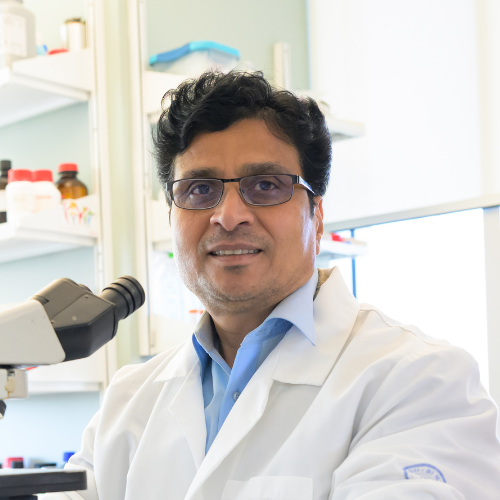
Jasimuddin Ahamed, Ph.D.
Cardiovascular Biology Research Program, Mail Stop 45
825 NE 13th Street
Oklahoma City, Oklahoma 73104
Phone: 405-271-2560
Lab Phone: 405-271-2564
Fax: 405-271-3137