


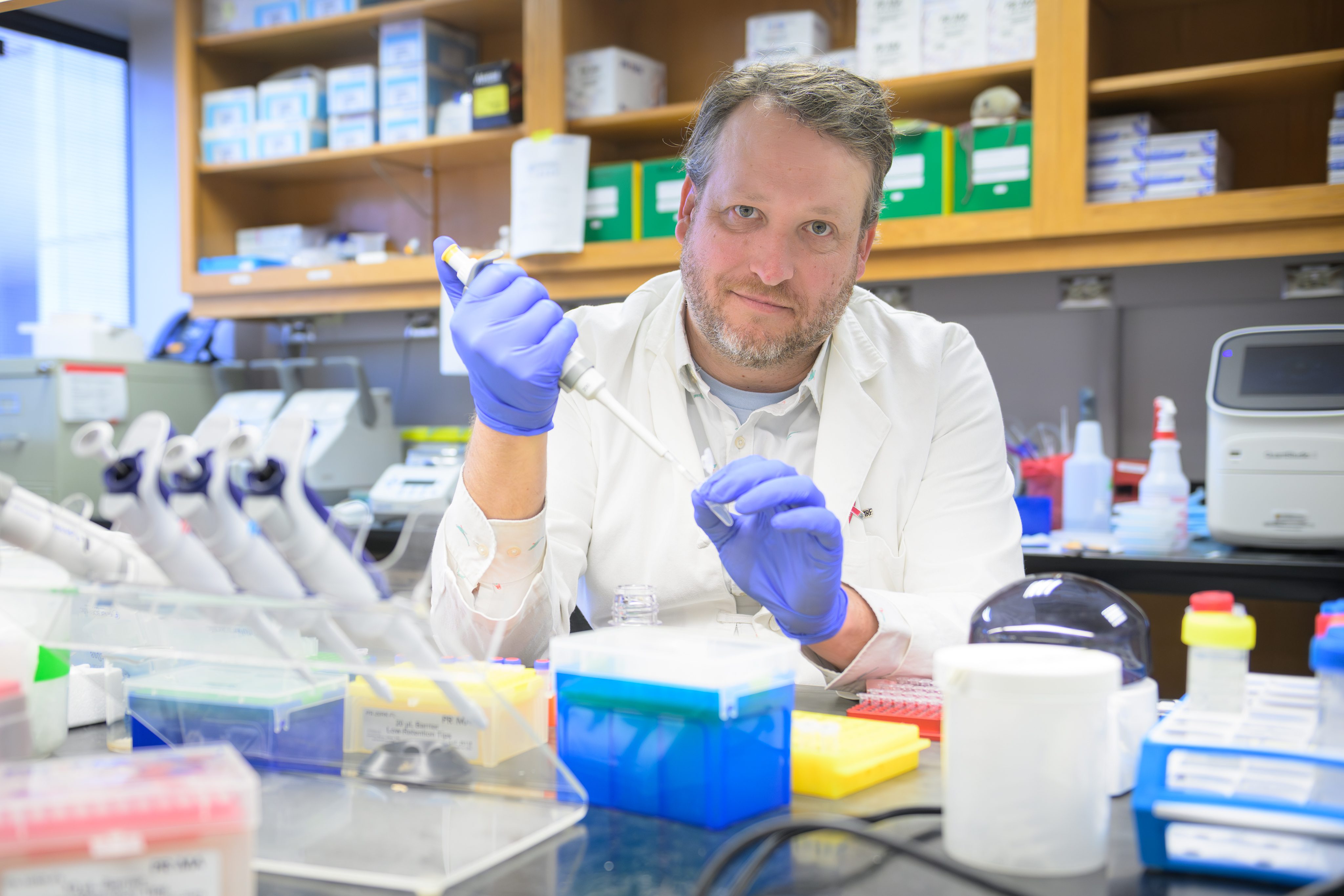
My Research
Our DNA acts like an instruction manual, but in cancer, the body sometimes opens the wrong pages. My lab studies how specialized “chromatin regulator” proteins control which genes turn on or off, and how failures in this system drive diseases such as breast cancer.
Epigenome Engineering and Mechanistic Dissection of mSWI/SNF Complexes
mSWI/SNF (BAF) complexes are among the most frequently mutated chromatin regulators in cancer. Traditional in vitro assays have been limited in resolving how these complexes function on native, developmentally relevant chromatin. I developed the FIRE-Cas9 epigenome-engineering system, enabling locus-specific recruitment of chromatin regulators and real-time measurement of their effects on chromatin structure and gene regulation on physiologic templates (Nat Commun). Building on this, our recent work in Life Science Alliance demonstrates that distinct BAF assemblies differentially modulate polycomb-associated histone marks, with canonical BAF (cBAF) uniquely opposing polycomb repression compared to pBAF and gBAF. Together, these technologies and mechanistic insights define how specific BAF configurations control chromatin state, providing a foundation for targeting BAF dysfunction in cancer.
Assembly and Function of Distinct BAF Complexes
The mammalian SWI/SNF (BAF) family of chromatin regulators comprises three major assemblies in stem cells—canonical BAF (cBAF), polybromo-associated BAF (pBAF), and GLTSCR-associated BAF (gBAF)—each sharing core subunits but incorporating unique components that confer specialized functions. pBAF-specific subunits such as PBRM1, ARID2, BRD7, and PHF10 contain multiple chromatin- and DNA-binding domains that may guide genomic targeting. While loss of ARID2 abolishes pBAF assembly, loss of PBRM1 does not. Because pBAF is essential for normal development and frequently mutated in cancer, elucidating its assembly and activity will clarify how combinatorial BAF architecture governs gene regulation and disease.
Chromatin Regulators and Anthracycline Response in Breast Cancer
Copy-number variation (CNV) drives many breast cancers, yet its origins remain unclear. In collaboration with Dr. Christina Curtis’s lab (Nat Med), I investigated how chromatin regulators (CRGs) influence CNV and anthracycline response. I performed all wet-lab studies, revealing that CRGs form a breast-cancer–specific transcriptional network encompassing trithorax and polycomb members. We found that CRGs promoting DNA accessibility predict anthracycline sensitivity, whereas repressive CRGs correlate with resistance. Experimental validation identified KDM4B as a modulator of TOP2 chromatin access, uncovering a new mechanism of anthracycline resistance. This chromatin regulatory network provides a framework for predicting TOP2-inhibitor response and developing new therapeutic strategies.
Research Keywords
- Cancer
- Personalized medicine
- DNA
- Chromatin
- Epigenetics





Contact
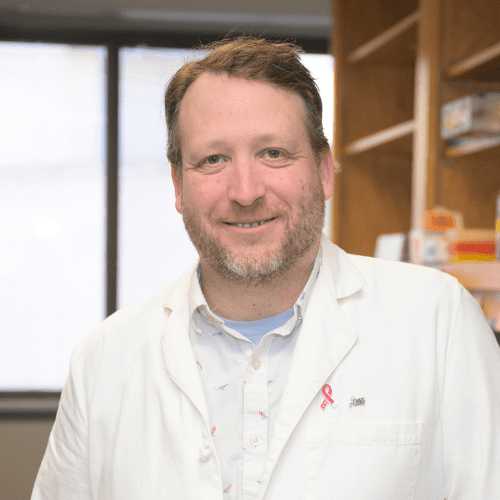
Jacob G. Kirkland, Ph.D.
Cell Cycle and Cancer Biology Research Program, MS 48
Oklahoma Medical Research Foundation
825 N.E. 13th Street
Oklahoma City, OK 73104
Phone: 405-271-4570
Fax: 405-271-7312