

My Research
We study how the DNA in a cell’s nucleus is organized to understand how cells make decisions. The myriad different cell types in metazoans are a demonstration that a single genome can give rise to many different phenotypes. The processes of differentiation and the disorder found in diseases such as cancer and neurodegeneration show that individual cells can move fluidly from one state to another in response to environmental cues or genetic injury. I found high levels of intrinsic variation in one important epigenetic feature, genome organization.
Determine the mechanisms controlling variability in genome organization
A wide range of mechanisms drives genome organization. Furthermore, many of these mechanisms – along with genome organization – are disordered in cancer. This leads to the hypothesis that genome organizational variability might be a global feature of cancer cells with many different etiologies. A mechanistic dissection of how the factors controlling genome architecture also contribute to plasticity and variability therein will yield insights into basic principles of how cells function. A more thorough understanding of how these mechanisms are altered in cancer may help us better understand that disease as well.
Investigating the cell-type specificity of variability in genome organization
Many studies have shown cell-type-specific genome organization on a population level. I observed that cell-type-specific associations can be marked by a change in mean distance or a change in variability within the population. However, many of the mechanisms likely to affect variability in genome organization on a global level are cell-type-specific as well. I will thoroughly test the hypothesis that variability in genome organization is cell-type-specific using Hi-C and imaging in in vitro and in vivo models of development.
Determine the functional role of variability in genome organization
My ultimate goal is to determine how genome organization variability determines cellular functions. To directly address this question, it will be essential to specifically alter genome organization without inducing pleiotropic effects. A better understanding of the mechanisms controlling genome organization will present the tools necessary to do these studies, and a combination of in vitro and in vivo studies should shed light on this question.
Research Keywords
- Cancer
- DNA






Contact
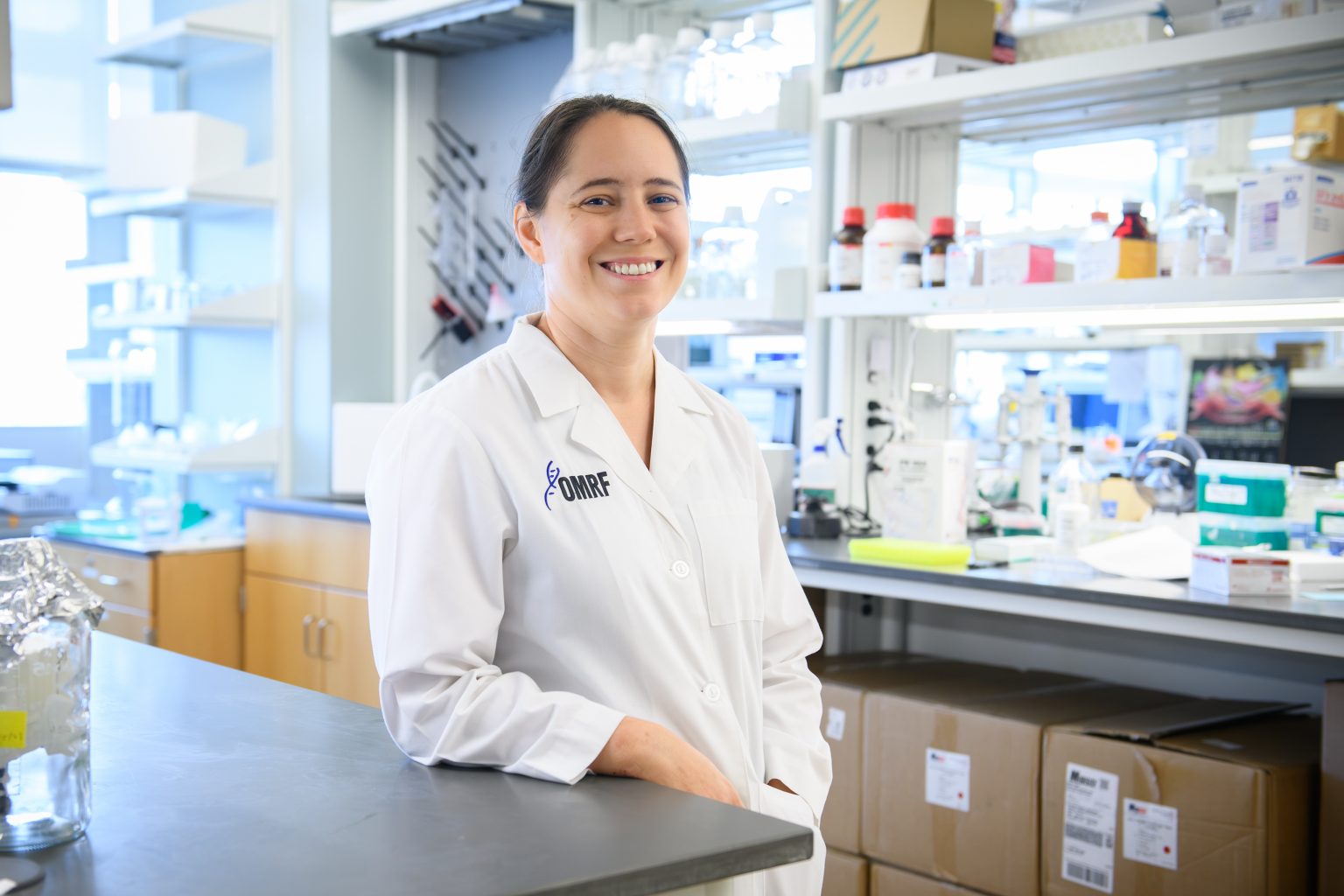
Elizabeth Finn, Ph.D.
Cell Cycle & Cancer Biology Research Program, MS 48
825 NE 13th Street
Oklahoma City, Oklahoma 73104