


My Research
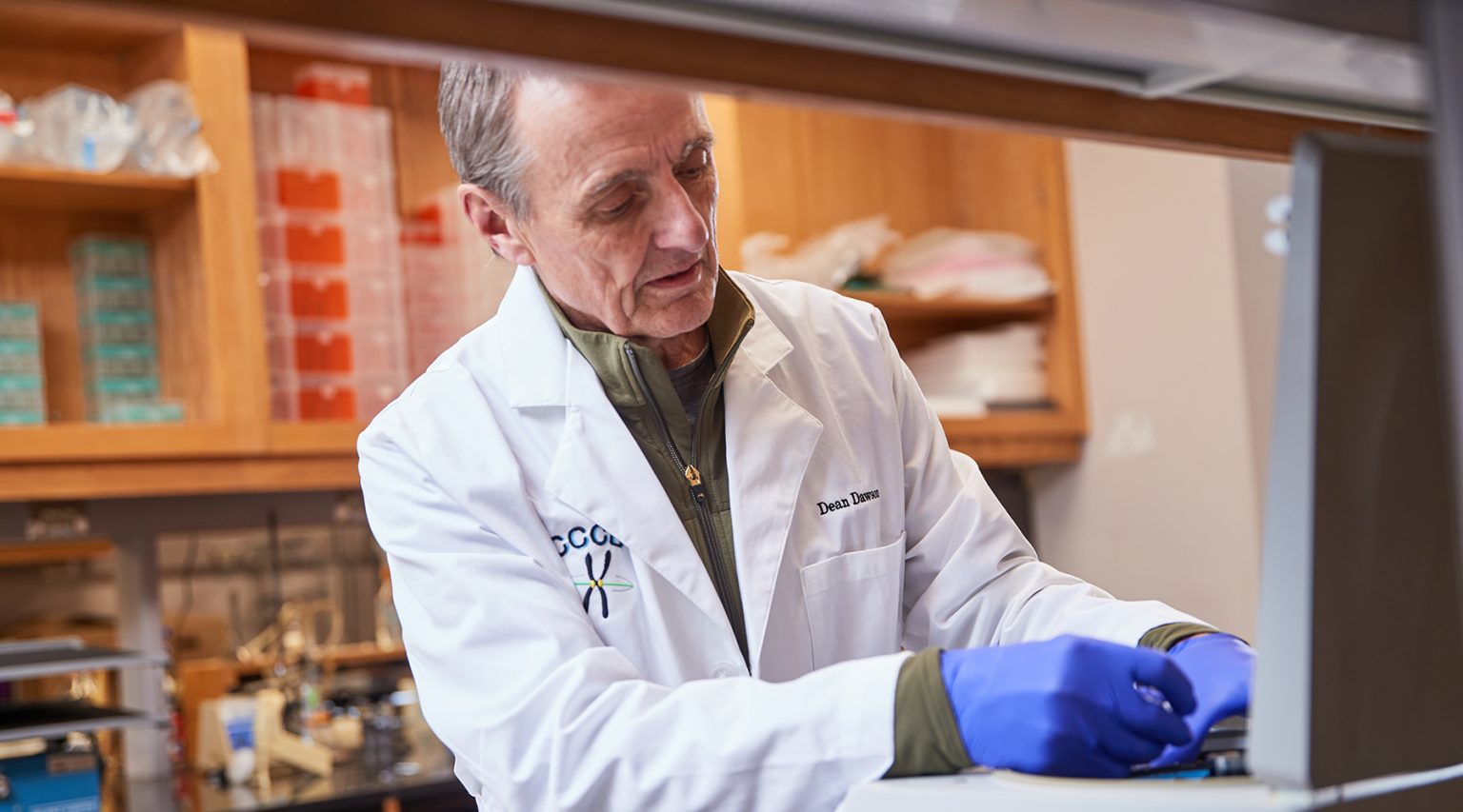
The improper partitioning of chromosomes to new cells as they are born is responsible for many human maladies. The process of partitioning the chromosomes in most of our cells is called mitosis. Error in this process segregation contribute to the development of cancer. The process of partitioning chromosomes to our gametes is called meiosis. Errors in this process are the leading cause of birth defects and infertility. Our lab studies the processes of mitosis and meiosis. We try to understand the cellular machinery that makes these processes work with amazing fidelity most of the time. In addition, we are interested in learning how these processes fail to generate cells with incorrect chromosome numbers.
Our projects primarily use yeast and cultured mammalian cells as models to elucidate fundamentals of chromosome behavior that will provide insights into the origins of chromosome segregation errors in humans.
Our laboratory is involved in three projects. In the first we are using yeast to study the machinery that moves chromosomes meiosis. In meiosis, the two copies of each chromosome (one copy inherited from each parent) find each other in the cell, become connected, than are pulled away from each other to opposite sides of the cell. Our laboratory discovered new ways, called centromere pairing, in which these partners become connected, to each other to insure that behave correctly. This could have implications for how birth defects arise in humans. We are elucidating the machinery behind centromere pairing and the ways in which it prevents errors in meiosis.
In the second project we are studying a gene called MPS1 that regulates mitosis and meiosis. Importantly, this gene is especially crucial for the survival of many cancer cells. We are exploring what critical roles MPS1 plays to keep cancer cells alive to determine whether MPS1 function could be a targeted to kill certain kinds of cancer cells.
Finally, we are studying the fate of chromosomes that have been partitioned incorrectly in mitosis – often an early step in the evolution of cells from normal to cancer cells. These errant chromosomes often go into a special cellular compartment called a micronucleus where they become mutated. We are identifying the genetic pathways that lead to the formation of these damaging micronuclei to better understand routes of cancer cell evolution.
Research Keywords
- Cancer
- Cell division
- Birth defects
- Chromosomes



Contact
Dean Dawson, Ph.D.
Cell Cycle and Cancer Biology Research Program, MS 48
Oklahoma Medical Research Foundation
825 N.E. 13th Street
Oklahoma City, OK 73104
Phone: 405-271-8192
Fax: 405-271-7312