

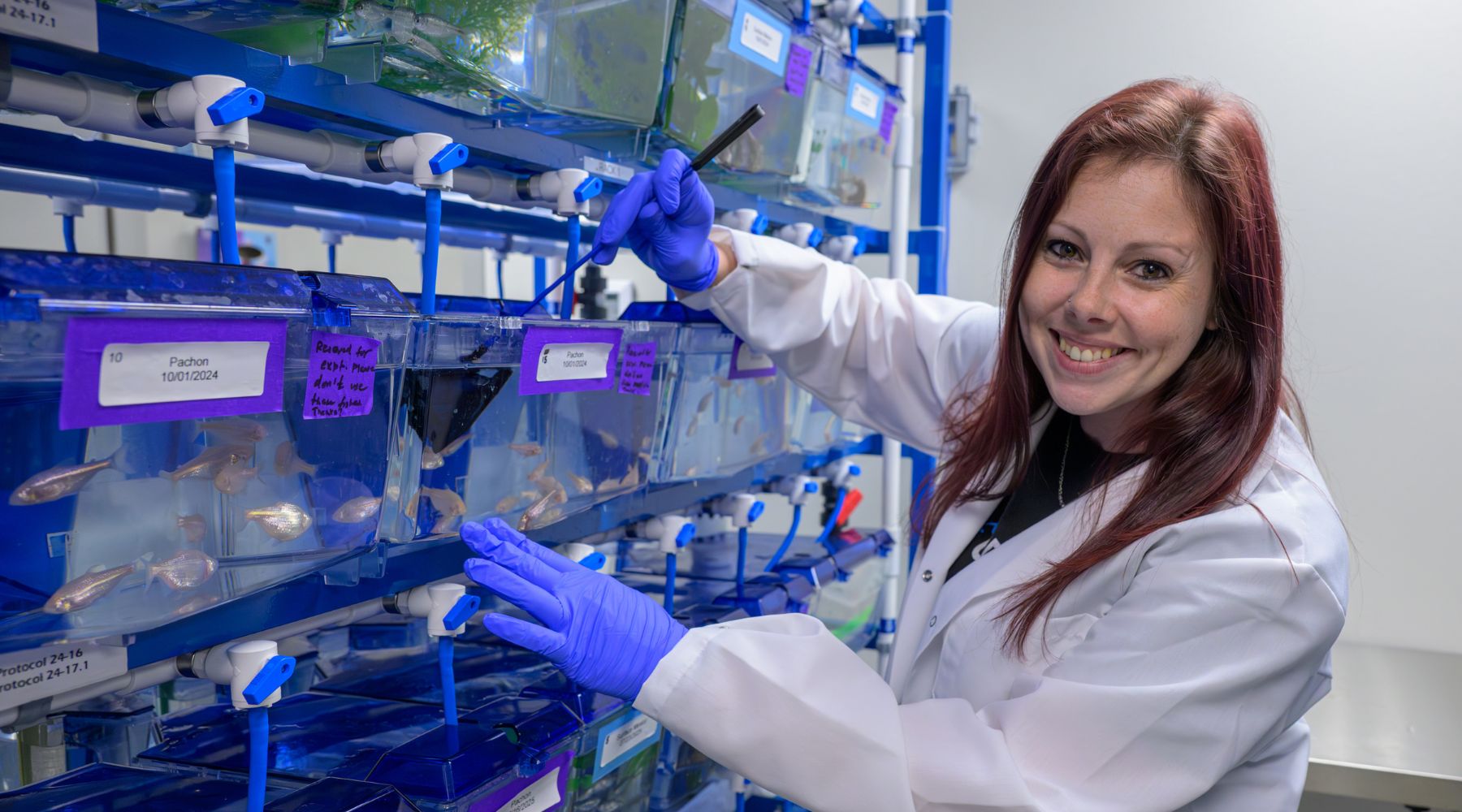
When stay-at-home mother Sarah Ball decided to go back to work, she found a position that made the most of her nurturing experience: parenting 1,600 tiny fish at the Oklahoma Medical Research Foundation.
“I’ve always loved animals,” Ball said. “I’ve passed that down to my kids, so now we have three dogs, two cats and they’re always finding creatures in their natural habitat around the backyard.”
This Mother’s Day, Ball will celebrate with all of her kids – even those with scales.
As the lead caretaker for the lab of OMRF researcher Jaya Krishnan, Ph.D., Ball is charged with the well-being of more than 100 tanks of cavefish. The blind fish, which are native to caves and rivers in Mexico, help Krishnan study metabolic diseases like diabetes.
For those studies, Ball must provide the fish with a stable living environment. That means a daily regimen of cleaning and feeding.
“It’s a constant process, but so is mothering,” Ball said.
Indeed, she said, her schedule with her human children, ages 7 and 10, mirrors her lab work. “Every day it’s bathtime, dinner, sports and homework,” she said. “Keeping a consistent routine is important.”
At OMRF, consistency is also key to success in research. “If the fish aren’t eating enough or have a dirty tank, that can show up in our results,” Krishnan said.
So, when Krishnan set up her lab in 2024, her requirements for the caretaker position were clear: She needed someone reliable, organized and able to multitask. “Motherhood teaches all that,” said Krishnan.
Krishnan said Ball’s years of experience as a stay-at-home mom made her the right choice for the position, even without any previous experience in animal husbandry.
“The term ‘helicopter mom’ gets thrown around, but here it’s necessary,” Ball said. “I keep a close eye on every fish, every single day. They can’t communicate, so if even one gets sick or is acting differently, I notice and act on it.”
Ball said finding a job she was passionate about and flexible with her family schedule felt “far-fetched” until she landed at OMRF.
That passion is evident, said Krishnan, and it leads to success in the lab. “Our work is possible because of the discipline and motherly love Sarah has for these little guys.”