
Dr. Charles Esmon died May 1, 2026. An OMRF Distinguished Career Scientist, Chuck was 79. While many tremendous scientists have called OMRF home, Chuck was perhaps the most talented and accomplished ever to do so.
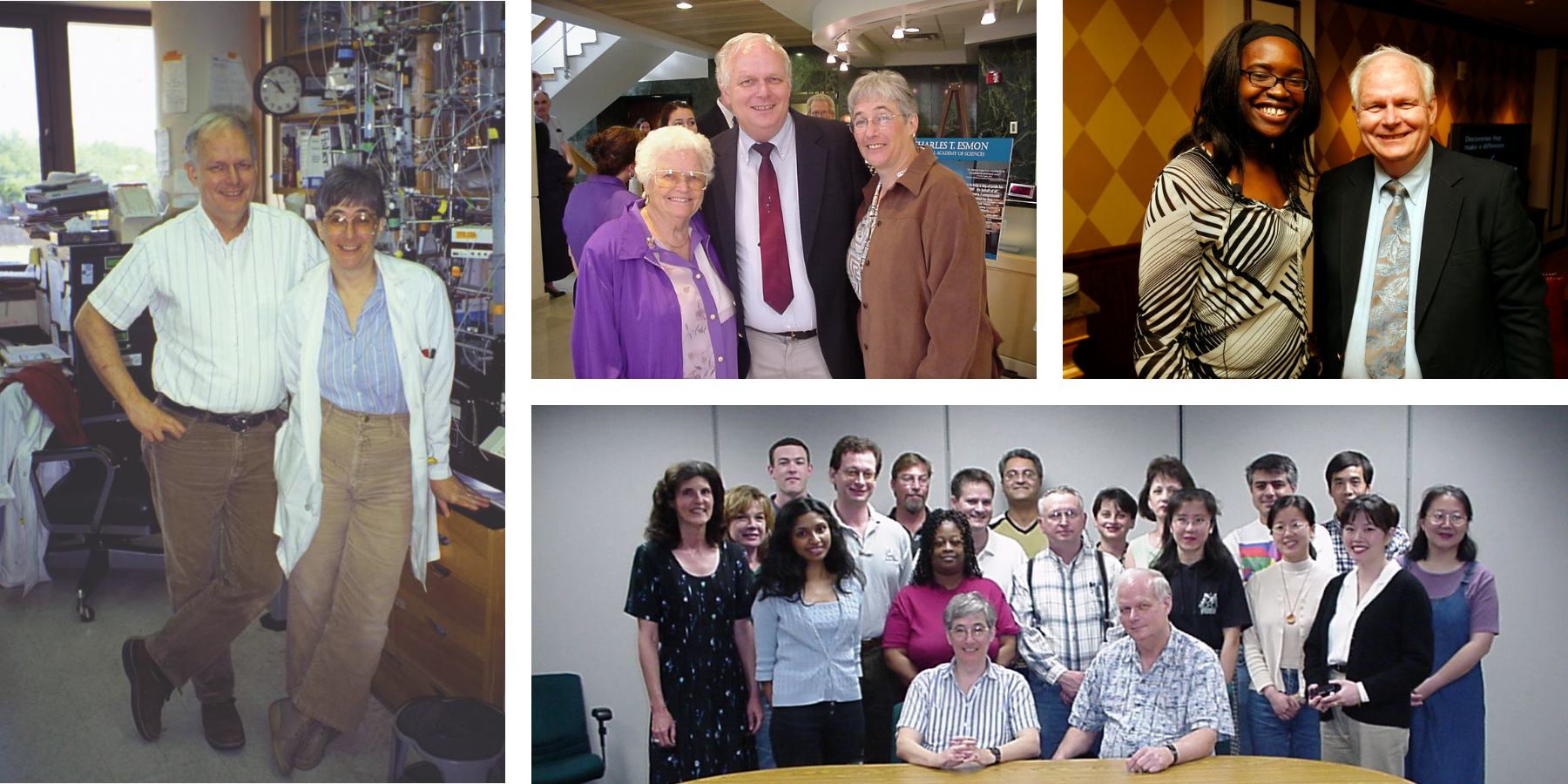
A self-described “country boy” who grew up on an Illinois farm, Chuck and his wife, Naomi, came to Oklahoma after earning their PhDs at Washington University in St. Louis, although Chuck first made a detour to the University of Wisconsin for postdoctoral studies. Naomi planted her flag in Dr. Jordan Tang’s lab at OMRF, while Chuck joined Dr. Fletcher Taylor at the University of Oklahoma Health Sciences Center. Naomi eventually relocated to Fletcher’s lab at OUHSC, and then in 1982, all three moved across the street to OMRF – this time with Naomi as a part of Chuck’s research team.
“She didn’t want to work with me initially,” recalled Chuck in an interview years later with Findings magazine, “because I had a reputation for being difficult to work with.” However, the collaboration that followed would prove anything but difficult. In the ensuing three-plus decades, with Naomi’s support, Chuck made a series of paradigm-shifting discoveries about blood clotting and how it relates to inflammation.
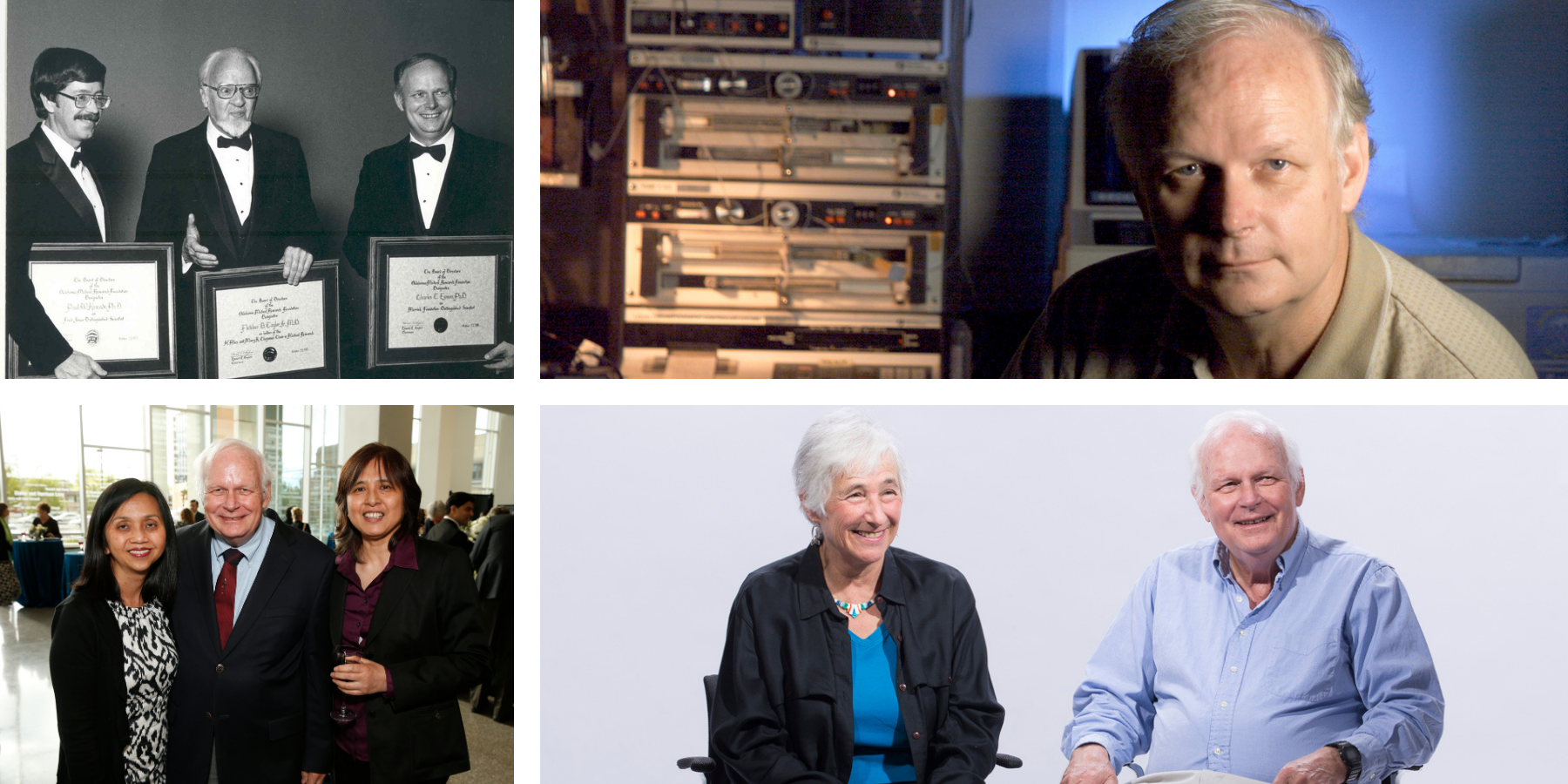
That work is today enshrined in textbooks. It also led to the development of two drugs that received approval from the Food and Drug Administration: Xigris, to treat severe sepsis, and Ceprotin, a therapy for people with a rare blood disorder. While drugmaker Eli Lilly removed Xigris from the market a decade after its approval, Ceprotin remains available in hospitals and clinics around the world, where physicians use it to treat patients with a life-threatening deficiency of protein C in their blood.
In 1988, Chuck became the first scientist outside of a university to be named a Howard Hughes Medical Institute Investigator, one of the highest honors in medical research and an appointment that he held for a quarter century. He also garnered many other plaudits, including a MERIT Award from the National Heart, Lung, and Blood Institute, the American Heart Association’s Basic Research Prize, the Robert J. and Claire Pasarow Foundation Award in Cardiovascular Research, the Robert P. Grant Medal from the International Society on Thrombosis and Haemostasis, and election to the National Academy of Sciences.
When Chuck joined the National Academy, Fletcher Taylor – who maintained a robust scientific partnership with Chuck throughout their careers – reflected on what made his friend and OMRF colleague special as a scientist. “It all starts with Chuck Esmon’s hands. The fluid, sure movements at the laboratory bench mask what is a complex job. This carries over into his writing; he thinks and writes in paragraphs, not sentences. All words and phrases find their places in a current of complex ideas.” Over the years, Fletcher said, he “delighted in watching and being repeatedly helped by Chuck.” But, he said, what he loved most was that Chuck was “a caregiver at heart.”
In the final years of his career at OMRF, Chuck had the opportunity to spend time with patients whose lives were saved by his work. Following one such meeting, Chuck told The Oklahoman, with characteristic understatement, “I always thought we would be able to do something that would actually be useful. To me, that was a big deal.”
Outside of the lab, Chuck and Naomi, who passed away in 2025, enjoyed skiing, deep-sea diving, underwater photography, and raising and caring for many dogs over the years. After retiring from OMRF in 2019, he continued as a Distinguished Career Scientist until his death.
The late Dr. Paul Kincade, a long-time OMRF colleague, may have put it best in 2015, when Chuck garnered yet another well-deserved scientific honor. “Oklahoma is blessed to have some very accomplished scientists, and Chuck Esmon may be the best of them. Again and again, he has made discoveries that really matter and ones that impact human health.”