

Adam’s Journal
Before digging out all of our red, white and blue clothing to celebrate America’s 250th birthday this summer, my wife and I watched Ken Burns’ (excellent) documentary, “The American Revolution.” In the series, I was surprised to find that Burns highlighted smallpox. What role did it play in the colonies’ fight for independence?
Dr. Scofield Prescribes
At the time of the American Revolution, smallpox posed one of the most significant health threats to the citizens of the 13 colonies. The highly communicable virus had already become common in the colonies, and densely populated port cities like Boston, Philadelphia and New York periodically saw concentrated outbreaks, usually triggered by the arrival of infected passengers or goods like clothing. Spread mainly through respiratory droplets, smallpox carried a mortality rate of 15–30%. Those who survived often suffered permanent scarring – they were “pockmarked” – and some were left blind. As a result, colonial Americans viewed smallpox with a fear comparable to what we experienced during the Covid-19 pandemic.
Early in the Revolutionary War, smallpox nearly destroyed the Continental Army during the colonies’ invasion of Canada, where outbreaks devastated troops. The virus hit American soldiers much harder than the British, as smallpox was extremely common in Great Britain, especially in cities. So, most British troops had already caught and survived smallpox as children, and those who hadn’t likely had been inoculated, a forerunner to vaccination.
Inoculation (or variolation) involved taking a scab or pus from a person with active smallpox and inserting it into a healthy individual, usually by making a small cut or scratch in the arm. The healthy person would then develop smallpox. But because the virus entered through the bloodstream instead of the lungs, infection was typically milder, and mortality rates (1–2%) were much lower.
Either way, British troops were largely immune to smallpox, as a single infection confers a lifetime of protection.
Meanwhile, the Continental Army was largely composed of men from rural areas, where smallpox was much less common. So, a large percentage of the troops lacked immunity to the virus, and generals were initially reluctant to inoculate them, fearing both the ensuing sickness – which would sideline troops – and potential larger outbreaks that could follow.
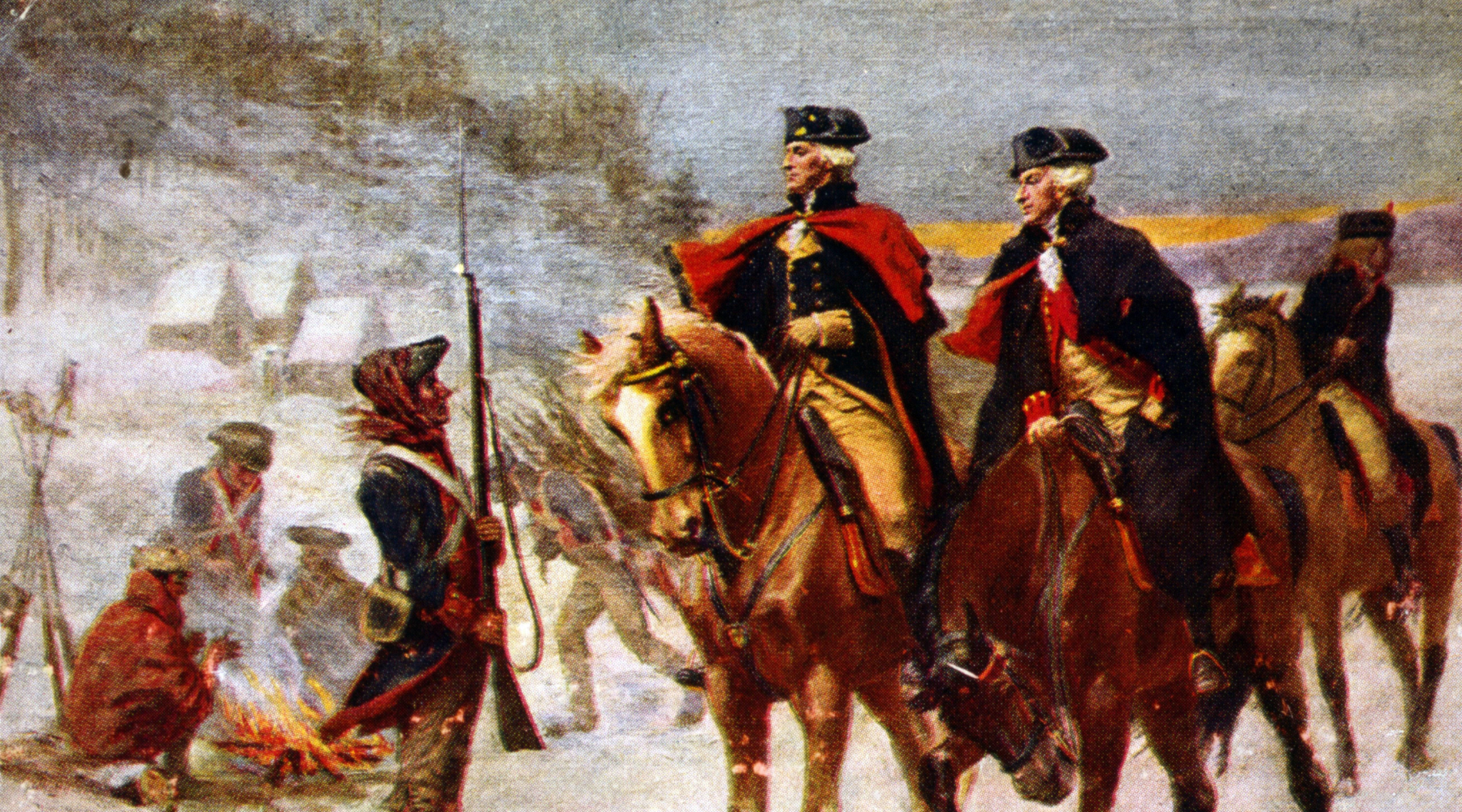
However, on the heels of an outbreak during the Canadian invasion and others among colonial troops, George Washington made a bold decision in 1777: he ordered systematic inoculation of the Continental Army.
This proved to be a tremendous logistical undertaking, with soldiers inoculated in controlled waves during winter encampments, when troops were less active. Infected soldiers were isolated during recovery, then returned immune.
Inoculation effectively eliminated smallpox as a threat to American troops, ending outbreaks that had removed large numbers of soldiers from service at critical moments. Washington’s daring choice stabilized the Continental Army and allowed it to keep fighting the war that ultimately led to our independence.
–
Dr. Hal Scofield is a physician-scientist at the Oklahoma Medical Research Foundation, and he also serves as Associate Chief of Staff for Research at the Oklahoma City VA Medical Center. Adam Cohen is OMRF’s senior vice president and general counsel. Send your health questions to contact@omrf.org.