

Adam’s Journal
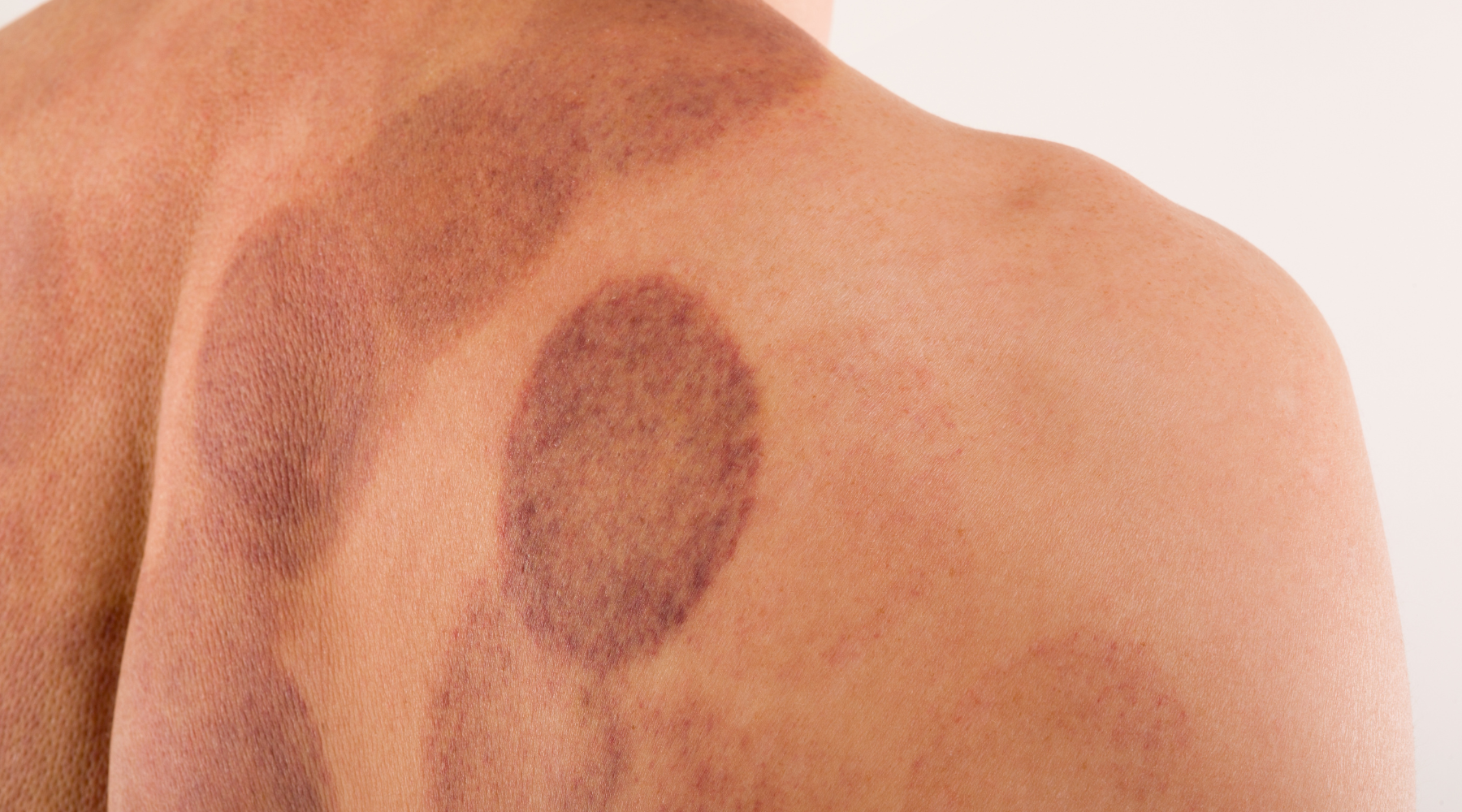
With my basketball-watching now reaching its annual fever pitch – go Thunder! – I’m increasingly noticing players bearing the telltale signs of “cupping”: round, reddish bruises on their upper backs and shoulders.
Why do athletes have cupping treatments? And do they actually do anything?
Dr. Scofield Prescribes
When you see athletes with the characteristic circular byproducts of cupping on their bodies, they have undergone what is essentially a suction massage. The process involves using cups to create suction on the skin.
The idea is that cupping increases blood flow, speeding muscle recovery and easing soreness. Athletic training staffs commonly incorporate cupping into sports therapy routines alongside massage and physical therapy.
Researchers have conducted quite a few studies of cupping. However, the evidence that cupping aids in athletic recovery remains limited and mixed.
Some of the more comprehensive studies suggest that cupping may help with subjective recovery measures like soreness, perceived exertion, sleep and wellness. But the evidence for meaningful improvements in more objective measures – like athletic performance or physiologic gauges of recovery – is much weaker.
Perhaps the best athlete-specific evidence I found was a 2018 systematic review of randomized controlled trials of cupping in amateur and professional athletes. It reported possible benefits for pain relief and range of motion, as well as a potential reduction in levels of creatine kinase, an enzyme that appears in elevated amounts in the blood with muscle injuries.
Still, the review stopped short of making any explicit recommendations for cupping in athletes, concluding that the evidence base was too small and methodologically weak.
When it comes to musculoskeletal pain – think back or neck pain in the context of sports – the evidence is even weaker. A review of the studies in this area concluded that cupping was often ineffective in treating this type of pain, whether in athletes or the general population.
As a recovery tool, cupping has failed to show that it reliably improves outcomes like performance, strength restoration or return-to-play timelines. Still, I’d view it as an (extremely) optional recovery aid, one that comes with essentially no risk and potential moderate benefits in areas like pain relief and improved sleep.
–
Dr. Hal Scofield is a physician-scientist at the Oklahoma Medical Research Foundation, and he also serves as Associate Chief of Staff for Research at the Oklahoma City VA Medical Center. Adam Cohen is OMRF’s senior vice president and general counsel. Send your health questions to contact@omrf.org.