

Adam’s Journal
Here’s a question from an Oklahoma Medical Research Foundation colleague:
Osteoporosis runs in my family, and I’ve heard that walking with a lot of force can help prevent it. Is stomping around a real treatment?
Kate Miller
Dr. Scofield Prescribes
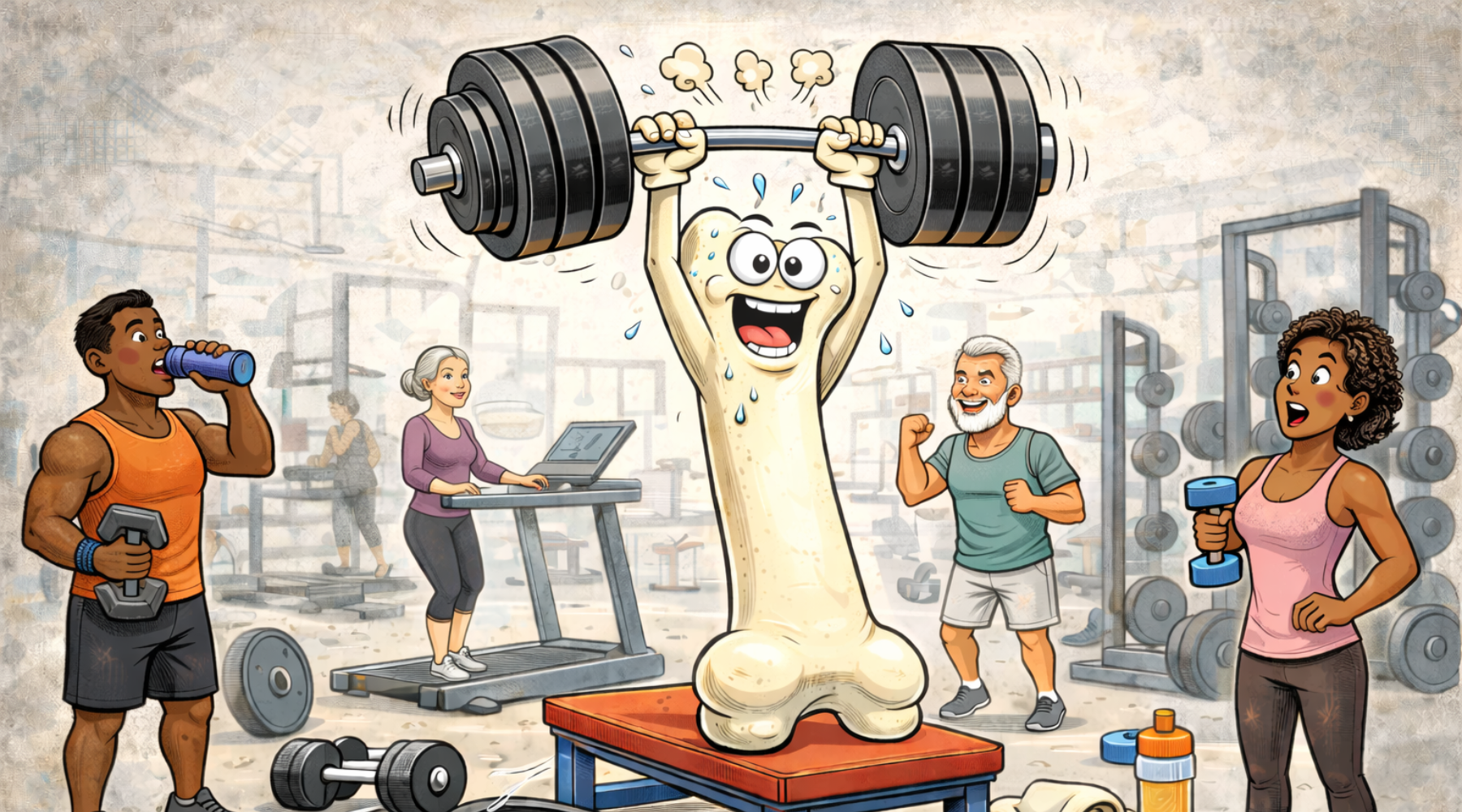
As we grow older, our bones weaken. Maintaining – or even increasing – bone density requires exercise. To benefit our bones, that exercise should be weight-bearing and, if possible, involve impact.
Bone is living tissue, and it changes over time in response to the forces placed on it. When our feet and legs carry our body weight, that places stress on our bones. And it’s that stress that keeps our bones strong.
Like muscles, bones stay “fittest” when they’re challenged. That’s where high-impact activities come in.
An analysis of 18 different trials on jumping found an improvement in hip bone density of 1.5% after an average of six months of jump training. The trials ranged from people jumping as high as possible 10–20 times, twice a day, to participants jumping for 20–30 minutes per session three times a week.
Researchers found that bone seems to respond best when there’s a small rest between individual jumps or between sets of jumps.
Not everyone can engage in high-impact activities. That’s especially true for people who are older, who live with disease or disability, and who have arthritis or osteoporosis.
For those who can’t jump – or jog, climb stairs, play pickleball or engage in other exercises that involve impact – the American Academy of Orthopaedic Surgeons suggests heel drops, which involve rising to your toes, then slowly lowering your heels to the ground.
Exercises that require you to carry weight also have bone-building capacity. All forms of strength training can help, but heavier lifting at lower repetitions is most effective.
The hips and spine can especially benefit from strength training. Common exercises that help bones in these areas include squats, farmer’s carries, and deadlifts.
Non-weight-bearing exercises like swimming and biking provide many benefits, both for muscles and organs like your heart and lungs. However, they won’t build or maintain bone strength.
So, let’s circle back to the original question on stomping. I didn’t find any studies that showed that stomping maintained or improved bone density. But the indirect evidence – including one study that involved a multi-exercise program that included stomping – certainly suggests that regular stomping can help keep bones strong. Just don’t give yourself shin splints!
–
Dr. Hal Scofield is a physician-scientist at the Oklahoma Medical Research Foundation, and he also serves as Associate Chief of Staff for Research at the Oklahoma City VA Medical Center. Adam Cohen is OMRF’s senior vice president and general counsel. Send your health questions to contact@omrf.org.