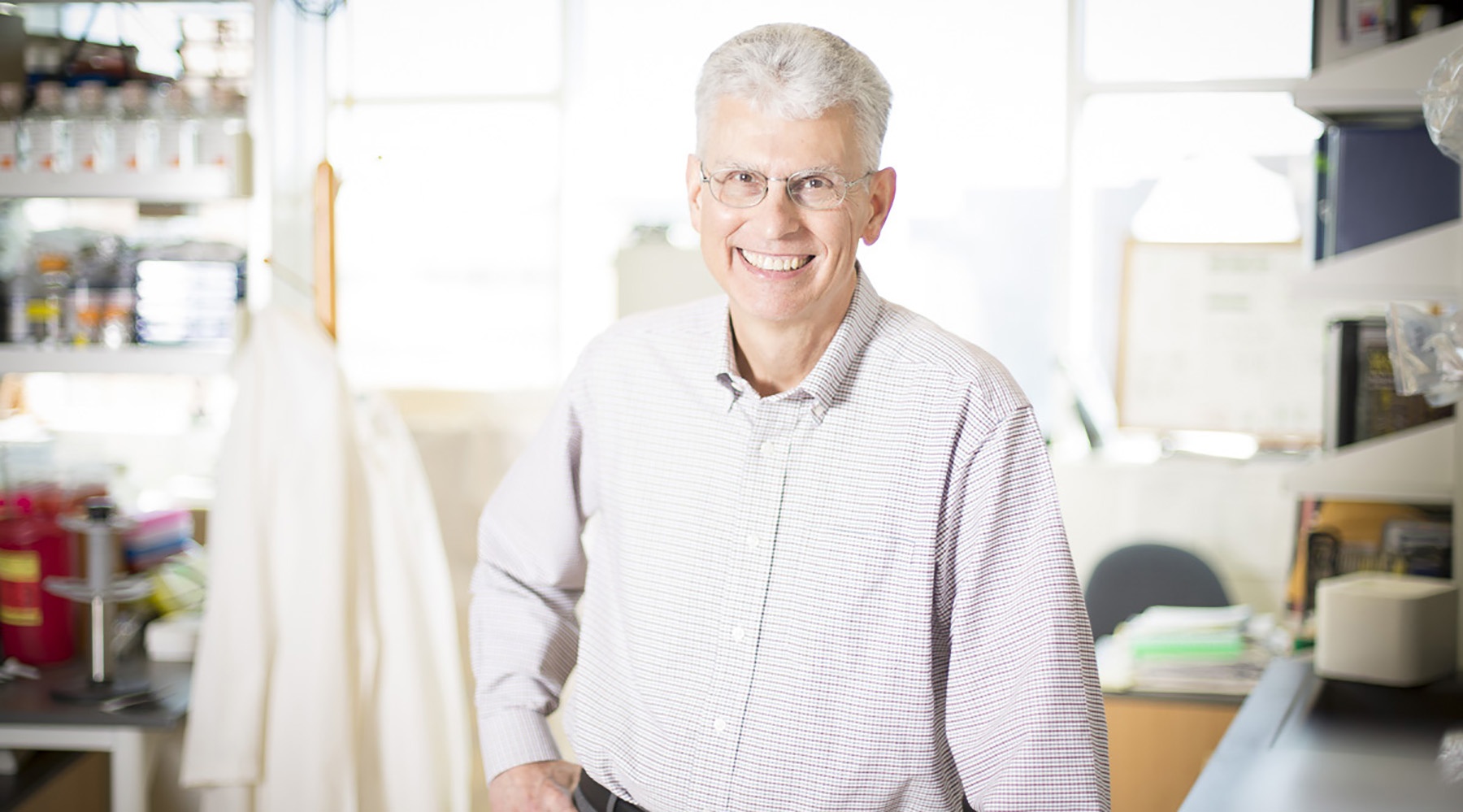
Rodger P. McEver, M.D.
Distinguished Career Scientist
Adjunct Professor, Department of Biochemistry and Molecular Biology, University of Oklahoma Health Sciences Center
My 101
The research in my lab focused on how circulating blood cells attach to blood vessel surfaces at sites of tissue injury or infection. Substances released at these sites direct the endothelial cells that line blood vessels to display “adhesion molecules.” These molecules enable circulating white blood cells, or leukocytes, to roll along the vessel surface. The rolling cells then slow to a stop and then crawl between the endothelial cells into the tissues, where they destroy invading microbes. This process is known as inflammation. Similarly, circulating platelets use adhesion molecules to roll along tissues that are exposed when blood vessels are disrupted. The platelets then stop and form clumps to slow hemorrhage and promote blood clotting. Inflammation and blood clotting are often linked. Indeed, leukocytes sometimes roll on and then stick to blood platelets. Excessive inflammation and blood clotting contribute toward many diseases, including heart attacks, stroke, dysfunction of transplanted organs, deep vein thrombosis, and sickle cell crisis.
Three adhesion molecules, called selectins, direct the initial rolling of leukocytes on endothelial cells and platelets. Our lab discovered one of the selectins, which is displayed on both endothelial cells and platelets, and also discovered its interacting partner, or ligand, on leukocytes. Examination of the molecular details of how selectins bind to their ligands has suggested means to inhibit these interactions in disease. We also collaborated with bioengineers to study how cellular and molecular features adjust to complex fluid dynamics to facilitate blood cell adhesion under flow. This work involves sophisticated video microscopy to visualize cell adhesion in flow chambers that mimic the conditions in the circulation.
Finally, my lab generated a variety of genetically engineered mice in which key adhesion or signaling molecules have been deleted or modified. These mice provide powerful tools for investigating molecular function in models of inflammation or blood clotting in living animals.
Research
During responses to infection and tissue injury, circulating leukocytes and platelets adhere to each other and to the endothelial surface of blood vessels. Dysregulated adhesion of these cells contributes to thrombotic and inflammatory disorders. Leukocytes first tether to and then roll on vascular surfaces, a prerequisite for the subsequent arrest and then migration of the cells into the underlying tissues.
Tethering and rolling require rapid interaction of three related cell adhesion molecules called selectins with glycosylated cell-surface ligands. These interactions must withstand the forces applied to adherent cells by the wall shear stresses in the circulation. We discovered a sialomucin called PSGL-1, which is the major ligand on leukocytes for P-selectin and L-selectin and which also binds to E-selectin.
We have identified a number of molecular and cellular features that govern how selectins bind to their glycoconjugate ligands. These include the extension of binding domains above the cell surface, the clustering of selectins or their ligands through interactions of the cytosolic domains with clathrin-coated pits or the cytoskeleton and the dynamic extension and retraction of long, thin membrane tethers during rolling adhesion. We discovered that different levels of force affect the lifetimes of selectin-ligand bonds in a biphasic manner. Low forces prolong lifetimes (catch bonds), whereas higher forces shorten lifetimes (slip bonds). Catch bonds help explain the paradoxical requirement for a minimum flow rate to support cell adhesion mediated through L-selectin.
Studies with gene-targeted mice have a identified a novel role for PSGL-1 in mediating tethering of flowing leukocytes to E-selectin on inflamed vascular surfaces, a function for core 1-derived O-glycans in angiogenesis during development, and an unexpected contribution of cytokine receptors in bone marrow endothelial cells for hematopoiesis.
We are using biochemical and crystallographic approaches to further refine the structural features involved in selectin-ligand interactions, flow chambers to study the biophysical features required for selectins to support cell interactions under flow and a variety of gene-targeted mice to study the functions of selectins, PSGL-1, glycosyltransferases and cytokine receptors in vivo. Our long-term goal is to understand how lectin-carbohydrate interactions in the vasculature contribute to inflammation, hemostasis and hematopoiesis.
Brief CV
Education
B.A., Yale University (cum laude), 1970
M.D., University of Chicago, 1974
Honors and Awards
1986-1991 NIH Research Career Development Award
1986 elected to American Society for Clinical Investigation
1993 Regents’ Award for Superior Accomplishment in Research and Creative Activity, University of Oklahoma
1994 elected to Association for American Physicians
1997 Investigator Recognition Award, International Society on Thrombosis and Haemostasis
1997 NIH Merit Award
1998 George Lynn Cross Research Professor, University of Oklahoma
2000 elected to Alpha Omega Alpha Honor Medical Society
2001 Fred Jones Distinguished Scientist, Oklahoma Medical Research Foundation
2001 elected Fellow of the American Heart Association
2008 Edward L. and Thelma Gaylord Prize for Scientific Achievement
Other Activities
Past or present service on editorial boards for Journal of Clinical Investigation, Blood, Arteriosclerosis, Thrombosis and Vascular Biology, Journal of Thrombosis and Hemostasis, and Journal of Biological Chemistry; reviewer for several other journals and publications; review committees and study sections for the National Institutes of Health, American Heart Association and other.
Established his lab at OMRF in 1987.
Publications
Recent Publications
Kondo Y, Larabee JL, Gao L, Shi H, Shao B, Hoover CM, McDaniel JM, Ho YC, Silasi-Mansat R, Archer-Hartmann SA, Azadi P, Srinivasan RS, Rezaie AR, Borczuk A, Laurence JC, Lupu F, Ahamed J, McEver RP, Papin JF, Yu Z, Xia L. L-SIGN is a receptor on liver sinusoidal endothelial cells for SARS-CoV-2 virus. JCI Insight 6, 2021 July, PMID: 34291736, PMCID: PMC8410055
Hoover CM, Kondo Y, Shao B, McDaniel M, Lee R, McGee S, Whiteheart SW, Bergmeier W, McEver RP, Xia L. Heightened activation of embryonic megakaryocytes causes aneurysms in the developing brain of mice lacking podoplanin. Blood, 2021 May, PMID: 33619517, PMCID: PMC8138551
Bergstrom K, Shan X, Casero D, Batushansky A, Lagishetty V, Jacobs JP, Hoover C, Kondo Y, Shao B, Gao L, Zandberg W, Noyovitz B, McDaniel JM, Gibson DL, Pakpour S, Kazemian N, McGee S, Houchen CW, Rao CV, Griffin TM, Sonnenburg JL, McEver RP, Braun J, Xia L. Proximal colon-derived O-glycosylated mucus encapsulates and modulates the microbiota. Science 370:467-472, 2020 October, PMID: 33093110, PMCID: PMC8132455
Selected Publications
Zhang N, Liu Z, Yao L, Mehta-D'souza P, McEver RP. P-Selectin Expressed by a Human SELP Transgene Is Atherogenic in Apolipoprotein E-Deficient Mice. Arterioscler Thromb Vasc Biol. 2016 Jun;36(6):1114-21. PMID: 27102967 PMCID: PMC4882243
Liu Z, Zhang N, Shao B, Panicker SR, Fu J, McEver RP. Replacing the Promoter of the Murine Gene Encoding P-selectin with the Human Promoter Confers Human-like Basal and Inducible Expression in Mice. J Biol Chem. 2016 Jan 15;291(3):1441-7. PMID: 26631722 PMCID: PMC4714226
* Yago T, Tsukamoto H, Liu Z, Wang Y, Thompson LF, McEver RP. Multi-Inhibitory Effects of A2A Adenosine Receptor Signaling on Neutrophil Adhesion Under Flow. J Immunol 2015 Oct 15;195(8):3880-9. PMID: 26355151 PMCID: PMC4592819
Yago T, Petrich BG, Zhang N, Liu Z, Shao B, Ginsberg MH, McEver RP. Blocking neutrophil integrin activation prevents ischemia-reperfusion injury. J Exp Med 2015. PMID: 26169939 PMCID: PMC4516797
Shao B, Yago T, Setiadi H, Wang Y, Mehta-D'Souza P, Fu J, Crocker PR, Rodgers W, Xia L, McEver RP. O-glycans direct selectin ligands to lipid rafts on leukocytes. Proc Natl Acad Sci U S A 2015. PMID: 26124096 PMCID: PMC4507194
Herzog BH, Fu J, Wilson SJ, Hess PR, Sen A, McDaniel JM, Pan Y, Sheng M, Yago T, Silasi-Mansat R, McGee S, May F, Nieswandt B, Morris AJ, Lupu F, Coughlin SR, McEver RP, Chen H, Kahn ML, Xia L. Podoplanin maintains high endothelial venule integrity by interacting with platelet CLEC-2. Nature 502:105-109, 2013. PMID: 23995678 PMCID: PMC3791160
Contact
Cardiovascular Biology Research Program, MS 45
Oklahoma Medical Research Foundation
825 N.E. 13th Street
Oklahoma City, OK 73104
Phone: (405) 271-6480
Fax: (405) 271-3137
E-mail: Rodger-McEver@omrf.org
For media inquiries, please contact OMRF’s Office of Public Affairs at news@omrf.org.


News from the McEver lab

Each week, OMRF Vice President of Research Dr. Rod McEver opens “Adam’s Journal” to answer a medical question from Adam Cohen, OMRF’s senior vice president & general counsel. Adam’s Journal Here’s a question from a reader: Dear Dr. McEver, I got my fourth Covid vaccination in September. I am at high risk because of my […]










OMRF’s education programs enjoyed a record summer in 2022. For most students, summer means late nights, lake days and snooze buttons. But for those who spend the dog days in OMRF’s labs, it’s mice, pipettes and data analysis. Despite the obvious appeal of a lazy few months between semesters, in recent years, OMRF has seen […]

Dear Dr. McEver, Hospital employees, especially when talking to the media, often describe a patient’s condition as “stable.” What does that mean? And when they say a person’s condition is “fair,” how does that differ from “good”? Jo Jones Edmond, OK Dr. McEver Prescribes There is no universal definition of the term “stable” in the […]














Each week, OMRF Vice President of Research Dr. Rod McEver opens “Adam’s Journal” to answer a medical question from Adam Cohen, OMRF’s senior vice president & general counsel. Adam’s Journal The Food and Drug Administration recently approved another Covid-19 vaccine. What makes this shot different than the others, how effective is it, and should those […]





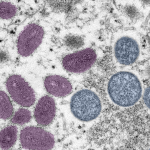






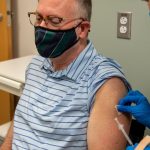





Each week, OMRF Vice President of Research Dr. Rod McEver opens “Adam’s Journal” to answer a medical question from Adam Cohen, OMRF’s senior vice president & general counsel. Adam’s Journal I participated in the clinical trial of the Pfizer Covid-19 vaccine, which means I received my initial shots much earlier than most people. As a […]



















In 2011, OMRF completed the largest campus expansion in the foundation’s history. With the construction of a new research tower, OMRF added 186,000 square feet of research and clinical space to its research campus. Funded through a combination of private gifts and state and federal grants, the facility houses dozens of laboratories, an imaging and […]

When Dr. William Thurman, above, took the helm of OMRF, he brought the lab coat he’d worn since his days training as a pediatric oncologist. That powder-blue garment, along with the bow ties he favored, would become synonymous with OMRF throughout the 1980s (and most of the 1990s). But his sartorial flourishes would prove the […]
















Each week, OMRF Vice President of Research Dr. Rod McEver opens “Adam’s Journal” to answer a medical question from Adam Cohen, OMRF’s senior vice president & general counsel and interim president. Adam’s Journal As I’ve grown older (I’m 53), I’ve noticed that I seem to be sleeping less. In particular, I tend to wake in […]


First a physician, Dr. Lijun Xia has become a research star As a young physician in China, Dr. Lijun Xia treated people with life-threatening blood diseases. But few medications existed to help the people he cared for, and over time, the hematologist grew frustrated. “I wanted to do better for my patients, to give them […]


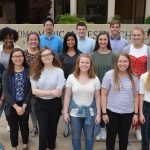

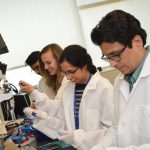

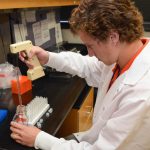
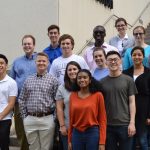







For many students, summer marks a time for rest and relaxation. For sailboats and sunscreen, beachcombing and barbecues. But don’t tell that to a dozen of Oklahoma’s top high school and college science students. As Sir Alexander Fleming Scholars at the Oklahoma Medical Research Foundation, they’ve opted to trade swimsuits for lab coats so they […]
OMRF honored three scientists and added a new board member at its annual spring board meeting and honors celebration Tuesday. Researcher John Harley, M.D., Ph.D., was awarded the Edward L. and Thelma Gaylord Prize for Scientific Achievement. OMRF named Rodger McEver, M.D., as the Alvin Chang Chair in Cardiovascular Biology and Lijun Xia, M.D, Ph.D., […]
OMRF has named 12 Oklahoma high school and college students as Sir Alexander Fleming Scholars for 2009. The students, chosen from a statewide pool of applicants, will comprise the 54th class of Fleming Scholars at OMRF. This year’s class will spend June and July working in laboratories with senior-level OMRF scientists on ongoing research projects. […]
Oklahoma Medical Research Foundation scientist John Harley, M.D., Ph.D., has been selected as a member of the Association of American Physicians. Harley, who chairs OMRF’s Arthritis and Immunology Research Program, was one of only 60 physicians nationwide chosen for membership this year. The 124-year-old Association selects members based on excellence in the pursuit of medical […]
When an epileptic seizure strikes, it’s almost always frightening: violent, involuntary muscle contractions, often accompanied by a loss of consciousness. Epilepsy affects more than 3 million Americans, including an estimated 100,000 Oklahomans. In most cases, the cause is not known. But a study from the Oklahoma Medical Research Foundation casts new light on how injuries […]
The Oklahoma Medical Research Foundation is now accepting applications for its 2009 Sir Alexander Fleming Scholar Program. The application deadline is Feb. 1. High school seniors, as well as college freshmen, sophomores and juniors, are eligible to apply for the scholarships. Students selected as Fleming Scholars will work side-by-side in a laboratory with a senior-level […]
At its annual honors and awards banquet this evening, the Oklahoma Medical Research Foundation will honor researcher Rodger McEver, M.D., with its highest scientific prize and board member Burns Hargis with its Board of Directors Distinguished Service Award. At the dinner, which will be held at the Oklahoma City Golf and Country Club, OMRF will […]
The Oklahoma Medical Research Foundation has named nine Oklahoma science students as Sir Alexander Fleming Scholars for 2008. Nearly 100 applicants from high schools and colleges throughout Oklahoma competed for the prestigious program, which has launched the careers of physicians and researchers for more than a half-century. Since 1956, the Fleming Scholar Program has provided […]
The Oklahoma Medical Research Foundation is accepting applications for its 2008 Sir Alexander Fleming summer scholarship program. The program lets students enhance their research skills by working alongside world-class scientists for eight weeks in OMRF’s state-of-the art laboratories. The application deadline is February 1. “The Fleming scholar program provides a phenomenal experience to young people […]
Their peers may spend much of June, July and August sleeping late and lounging by the pool, But for a dozen of Oklahoma’s most talented high school and college science students, summer will mean donning lab coats and safety goggles in laboratories at the Oklahoma Medical Research Foundation. OMRF today announced its 2007 class of […]
The Oklahoma Medical Research Foundation has welcomed its 50th class of Sir Alexander Fleming Scholars. The class, 13 in all, represent some of Oklahoma’s most talented high school and college science students. The eight high-schoolers and five collegians were selected from more than 100 applicants. the students, all of whom are contemplating careers in medical […]
OKLAHOMA CITY, December 17, 2004 – The Oklahoma Medical Research Foundation has named Rodger McEver, M.D., as Vice President of Research and Tim Hassen as Chief Financial Officer. Dr. Rodger McEver McEver holds a B.A. from Yale University and earned his medical degree at the University of Chicago. He joined OMRF’s scientific staff in 1987 and […]
Research at the Oklahoma Medical Research Foundation (OMRF) will receive a major boost with a $6 million gift from Eli Lilly and Company. OMRF will use the gift from the Indianapolis-based pharmaceutical company to create a pair of endowed faculty chairs – the Eli Lilly Chairs in Biomedical Research. For more than two decades, Lilly […]
The Oklahoma Medical Research Foundation announced today that it has received a $10 million grant from the National Institutes of Health. “This is yet another important step in the emergence of Oklahoma as a center of biomedical excellence,” said OMRF President Dr. J. Donald Capra. “Five years ago, this state had never seen a $10 […]
“From Bench to Bedside: Biomedicine at the New Millennium,” a series of free public lectures presented by scientists at the Oklahoma Medical Research Foundation, is scheduled to begin October 7 at Westminster Presbyterian Church in Oklahoma City. OMRF’s nationally and internationally recognized biomedical researchers will explain in easily understood terms the latest research being done […]

For Mary Long, the answer to her pain may, literally, be right around the CORNER. Her grandmother would hum as she rubbed Mary Long’s limbs with liniment. “You’re just a puny child,” she would say, shaking her head. The rubdowns soothed the youngster, but they didn’t erase the aches that seemed ever present in her […]