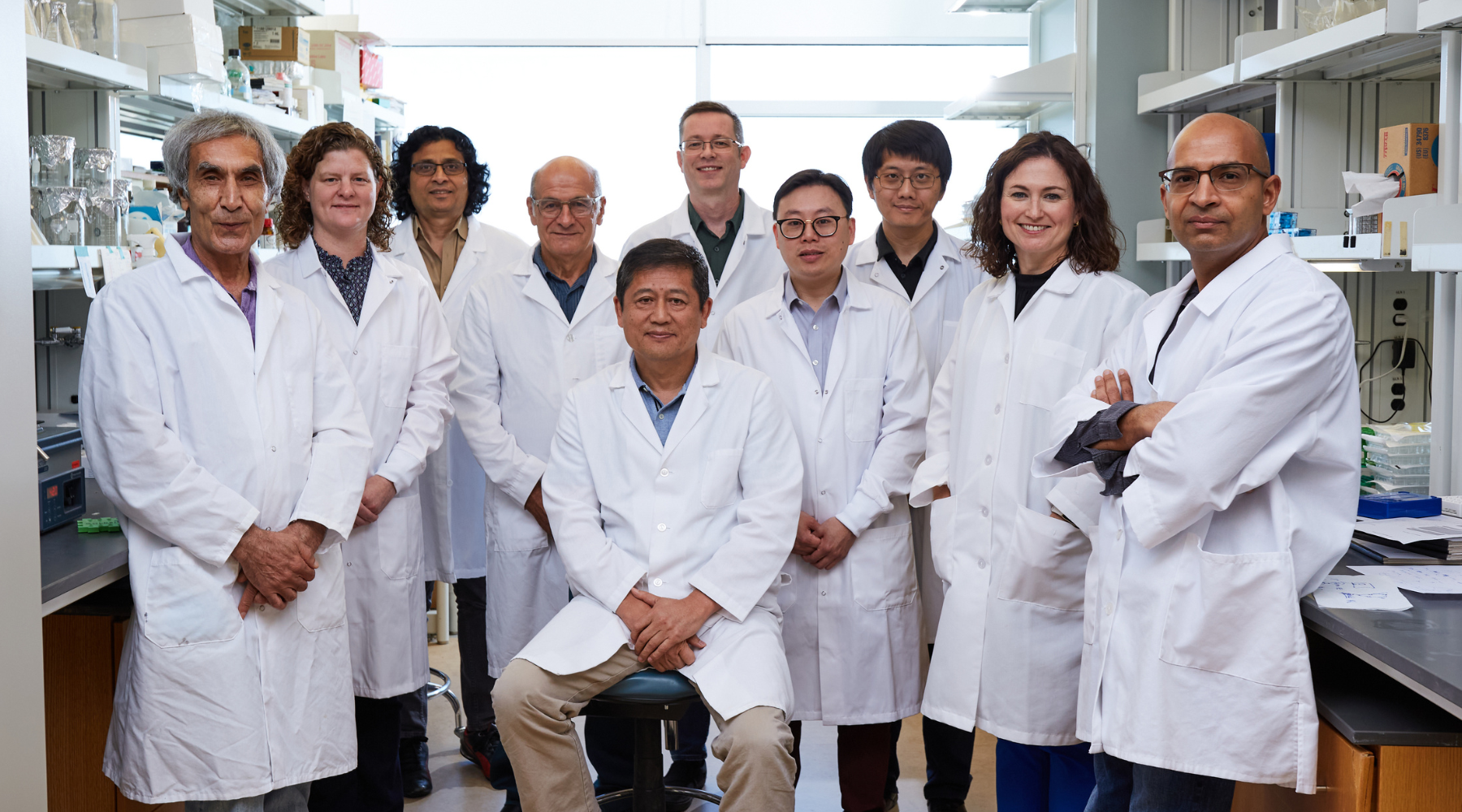
Cardiovascular Biology Research Program
What We Do
The Cardiovascular Biology Research Program investigates fundamental mechanisms involved in blood and lymphatic vessel function, atherogenesis, blood coagulation, inflammation, and sepsis.
This program utilizes a multidisciplinary approach to address these questions at a molecular level. This approach encompasses structural biology, structure-function analysis of enzymes and receptors, regulation of the relevant genes, in vivo studies using transgenic and gene deletion approaches, cell biology, protein chemistry, physiological studies, and biophysical methods for analyzing protein-protein, membrane-protein, and cell-cell interactions.
The multidisciplinary approach provides insights into processes with relevance to many human diseases, including heart attack, stroke, septic shock, cancer, and inflammatory bowel disease. Several findings by program members have generated patents and licenses that may lead to new diagnostics and therapeutics.
Our Scientists
 Courtney Griffin, Ph.D.
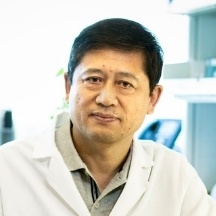 Lijun Xia, M.D., Ph.D.
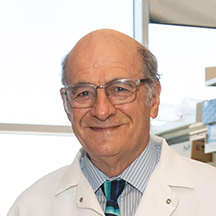 Florea Lupu, Ph.D.
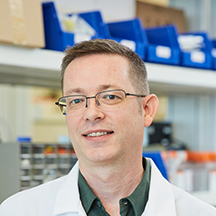 Lorin Olson, Ph.D.
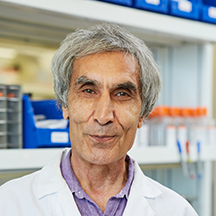 Ray Rezaie, Ph.D.
 Jasimuddin Ahamed, Ph.D.
 Sathish Srinivasan, Ph.D.
 Audrey Cleuren, Ph.D.
 Brian Coon, Ph.D.
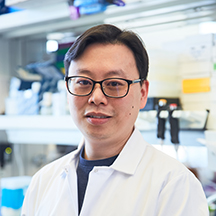 Chi Fung Lee, Ph.D.
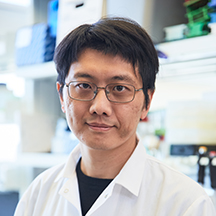 Pengchun Yu, Ph.D.
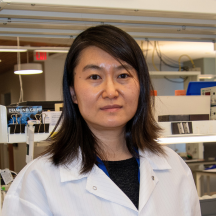 Xin Geng, Ph.D.
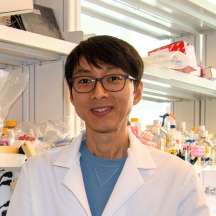 Hae Ryong Kwon, Ph.D.
 Chris Schafer, Ph.D.
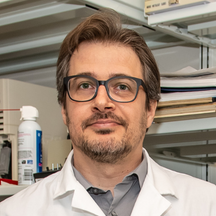 Robert Silasi-Mansat, Ph.D.
Our Publications
2024
Hatch CJ, Piombo SD, Fang JS, Gach JS, Ewald ML, Van Trigt WK, Coon BG, Tong JM, Forthal DN, Hughes CCW. SARS-CoV-2 infection of endothelial cells, dependent on flow-induced ACE2 expression, drives hypercytokinemia in a vascularized microphysiological system. Front Cardiovasc Med 11:1360364, 2024 March, PMID: 38576426, PMCID: PMC10991679
Yang J, Zhu L, Pan H, Ueharu H, Toda M, Yang Q, Hallett SA, Olson LE, Mishina Y. A BMP-controlled metabolic-epigenetic signaling cascade directs midfacial morphogenesis. J Clin Invest, 2024 March, PMID: 38466355, PMCID: PMC11014657
Zuo B, Yang F, Huang L, Han J, Li T, Ma Z, Cao L, Li Y, Bai X, Jiang M, He Y, Xia L. Endothelial Slc35a1 deficiency causes loss of LSEC identity and exacerbates neonatal lipid deposition in the liver in mice. Cell Mol Gastroenterol Hepatol, 2024 March, PMID: 38467191
Huang L, Kondo Y, Cao L, Han J, Li T, Zuo B, Yang F, Li Y, Ma Z, Bai X, Jiang M, Ruan C, Xia L. Novel GNE missense variants impair de novo sialylation and cause defective angiogenesis in the developing brain in mice. Blood Adv 8:991-1001, 2024 February, PMID: 38237079, PMCID: PMC10879683
Giri H, Biswas I, Rezaie AR. Thrombomodulin: A multifunctional receptor modulating the endothelial quiescence. J Thromb Haemost, 2024 January, PMID: 38266676, PMCID: PMC10960680
Boutagy NE, Gamez-Mendez A, Fowler JW, Zhang H, Chaube BK, Esplugues E, Lee S, Horikami D, Zhang J, Citrin KM, Singh AK, Coon BG, Suarez Y, Fernandez-Hernando C, Sessa WC. Dynamic metabolism of endothelial triglycerides protects against atherosclerosis in mice. J Clin Invest, 2024 January, PMID: 38175710, PMCID: PMC10866653
Biswas I, Giri H, Panicker SR, Rezaie AR. Thrombomodulin Switches Signaling and Protease-Activated Receptor 1 Cleavage Specificity of Thrombin. Arterioscler Thromb Vasc Biol, 2024 January, PMID: 38174561, PMCID: PMC10922642
2023
Shi H, Gao L, Kirby N, Shao B, Shan X, Kudo M, Silasi R, McDaniel MJ, Zhou M, McGee S, Jing W, Lupu F, Cleuren A, George JN, Xia L. Clearance of VWF by hepatic macrophages is critical for the protective effect of ADAMTS13 in sickle cell anemia mice. Blood, 2023 December, PMID: 38142410, PMCID: PMC10997916
Giri H, Biswas I, Rezaie AR. Thrombomodulin Regulates PTEN/AKT Signaling Axis in Endothelial Cells. Arterioscler Thromb Vasc Biol, 2023 December, PMID: 38059351, PMCID: PMC10841639
Pfeffer MA, Kohs TCL, Vu HH, Jordan KR, Si Han Wang J, Lorentz CU, Tucker EI, Puy C, Olson SR, DeLoughery TG, Hinds MT, Keshari RS, Gailani D, Lupu F, McCarty OJT, Shatzel JJ. Factor XI Inhibition for the Prevention of Catheter-Associated Thrombosis in Patients With Cancer Undergoing Central Line Placement: A Phase 2 Clinical Trial. Arterioscler Thromb Vasc Biol, 2023 November, PMID: 37970718, PMCID: PMC10877270
Riecan M, Domanska V, Lupu C, Patel M, Vondrackova M, Rossmeisl M, Saghatelian A, Lupu F, Kuda O. Tissue-specific sex difference in the metabolism of fatty acid esters of hydroxy fatty acids. bioRxiv, 2023 November, PMID: 38014093, PMCID: PMC10680750
Cleuren A, Molema G. Organotypic heterogeneity in microvascular endothelial cell responses in sepsis-a molecular treasure trove and pharmacological Gordian knot. Front Med (Lausanne) 10:1252021, 2023 November, PMID: 38020105, PMCID: PMC10665520
Subramani K, Bander J, Chen S, Suárez-Fariñas M, Venkatesan T, Subrahmanian S, Varshney R, Kini A, Sharma S, Rifkin DB, Cho J, Coller BS, Ahamed J. Evidence That Anemia Accelerates AS Progression Via Shear-Induced TGF-β1 Activation: Heyde's Syndrome Comes Full Circle. JACC Basic Transl Sci 9:185-199, 2023 November, PMID: 38510715, PMCID: PMC10950403
Wan Y, Adair K, Herrmann A, Shan X, Xia L, Duckworth CA, Yu LG. C1GalT1 expression reciprocally controls tumour cell-cell and tumour-macrophage interactions mediated by galectin-3 and MGL with double impact on cancer development and progression. Cell Death Dis 14:547, 2023 August, PMID: 37612278, PMCID: PMC10447578
Ho YC, Geng X, O'Donnell A, Ibarrola J, Fernandez-Celis A, Varshney R, Subramani K, Azartash-Namin ZJ, Kim J, Silasi R, Wylie-Sears J, Alvandi Z, Chen L, Cha B, Chen H, Xia L, Zhou B, Lupu F, Burkhart HM, Aikawa E, Olson LE, Ahamed J, López-Andrés N, Bischoff J, Yutzey KE, Srinivasan RS. PROX1 Inhibits PDGF-B Expression to Prevent Myxomatous Degeneration of Heart Valves. Circ Res, 2023 August, PMID: 37555328, PMCID: PMC10487359
Tong Y, Wu Y, Ma J, Ikeda M, Ide T, Griffin CT, Ding XQ, Wang S. Comparative mechanistic study of RPE cell death induced by different oxidative stresses. Redox Biol 65:102840, 2023 August, PMID: 37566944, PMCID: PMC10440584
Tsitsikov EN, Phan KP, Liu Y, Tsytsykova AV, Kinter M, Selland L, Garman L, Griffin C, Dunn IF. TRAF7 is an essential regulator of blood vessel integrity during mouse embryonic and neonatal development. iScience 26:107474, 2023 July, PMID: 37583551, PMCID: PMC10424150
Schafer CM, Martin-Almedina S, Kurylowicz K, Dufton N, Osuna-Almagro L, Wu ML, Johnson CF, Shah AV, Haskard DO, Buxton A, Willis E, Wheeler K, Turner S, Chlebicz M, Scott RP, Kovats S, Cleuren A, Birdsey GM, Randi AM, Griffin CT. Cytokine-Mediated Degradation of the Transcription Factor ERG Impacts the Pulmonary Vascular Response to Systemic Inflammatory Challenge. Arterioscler Thromb Vasc Biol, 2023 June, PMID: 37317853, PMCID: PMC10364964
Jiang M, Yang F, Jiang Y, Cheng L, Han J, Yi J, Zuo B, Huang L, Ma Z, Li T, Cao L, Xia Z, Bai X, Jia C, Yang TTC, Esmon NL, Ruan C, Xia L, Esmon C, Han Y, Wu D, Xu J. Safety and efficacy of anti-human activated protein C antibody SR604 for prophylaxis of congenital factor deficiencies. Blood, 2023 June, PMID: 37294924
Chella Krishnan K, El Hachem EJ, Keller MP, Patel SG, Carroll L, Vegas AD, Gerdes Gyuricza I, Light C, Cao Y, Pan C, Kaczor-Urbanowicz KE, Shravah V, Anum D, Pellegrini M, Lee CF, Seldin MM, Rosenthal NA, Churchill GA, Attie AD, Parker B, James DE, Lusis AJ. Genetic architecture of heart mitochondrial proteome influencing cardiac hypertrophy. Elife 12, 2023 June, PMID: 37276142, PMCID: PMC10241513
Dragomir MP, Fuentes-Mattei E, Winkle M, Okubo K, Bayraktar R, Knutsen E, Qdaisat A, Chen M, Li Y, Shimizu M, Pang L, Liu K, Liu X, Anfossi S, Zhang H, Koch I, Tran AM, Mohapatra S, Ton A, Kaplan M, Anderson MW, Rothfuss SJ, Silasi R, Keshari RS, Ferracin M, Ivan C, Rodriguez-Aguayo C, Lopez-Berestein G, Georgescu C, Banerjee PP, Basar R, Li Z, Horst D, Vasilescu C, Bertilaccio MTS, Rezvani K, Lupu F, Yeung SC, Calin GA. Anti-miR-93-5p therapy prolongs sepsis survival by restoring the peripheral immune response. J Clin Invest, 2023 June, PMID: 37261908, PMCID: PMC10348769
Elhadad S, Redmond D, Tan A, Huang J, Rodriguez BL, Racine-Brzostek SE, Subrahmanian S, Ahamed J, Laurence J. Defibrotide mitigates endothelial cell injury induced by plasmas from patients with COVID-19 and related vasculopathies. Thromb Res 225:47-56, 2023 March, PMID: 37001283, PMCID: PMC10033153
Giri H, Biswas I, Rezaie AR. Activated protein C inhibits mesothelial-to-mesenchymal transition in experimental peritoneal fibrosis. J Thromb Haemost 21:133-144, 2023 January, PMID: 36695376, PMCID: PMC10726528
Loading...
Contact Us
Cardiovascular Biology Research Program
Oklahoma Medical Research Foundation
825 NE 13th Street, MS 45
Oklahoma City, OK 73104
Phone: (405) 271-6480
Fax: (405) 271-3137
Email: Mia-Pederson-Rambo@omrf.org